



Pick Up
1548. Could the Largest El Niño on Record Be Emerging? Global Temperatures May Reach New Highs in 2027
Related Research Program
Information

1548. Could the Largest El Niño on Record Be Emerging? Global Temperatures May Reach New Highs in 2027
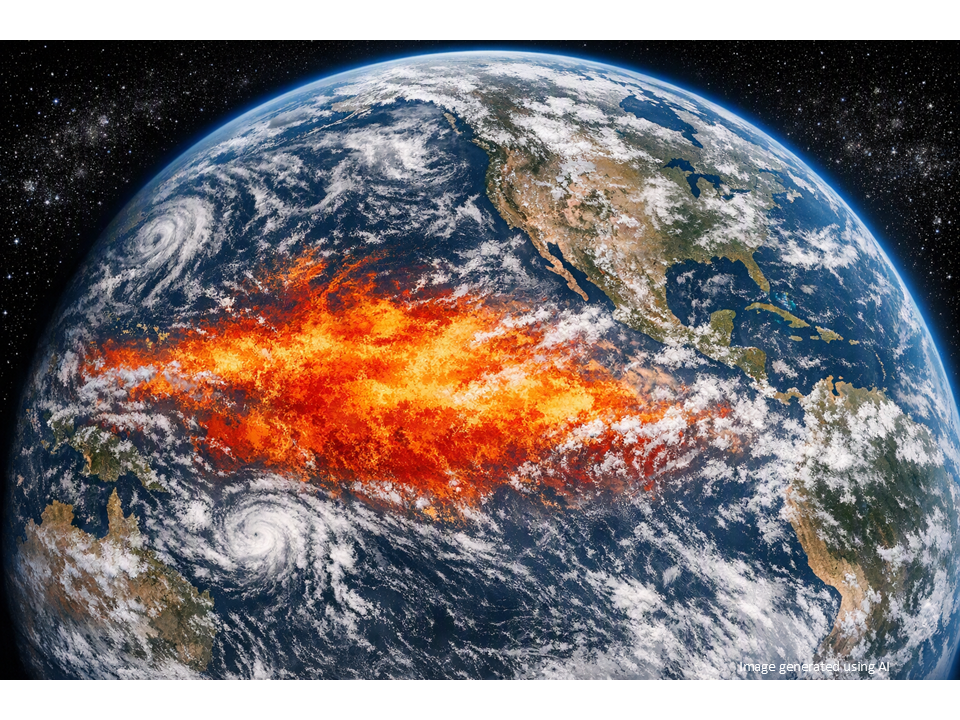
According to a Nature News commentary, researchers from Berkeley Earth and other institutions suggest that the El Niño event that emerged in 2026 could become the strongest observed in more than 150 years of instrumental records. Current projections indicate that sea surface temperature anomalies in the tropical Pacific may substantially exceed those recorded during the exceptional 2015–2016 El Niño. Combined with ongoing human-induced global warming, this could result in 2027 becoming the warmest year ever recorded worldwide.
The U.S. National Oceanic and Atmospheric Administration (NOAA) estimates an 80 percent probability that the current event will develop into a “very strong” El Niño by the end of 2026, with El Niño conditions likely to persist at least until April 2027. Researchers suggest that global average temperatures in 2027 could reach approximately 1.7°C above pre-industrial levels, bringing the planet close to the 1.5°C threshold identified in the Paris Agreement.
El Niño is a natural climate phenomenon characterized by warmer-than-average sea surface temperatures and changes in atmospheric circulation across the tropical Pacific Ocean. Its effects are felt worldwide and are often associated with an increased risk of heatwaves, droughts, floods, and wildfires. A previous strong El Niño event in 1997–1998 has been estimated to have reduced global economic growth by approximately US$5.7 trillion in subsequent years. Researchers have suggested that the current event could potentially contribute to economic losses of up to US$10 trillion by 2032.
Scientists have also raised concerns about impacts on ecosystems. Elevated ocean temperatures increase the risk of coral bleaching and may reduce the capacity of both marine and terrestrial ecosystems to absorb carbon dioxide from the atmosphere.
At the same time, researchers note that scientific debate continues regarding whether this event represents only a temporary natural fluctuation or whether climate change is contributing to a long-term tendency for stronger and more frequent El Niño events. While many climate models project an increase in extreme El Niño events over the course of this century, observational evidence remains insufficient to conclusively determine whether this trend has already emerged.
The forecasts underscore the potential for interactions between natural climate variability and human-induced global warming to amplify extreme weather events and their social, economic, and environmental consequences.
Reference
Dinneen, J. (2026). This El Niño is set to be the largest on record by a ‘mind-blowing margin’. Nature News.
https://doi.org/10.1038/d41586-026-02293-y
Contributor: Miyuki Iiyama, Strategic Coordination Office