



Pick Up
1450. 2026 El Niño Forecast
Related Research Program
Information
1450. 2026 El Niño Forecast
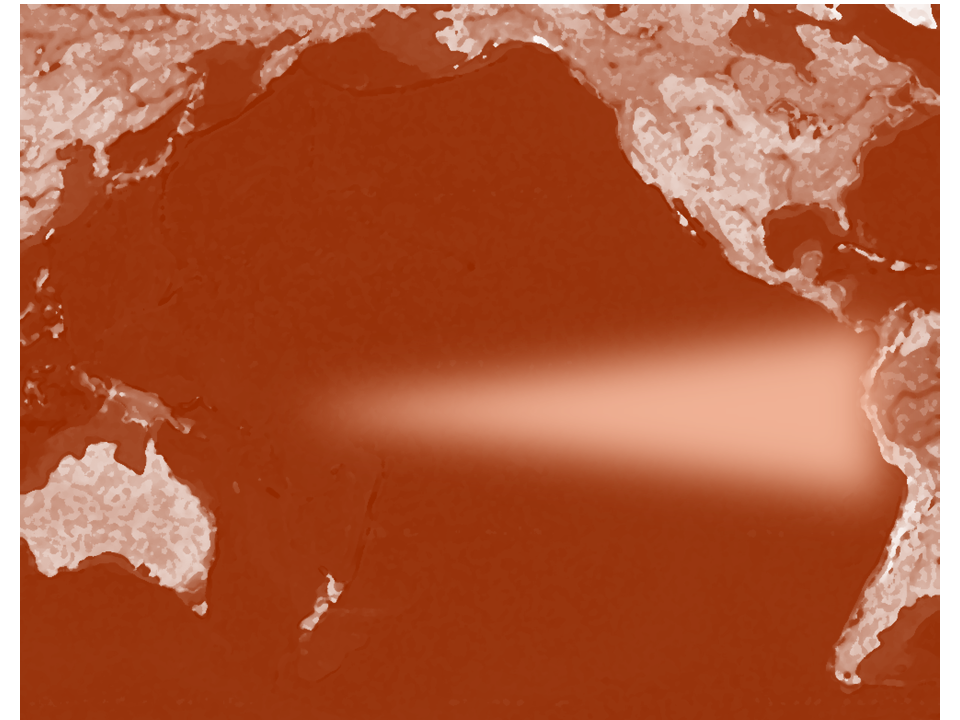
The World Meteorological Organization (WMO) has announced that the weak La Niña phenomenon may transition to a neutral state in the coming months and transition into an El Niño phenomenon by the end of 2026.
According to the WMO, there is a 60% chance of neutral conditions during the three months of March through May, a 30% chance of La Niña, and a 10% chance of El Niño. From April through June, there is a 70% chance of neutral conditions. From May through July, the chance of neutral conditions drops to 60% and the chance of El Niño is 40%.
The most recent El Niño event, which occurred from 2023 to 2024, was one of the five strongest on record, contributing to 2023 being the second-hottest year and 2024 being the hottest year on record.
Extreme events were observed around the world during this period, and scientists point to the influence of human-induced climate change, as well as El Niño, as the underlying cause of many of the abnormal weather events from 2023 to 2024. The warmed atmosphere, under high temperatures caused by anthropogenic climate change, accumulates humidity, dramatically increasing the likelihood of extreme rainfall.
For example, in 2023 alone, a heatwave was observed in the Northern Hemisphere in July, extreme cyclones exacerbated extreme rainfall (floods in northern China in July and in Libya in September), and some areas transitioned from drought to flooding (California and the Horn of Africa). Extreme weather phenomena can also lead to ecosystem-related disasters, such as forest fires (Hawaii in August 2023 and Canada from spring to fall 2023) and dust storms (Mongolia in April 2023).
2024 also saw reports of extreme events, including a heatwave in South America, a drought in southern Africa, and floods in Dubai. While many of the extreme events that occurred in early 2024 were also influenced by El Niño, a World Weather Attribution (WWA) analysis, which analyzes the causal relationship between extreme events and climate change, concluded that even in cases like the worst drought in Amazon history, climate change was a major factor, with El Niño merely exacerbating the situation. The Amazon rainforest and Pantanal wetlands suffered severe biodiversity loss due to severe drought and fires. The Amazon is the world's most important terrestrial carbon sink and plays a crucial role in stabilizing the global climate. Avoiding deforestation is urgently needed to protect the ecosystem from drought and fire.
As global warming progresses, climate change is beginning to affect weather beyond natural phenomena like El Niño. There is a need to study emerging trends in extreme weather in order to develop adaptation strategies and countermeasures, while also accelerating efforts to mitigate climate change.
Contributor: IIYAMA Miyuki, Information Program