



Pick Up
1497. NOAA Announces Increased Likelihood of El Niño Development
Related Research Program
Information
1497. NOAA Announces Increased Likelihood of El Niño Development
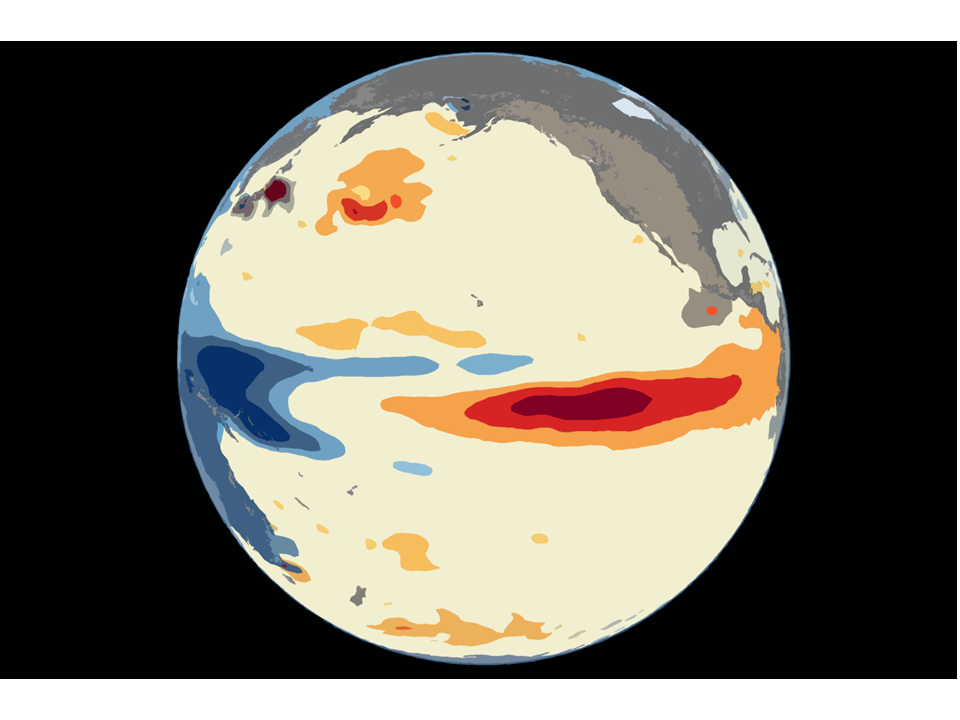
On May 14, 2026, the Climate Prediction Center of the U.S. National Oceanic and Atmospheric Administration (NOAA) issued an “El Niño Watch.” According to the report, there is an 82% chance that El Niño conditions will develop during May–July 2026 and a 96% chance that they will persist through the Northern Hemisphere winter of 2026/27. Sea surface temperatures across the eastern to central equatorial Pacific are currently above average, indicating signs of a developing El Niño.
In particular, above-average ocean temperatures have been observed over a broad area beneath the surface in the eastern Pacific Ocean. In addition, subsurface ocean temperature anomalies have increased for six consecutive months, suggesting an accumulation of warm water within the Pacific Ocean.
At the same time, NOAA noted that ocean-atmosphere coupling has not yet strengthened sufficiently, and El Niño–Southern Oscillation (ENSO) conditions are therefore still classified as ENSO-neutral. While confidence in the development of El Niño has increased, considerable uncertainty remains regarding its eventual intensity. At present, the probability of a “very strong” El Niño is estimated at 37%.
NOAA also pointed out that past very strong El Niño events were characterized by strong ocean-atmosphere coupling throughout the summer season, and whether similar conditions will develop in 2026 will be an important focus in the coming months.
The forecast is attracting attention from the perspective of risk management in agriculture, water resources, and disaster preparedness. El Niño is known to affect global rainfall and temperature patterns, causing droughts, floods, and impacts on agricultural production in different regions. However, NOAA emphasized that a strong El Niño does not necessarily guarantee strong impacts, as regional outcomes depend on seasonal conditions and atmospheric circulation patterns. NOAA therefore stressed the importance of continuously monitoring ENSO conditions over the coming months.
Contributor: IIYAMA Miyuki, Strategic Coordination Office