



Pick Up
1449. Concerns about the Impact of the Conflicts on Fertilizer and Food Prices
Related Research Program
Information

1449. Concerns about the Impact of the Conflicts on Fertilizer and Food Prices
The global fertilizer market faces various geopolitical and logistical challenges.
The production costs and, therefore, availability of mineral fertilizers are closely linked to energy prices. Natural gas is a key feedstock for all nitrogen fertilizers, as well as the widely used monoammonium phosphate (MAP) and diammonium phosphate (DAP), and various nitrogen, phosphorus, and potassium (NPK) blends. Stable natural gas prices support predictability in fertilizer production and supply.
Looking back, global fertilizer prices began to rise around 2020, reaching record highs in mid-2021. In February 2022, Russia's invasion of Ukraine disrupted supply chains and led to inflationary pressures on energy, agricultural, and fertilizer prices.
International fertilizer trade has also been affected by ongoing maritime disruptions in the Red Sea and the 2024 Panama Canal closure, both of which increased uncertainty regarding fertilizer shipments. While some of these challenges have since eased, rising risks and insurance costs remain a significant concern.
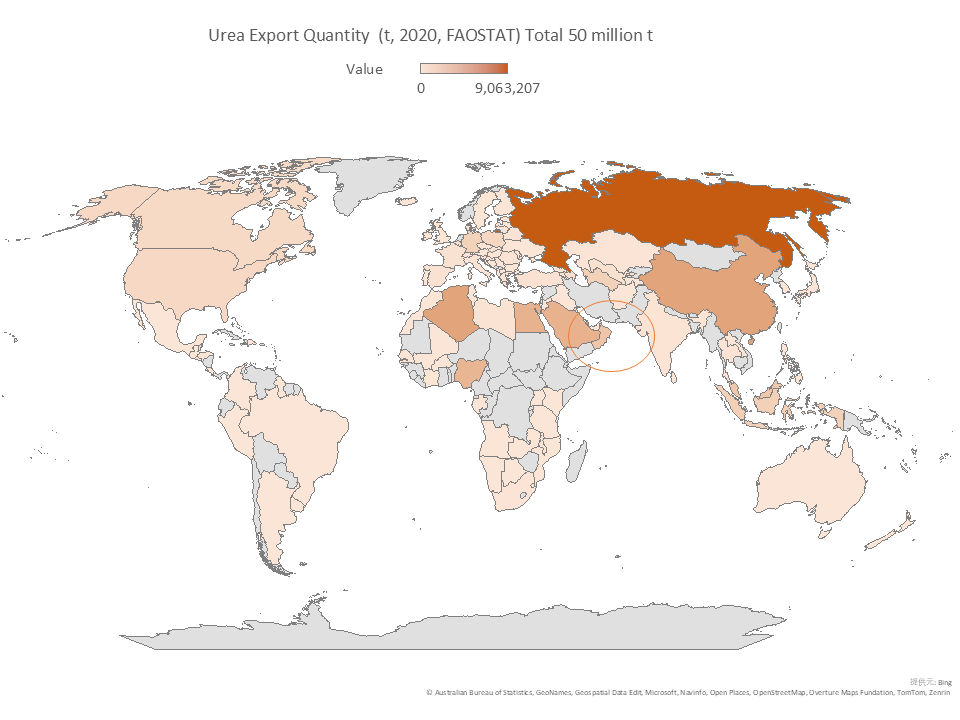
The rapidly escalating conflict in the Middle East has led to the blockage of the Strait of Hormuz. Of the world's top 10 urea exporters (Russia, Qatar, China, Algeria, Saudi Arabia, Egypt, Nigeria, Oman, Malaysia, and the Netherlands), Qatar and Saudi Arabia transport urea through the Strait of Hormuz, raising concerns that the blockage could adversely affect food prices.
Contributor: IIYAMA Miyuki, Information Program