



Pick Up
1564. Climate-Induced Severe Water Scarcity May Raise Global Wheat Price Risks
Related Research Program
Information

1564. Climate-Induced Severe Water Scarcity May Raise Global Wheat Price Risks
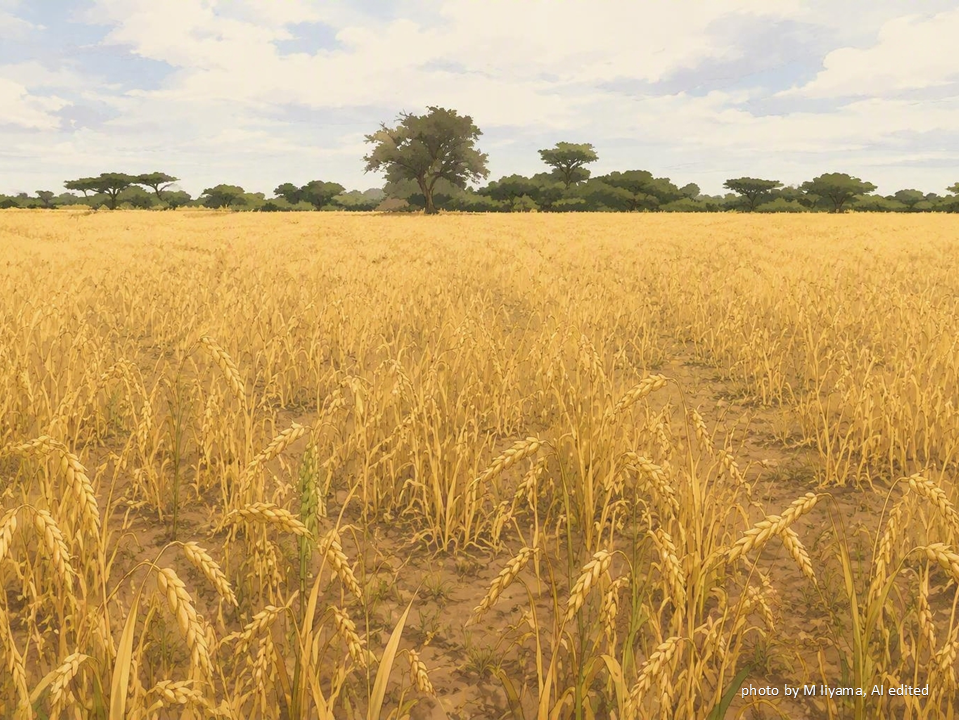
Severe water scarcity intensified by climate change can affect not only crop yields but also food price volatility through international markets. A new study suggests that wheat, among major staple crops, is particularly exposed to price risks associated with widespread water shortages.
Drought and water scarcity caused by climate change may affect not only agricultural production but also global food prices. When severe water shortages occur simultaneously across several major wheat-producing regions, the effects can spread through international markets and eventually be reflected in consumer prices for bread, pasta, breakfast cereals, and other wheat-based foods.
The study, published in AGU’s journal Earth’s Future under the title “Climate-Induced Severe Water Scarcity Events as Harbingers of Global Wheat Price,” combined climate observations, crop production areas, crop calendars and global commodity price data for the period 2000–2021. The researchers developed a Severe Water Scarcity (SWS) indicator to estimate the share of cropland exposed to drought during the most water-sensitive stages of crop growth. For wheat, the extent of the SWS-affected area was found to explain approximately 74% of annual fluctuations in global wheat prices.
Historically, about 5% of the world’s wheat-growing area experienced severe water scarcity in an average year, while this share exceeded 15% in particularly dry years such as 2000, 2010, 2012, and 2020. Future climate projections suggest that severe water scarcity may affect larger portions of global wheat-producing regions as temperatures continue to rise, increasing the risk of higher wheat prices.
Because wheat is widely traded internationally and serves as a staple food for many countries, compound drought events across multiple breadbasket regions represent a direct risk to global food security. The findings underline the need for climate adaptation measures in agriculture, including improved water management and drought-tolerant crop varieties, as well as stronger risk management across international food markets and supply chains.
Reference: Trnka, M., Meitner, J., Balek, J., Feng, S., Arbelaez Gaviria, J., Fischer, M., et al. (2026). Climate-Induced Severe Water Scarcity Events as Harbingers of Global Wheat Price. Earth’s Future. https://doi.org/10.1029/2025EF006095
Contributor: Miyuki IIYAMA, Strategic Coordination Office