



Pick Up
1555. Global Food Price Trends in July 2026 (FAO Food Price Index)
Related Research Program
Information
1555. Global Food Price Trends in July 2026 (FAO Food Price Index)
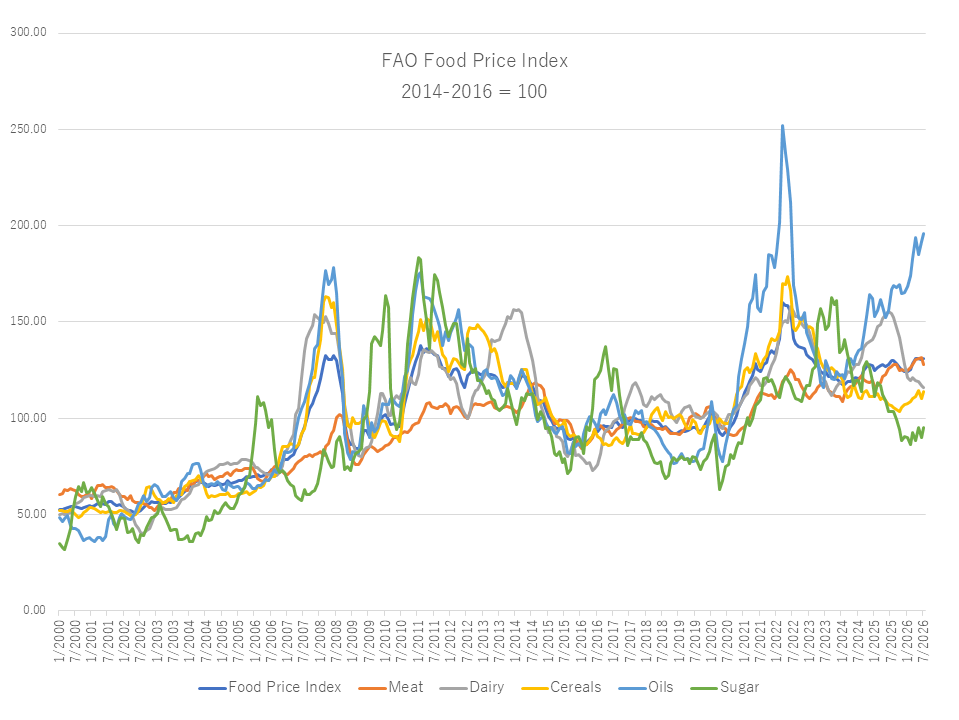
According to the Food and Agriculture Organization of the United Nations (FAO), the FAO Food Price Index averaged 131.1 points in July 2026, up 0.7 points, or 0.6 percent, from the previous month. Increases in the price indices for cereals, sugar and vegetable oils more than offset declines in those for meat and dairy products. The index stood 1.3 points, or 1.0 percent, above its level a year earlier, but remained 29.1 points, or 18.2 percent, below the peak recorded in March 2022.
The following overview of commodity price movements is based on FAO’s release.
Cereals
The FAO Cereal Price Index averaged 113.8 points in July, up 3.8 points, or 3.4 percent, from June and 7.3 points, or 6.9 percent, above its level a year earlier. Wheat prices rose by 5.8 percent and were 9.9 percent higher than a year earlier, reflecting concerns over continued disruptions to Black Sea export flows, damage to export infrastructure and the impact of recent heatwaves in several key producing countries. Maize prices also increased by 3.6 percent from the previous month, supported by concerns over hot and dry weather in parts of the United States Corn Belt and spillover effects from firmer energy markets amid heightened geopolitical tensions. Sorghum prices edged higher in line with maize prices in the United States. By contrast, barley prices fell by 1.9 percent, as favorable crop prospects in Australia and the Black Sea region more than offset heat-related yield losses in the European Union. The FAO All Rice Price Index remained broadly stable, as a modest increase in Indica quotations was offset by demand-driven declines for other major traded rice varieties.
Vegetable oils
The FAO Vegetable Oil Price Index averaged 195.7 points in July, up 3.7 points, or 2.0 percent, from June, reaching its highest level since June 2022. The increase reflected higher palm and soy oil prices, which more than offset lower sunflower and rapeseed oil quotations. Palm oil prices rose for a second consecutive month, supported by firm demand from Indonesia’s biodiesel sector and higher crude oil prices. Soy oil prices also increased, underpinned by strong feedstock demand in the United States and stronger global import demand. In contrast, sunflower and rapeseed oil prices declined on expectations of larger supplies in the 2026/27 season, although renewed tensions in the Black Sea region and concerns over their potential impact on exports limited the extent of the decline.
Meat
The FAO Meat Price Index averaged 127.7 points in July, down 3.6 points, or 2.8 percent, from June, while remaining 1.1 points, or 0.8 percent, above its level a year earlier. This was the first monthly decline in 2026 and reflected lower quotations across all meat categories except ovine meat. Poultry prices declined mainly due to ample export supplies from Brazil. Uncertainty over future access to the European Union market related to antimicrobial requirements also raised expectations that higher-value products could be redirected to alternative markets, potentially increasing competition and putting downward pressure on prices. Pig meat prices also fell, driven by abundant supplies in the European Union and subdued global demand, although high summer temperatures provided some price support by limiting animal growth rates. Bovine meat prices eased, reflecting weaker import demand from Asia. By contrast, ovine meat prices rose further to a new record high, supported by persistently tight exportable supplies from Oceania and robust import demand.
Dairy products
The FAO Dairy Price Index averaged 116.2 points in July, down 0.8 points, or 0.7 percent, from June and 38.4 points, or 24.8 percent, below its level a year earlier. The decline continued the downward trend observed since April, as lower quotations for butter and milk powders more than offset a modest recovery in cheese prices. Skim milk powder prices fell by 3.3 percent from the previous month, reflecting ample export supplies from the European Union and Oceania as well as cautious buying following earlier price increases. However, skim milk powder was the only dairy product traded above its year-earlier level. Whole milk powder prices declined by 3.1 percent, as weak import demand, particularly from China, outweighed firm purchases from Southeast Asia and the Near East, with stronger export competition also weighing on prices. Butter prices fell by 2.4 percent as improved milk fat availability and expanding export supplies eased market tightness. By contrast, the cheese price index rose by 1.7 percent, marking its first monthly increase in about a year, against the backdrop of seasonally lower milk supplies in the European Union.
Sugar
The FAO Sugar Price Index averaged 95.0 points in July, up 5.1 points, or 5.6 percent, from June, but still 8.3 points, or 8.0 percent, below its level a year earlier. The increase was driven mainly by concerns over the impact of persistent hot and dry weather in the European Union and El Niño-related weather conditions in key producing countries in Asia on production prospects. Expectations of stronger ethanol demand in Brazil, following an increase in the mandatory ethanol blend in gasoline, also supported prices by raising the possibility that a larger share of sugarcane would be diverted to ethanol production, thereby reducing the availability of sugar supplies. However, improved harvesting conditions in Brazil’s Center-South region limited the overall increase in international sugar prices.
Conclusion
According to FAO’s release, July 2026 saw divergent movements across food commodity markets: prices for cereals, sugar and vegetable oils increased, while those for meat and dairy products declined. In particular, geopolitical risks surrounding the Black Sea region, hot and dry weather in major producing areas, developments in energy markets and trends in biofuel demand all influenced international food prices. Continued attention will be needed to how these factors affect global food markets going forward.
Contributor: Miyuki IIYAMA, Strategic Coordination Office