



Pick Up
1471. Global Food Price Trends, March 2026
Related Research Program
Information
1471. Global Food Price Trends, March 2026
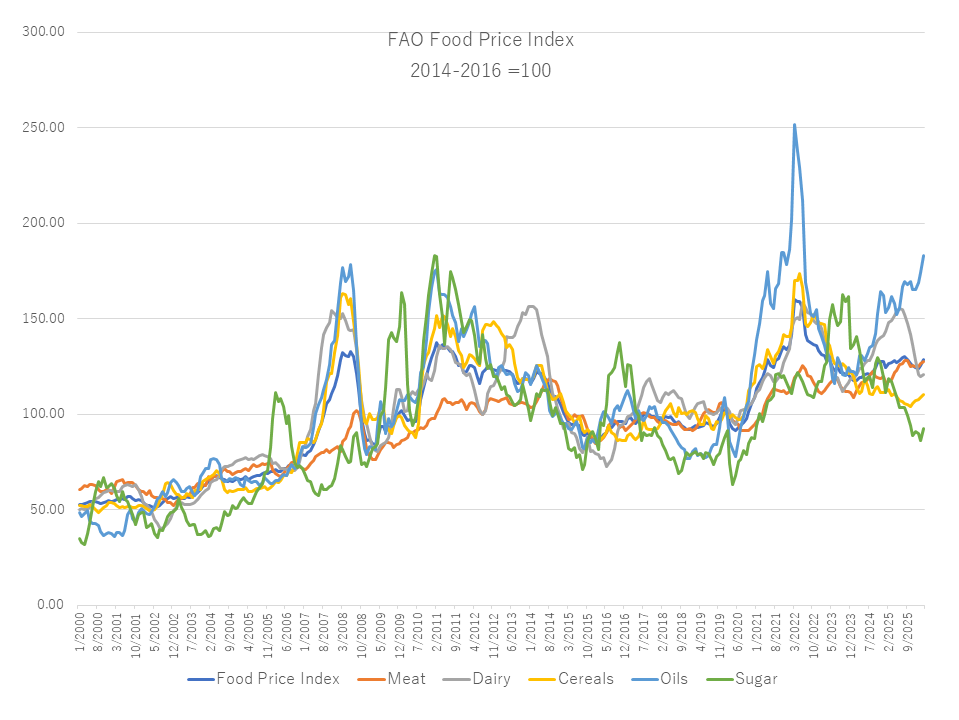
The FAO Food Price Index averaged 128.5 points in March 2026, a 2.4% increase from the revised February level, marking the second consecutive month of increases. Price indices across all commodity groups, including grains, meat, dairy products, vegetable oils, and sugar, rose, reflecting not only market fundamentals but also a reaction to rising energy prices due to escalating conflict in the Middle East. Compared to historical levels, the food price index is 1.0% higher than a year ago, but remains 19.8% lower than the peak recorded in March 2022.
The FAO grain price index averaged 110.4 points in March, up 1.5% from February and 0.6% from the same month last year, reflecting price increases for all major grains except rice. International wheat prices rose 4.3%, driven by worsening crop assessments in the US due to drought concerns and expected reductions in planted area in Australia following forecasts of rising fertilizer prices. These upward pressures were partially offset by generally good crop conditions in Europe, intense competition among exporters, and still sufficient supply. Corn prices rose only 0.9%, despite concerns about soaring fertilizer prices ahead of planting in the Northern Hemisphere and improved outlooks for ethanol demand driven by rising energy prices, but a global supply surplus weighed on the market. In contrast, the US price index fell 3.0% in March 2026, reflecting a combination of factors including harvest pressures, weak import demand, and the currency's depreciation against the US dollar.
The FAO vegetable oil price index rose 5.1% from February, marking its third consecutive month of gains and putting it 13.2% above its level a year ago. International palm oil prices reached their highest level since mid-2022, trading at a premium against soybean oil. This was mainly a spillover effect from the sharp rise in crude oil prices, with weaker-than-expected production forecasts from Malaysia also pushing prices up. Soybean oil prices rose only slightly, as expectations of increased biofuel demand in the US were partially offset by increased seasonal export supply from South America. Meanwhile, international sunflower oil and rapeseed oil prices were supported by continued supply tightness in the Black Sea region and increased demand for raw materials due to a significant rise in global energy prices, respectively.
The FAO meat price index rose 1.0% from February and 8.0% year-on-year. This increase was mainly due to higher pork prices reflecting increased seasonal demand in Europe and a slight rise in beef prices due to reduced export supply in Brazil, while lamb and chicken prices softened.
The FAO dairy price index rose 1.2% month-on-month, but remained 18.7% lower year-on-year. This was the first increase since July 2025, mainly driven by price increases in skim milk powder, butter, and whole milk powder, while a decline in international cheese prices limited the overall increase.
The FAO sugar price index rose 7.2% month-on-month, reaching its highest level since November 2025, but remained 21.0% lower than the same month last year. The rise in March was primarily due to higher international crude oil prices, fueling expectations that Brazil, the world's largest sugar exporter, will increase its reliance on sugarcane-derived ethanol during the upcoming harvest season. Further upward pressure on sugar prices stemmed from concerns about the impact of the escalating Middle East conflict on sugar trade. However, the overall rise in global sugar prices was restrained by a generally positive global supply outlook for the 2025/26 season, driven by strong harvests in India and Thailand.
Contributor Miyuki IIYAMA, Strategic Coordination Office