



Pick Up
1492. Global Food Price Trends, April 2026
Related Research Program
Information
1492. Global Food Price Trends, April 2026
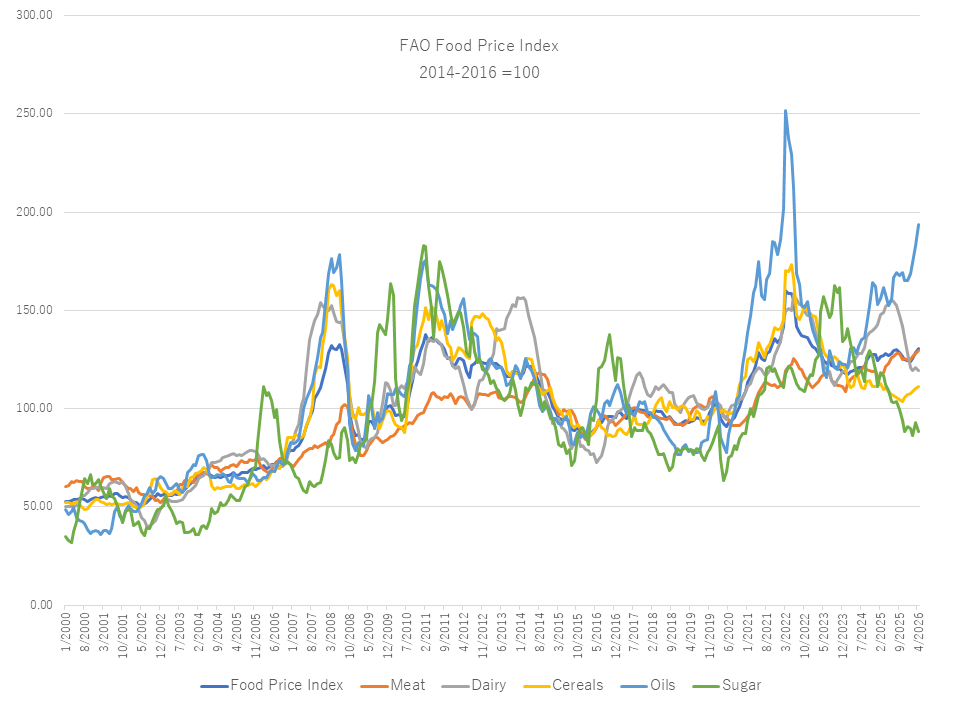
The FAO Food Price Index (FFPI) averaged 130.7 points in April 2026, up 1.6 percent from its revised March level, marking a third consecutive monthly increase, albeit at a slower pace than the previous month. Price indices for vegetable oils, meat, and cereals increased, while those for sugar and dairy products declined. Compared to historical levels, the FFPI stood 2.0 percent above its level a year earlier but remained 18.4 percent below its peak recorded in March 2022.
The FAO Cereal Price Index averaged 111.3 points in April, up 0.8 percent from March and 0.4 percent higher than in April 2025. The increase reflected higher prices across most major cereals, except sorghum and barley. International wheat prices rose by 0.8 percent, driven by drought conditions in parts of the United States and concerns about below-average rainfall in Australia. In addition, high fertilizer prices—linked to elevated energy costs and supply disruptions associated with the effective closure of the Strait of Hormuz—have raised expectations of reduced wheat plantings in 2026, further supporting prices. Maize prices increased by 0.7 percent, underpinned by weather-related concerns in Brazil, dry sowing conditions in parts of the United States, and firm demand for ethanol amid high crude oil prices. The FAO All Rice Price Index increased by 1.9 percent, reflecting higher production and marketing costs in rice-exporting countries following the surge in fuel-related expenses. In contrast, sorghum prices declined by 4.0 percent, mainly due to weaker import demand, especially from China, and improved global supply prospects.
The FAO Vegetable Oil Price Index increased by 5.9 percent from March, reaching its highest level since July 2022. Prices for palm, soy, sunflower, and rapeseed oils all rose. Palm oil prices increased for the fifth consecutive month, supported by strong demand from the biofuel sector, policy incentives in producing countries, and high crude oil prices. Additional upward pressure came from concerns over lower production in Southeast Asia. Similarly, soy and rapeseed oil prices were underpinned by robust biofuel demand in the United States and the European Union. Sunflower oil prices remained elevated due to persistent supply tightness in the Black Sea region.
The FAO Meat Price Index rose by 1.2 percent in April, reaching a new record high and standing 6.4 percent above its level a year earlier. Bovine meat prices increased, supported by limited supplies of slaughter-ready cattle in Brazil and ongoing herd rebuilding, as well as strong import demand, particularly from China. Pig meat prices rose due to firm seasonal demand in the European Union, although this was partly offset by ample supplies in Brazil. Poultry meat prices increased, driven by strong demand from African markets, despite logistical constraints affecting shipments to the Near East. Ovine meat prices remained broadly stable.
The FAO Dairy Price Index declined by 1.1 percent from March, standing 21.2 percent below its level a year earlier. The decrease was mainly driven by lower butter and cheese prices, reflecting abundant milk supplies in the European Union and Oceania. In contrast, skim milk powder prices continued to rise, supported by strong import demand from North Africa, the Near East, and Southeast Asia, reaching their highest level since October 2022. Whole milk powder prices remained largely unchanged.
The FAO Sugar Price Index declined by 4.7 percent from March and was 21.2 percent lower than a year earlier. The decline was mainly driven by expectations of ample global supplies, supported by improved production prospects in key producing countries such as China and Thailand. Additionally, the start of the harvest season in Brazil under favorable weather conditions contributed to the downward pressure on international sugar prices.
Contributor: IIYAMA Miyuki, Strategic Coordination Office