



Pick Up
1452. February 2026 World Food Price Trends
Related Research Program
Information
1452. February 2026 World Food Price Trends
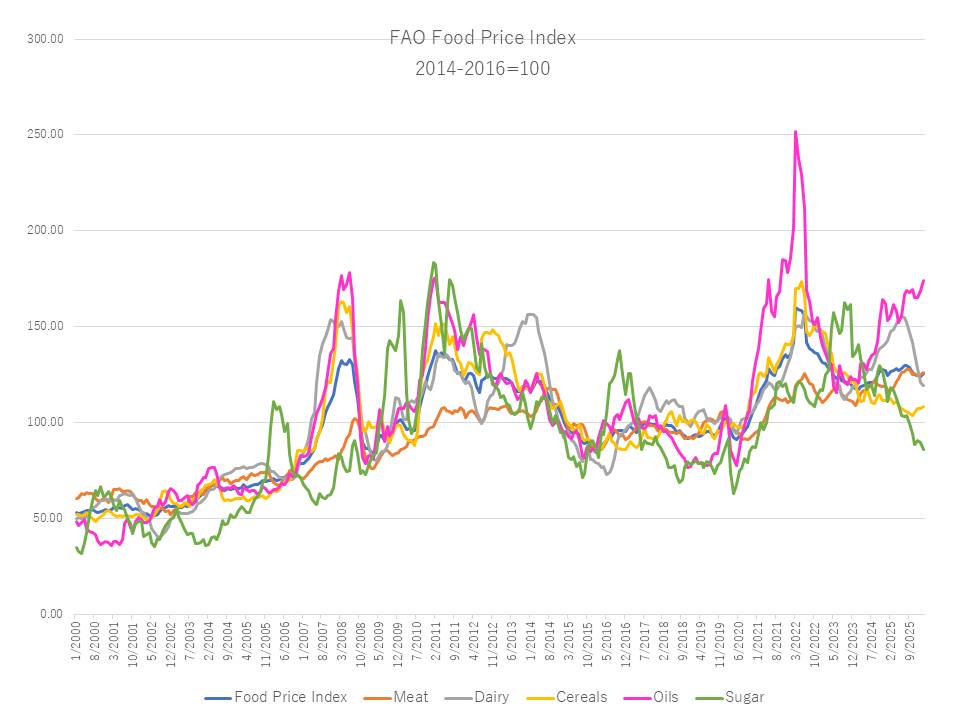
The FAO Food Price Index rose to 125.3 points in February 2026, up 0.9% from the revised January value. Increases in the cereal, meat, and vegetable oil price indexes outweighed declines in the dairy and sugar price indexes, resulting in the first increase after five consecutive months of declines. However, prices were down 1.0% year-on-year and 21.8% from their peak in March 2022.
The FAO Cereal Price Index rose 1.1% month-on-month in February but remains 3.5% lower year-on-year. Global wheat prices rose 1.8% in February following reports of an increased risk of frost and winter kill in parts of Europe and the United States. Logistics disruptions in the Russian Federation and ongoing tensions in the Black Sea region also contributed to the increase. Global corn prices were broadly stable, while barley prices remained firm due to sustained Chinese demand for Australian barley and purchases by North African buyers sourcing from Europe. Sorghum prices also rose on solid international demand. The FAO Rice Price Index rose slightly by 0.4% in February, supported by continued demand for Basmati and Japonica rice.
The FAO Vegetable Oil Price Index rose 3.3% in February from the previous month, reaching its highest level since June 2022. This increase was driven by higher palm, soybean, and rapeseed oil prices, which more than offset lower sunflower oil prices. International palm oil prices rose for the third consecutive month, supported by strong global import demand and seasonal production declines in Southeast Asia. Global soybean oil prices rose on expectations of U.S. biofuel policy support, while rapeseed oil prices rebounded on the prospect of increased import demand for Canadian supplies. In contrast, sunflower oil prices fell modestly, reflecting weaker import demand due to higher prices and increased export supply from Argentina, but remained significantly higher than the same month last year.
The FAO Meat Price Index rose 0.8% in February from its revised January level and 8.0% from the same month last year. The increase was primarily due to higher global beef and lamb prices, while chicken and pork prices increased only slightly.
The FAO Dairy Price Index was down 1.2% from January and 19.2% from a year earlier. The decline in February was mainly due to a continued decline in cheese prices within the EU, driven by improving milk supplies, weak demand from key export markets, and increased international competition. Meanwhile, international prices for skim milk powder and whole milk powder rose significantly, supported by increased import demand, particularly from North Africa, the Near East, and Southeast Asia, and slower seasonal growth in milk supplies in New Zealand.
The FAO Sugar Price Index was down 4.1% from January and 27.3% from a year earlier, reaching its lowest level since October 2020. Expectations of a global supply glut this season continue to put downward pressure on world sugar prices. The generally favorable production outlook, including record-high production forecasts in the United States, more than offsets upward price pressures from downward revisions to India's production forecasts and seasonal declines in Brazil.
Contributor: IIYAMA Miyuki, Information Program