



Pick Up
1552. Climate Change Is Rapidly Increasing Wildfire Risk in Southern Europe
Related Research Program
Information
1552. Climate Change Is Rapidly Increasing Wildfire Risk in Southern Europe
On 28 July 2026, the UNFCCC warned that climate-driven disasters are reaching “nightmare proportions.” Across Europe, record-breaking heatwaves and large wildfires have led to mass evacuations and significant economic losses, particularly in France and Spain. Severe impacts have also been reported elsewhere, with temperatures approaching 49°C in North Africa and prolonged periods of temperatures above 40°C in Japan.
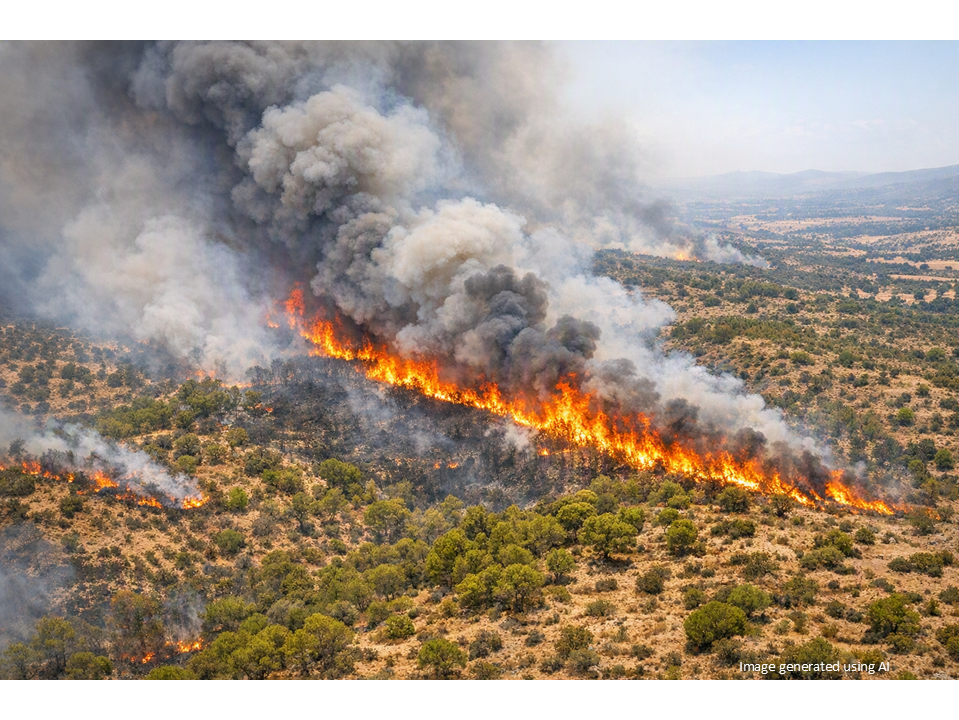
Meanwhile, a paper published in Scientific Reports analyzed long-term changes in fire-weather conditions, measured using the Fire Weather Index (FWI), across Southern Europe. The study found that the number of summer days experiencing extreme fire-weather conditions more than doubled between 1981 and 2025 across large areas of the Iberian Peninsula, France, Italy, and Greece. In particular, rising temperatures and declining summer precipitation in Spain and Portugal have contributed to increasing wildfire risk.
The paper also examined the record-breaking 2025 wildfire season in Southern Europe. Approximately 350,000 hectares burned in Spain and more than 250,000 hectares in Portugal, with the Iberian Peninsula accounting for around 80% of the total area burned across Southern Europe. The authors attribute these large-scale fires to increasingly extreme heat and drought conditions that have intensified fire-prone weather across the region.
In addition, the paper explored links between fire-weather variability and large-scale climate patterns, including the North Atlantic Oscillation (NAO) and the El Niño-Southern Oscillation (ENSO). The results indicate a statistical relationship between sea-surface temperature variability associated with La Niña events and fire-weather conditions in northwestern Iberia, suggesting potential applications for seasonal wildfire-risk forecasting.
The paper further notes that, although the overall number of fires and total burned area have generally declined over the long term in Southern Europe, extreme fire-weather conditions have continued to increase. Improved fire-prevention and suppression systems have reduced fire occurrence, but climate change appears to be creating conditions that favor fewer yet larger and more difficult-to-control wildfires.
The UNFCCC article emphasizes that addressing the growing risks from climate-related disasters will require accelerating the transition away from coal, oil, and gas, expanding renewable energy deployment, and strengthening forest protection efforts.
References
UNFCCC (2026). UN Climate Chief: "The climate alarm is blaring, from every direction." (28 July 2026)
https://unfccc.int/news/un-climate-chief-the-climate-alarm-is-blaring-f…
Feron, S., Cordero, R.R., Damiani, A. et al. (2026). Major intensification of fire weather across southern Europe in recent decades. Scientific Reports, 16, 21852.
https://doi.org/10.1038/s41598-026-61756-4
Contributor: Miyuki IIYAMA, Strategic Coordination Office