



Pick Up
1458. Green Asia Report Series No. 6: Sustainable Use of Small Indigenous Fish Species for Nutritional and Livelihood Improvement in Inland Rural Areas of Indochina
Related Research Program
Information


1458. Green Asia Report Series No. 6: Sustainable Use of Small Indigenous Fish Species for Nutritional and Livelihood Improvement in Inland Rural Areas of Indochina
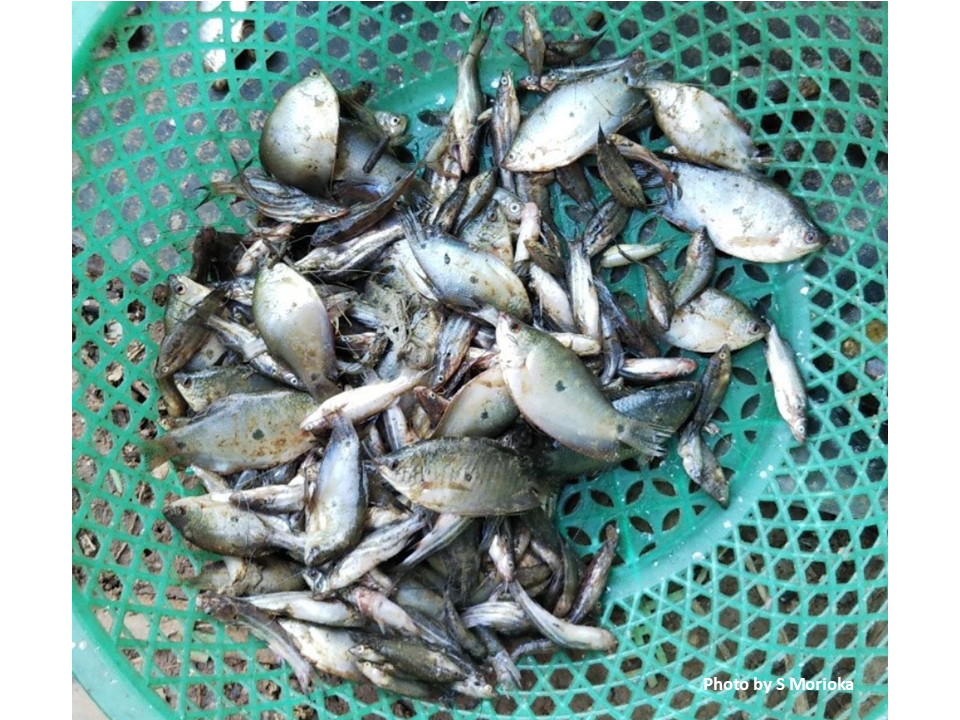
The sixth issue of the Green Asia Report Series, focusing on the conservation and sustainable use of small indigenous fish species, has been published. This report series aims to introduce scalable technologies that can be shared in the Asia-Monsoon region and contribute to food systems transformation in the region, by serving as a reference for various stakeholders, including government officials, researchers, extension officers, producers, and the private sector. The sixth issue, titled "Sustainable Use of Small Indigenous Fish Species for Nutritional and Livelihood Improvement in Inland Rural Areas of Indochina," highlights small indigenous fish species as affordable and high-quality nutrient sources and explains models for their resource conservation and aquaculture. The overview is as follows:
Despite economic growth across Southeast Asia, undernutrition remains a critical issue in rural areas. Deficiencies in proteins, lipids, minerals, and vitamins contribute to high rates of child stunting and anemia among women. To address these gaps, aquaculture has been promoted throughout Southeast Asian countries. However, the escape and establishment of introduced species poses risks to native aquatic biodiversity and local ecosystems. Furthermore, commercial aquaculture systems often require capital-intensive infrastructure and expensive feed inputs, which limit their feasibility in low-income communities. To secure nutrition in rural areas while conserving local ecosystems, the utilization of small indigenous fish species is required.
A decline in indigenous fish, which are important local food sources, has been reported in artificial reservoirs in Thailand and Laos. This is due to increased fishing pressure caused by advances in fishing technology, necessitating countermeasures such as restricting fishing efforts and establishing protected areas. For the sustainable use of fishery resources, it is important not only to restrict catches but also to reduce food loss and utilize catches effectively. In rural areas lacking sufficient cold storage infrastructure, utilizing fermentation, a traditional food processing technology, is also effective. In recent years, in particular, protocols for salinity adjustment that suppress histamine production during the fermentation process have been established. The dissemination of such new food processing technologies is highly effective.
Small indigenous fish species can also be utilized for aquaculture. In case studies of rice-field aquaculture in Laos, it was verified that fish grow without artificial feeding. In addition, increased rice yields have been observed in some cases. Moreover, in pond aquaculture cases, sales revenues significantly exceeding feed costs have been recorded. These findings suggest that aquaculture utilizing small indigenous fish species and the local environment can be implemented by low-income farmers and has the potential to provide high-quality nutrition and income.
Fishmeal, the main ingredient in artificial aquaculture feed, has shown an upward price trend in recent years, creating challenges for the industry. Insects are gaining attention as an alternative feed ingredient to fishmeal. When the black soldier fly (Hermetia illucens), which is native to Southeast Asia and can be reared using plant residues, was used as a protein source for aquaculture feed, fish growth comparable to that with fishmeal was observed. This usage is included in the “Technology Catalog Contributing to Production Potential and Sustainability in the Asia-Monsoon Region” as “Aquaculture feed with the black soldier fly larvae easily grown from fruit residues as a protein source.”
Conserving and utilizing small indigenous fish species is highly feasible for farmers in inland Southeast Asia. This approach can simultaneously conserve local ecosystems and improve the nutritional status of the population.
Report Series https://www.jircas.go.jp/en/greenasia/report
International Center for Strategy "MIDORI" https://www.jircas.go.jp/en/greenasia
Contributor: KOBAYASHI Shintaro, Social Sciences Division