



Pick Up
1557. Land Degradation Neutrality (LDN): A global goal to protect and restore land
Related Research Program
Information
1557. Land Degradation Neutrality (LDN): A global goal to protect and restore land
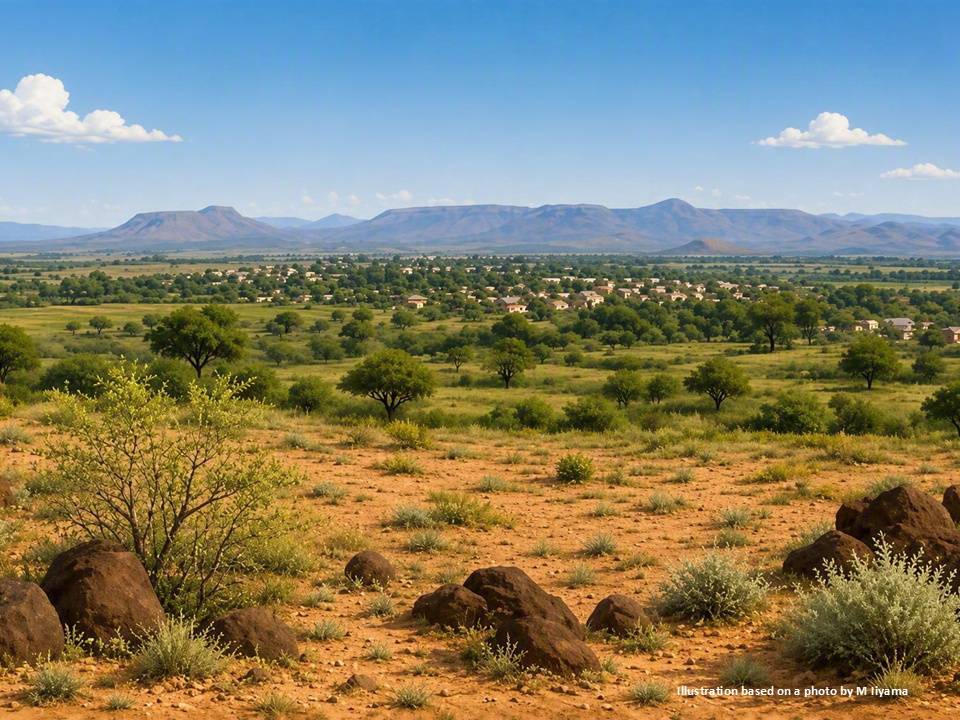
This week, the 17th session of the Conference of the Parties to the United Nations Convention to Combat Desertification (UNCCD COP17) is being held in Ulaanbaatar, Mongolia. As the international community discusses responses to desertification, land degradation and drought, renewed attention is being given to Land Degradation Neutrality (LDN), an approach that aims to maintain the quantity and quality of land resources at a level sufficient to support the ecosystem services needed now and in the future.
LDN is a framework for integrated land management. It is not limited to restoring land that has already been degraded. Rather, it seeks to prevent new degradation, minimize unavoidable impacts, and compensate for any remaining degradation through restoration and rehabilitation.
UNCCD presents a response hierarchy for achieving LDN: first, avoiding land degradation; second, reducing degradation that cannot be avoided; and third, restoring and rehabilitating degraded land. This concept applies to a wide range of land uses, including croplands, rangelands, forests and wetlands, and is essential for supporting food production, water cycles, biodiversity and local livelihoods.
Land degradation is driven by different factors in different regions, such as soil erosion, salinization, overgrazing, deforestation, inappropriate water management and urbanization. As the impacts of climate change intensify, the loss of land productivity and water retention capacity directly affects food security and rural livelihoods. LDN is therefore positioned not only as an environmental objective, but also as a practical goal that connects agriculture, development, disaster risk reduction and climate action.
Achieving LDN requires integrated efforts that combine land-use planning, sustainable agriculture and pastoralism, soil conservation, vegetation restoration, water management, and the knowledge and participation of local communities. Land is the common foundation linking climate, biodiversity, food, water and livelihoods. COP17 is expected to further advance international discussion and action to avoid, reduce and reverse land degradation. For more information, please refer to the UNCCD page on Land Degradation Neutrality.
References
UNCCD COP17 https://www.unccd.int/events/governing-bodies-meetings/unccd-cop17Land Degradation Neutrality https://www.unccd.int/land-and-life/land-degradation-neutrality/overview
Contributor: Miyuki IIYAMA, Strategic Coordination Office