



Pick Up
1547. Climate Change Worsens European Droughts: Rising Temperatures and Evaporative Demand Increase Risks to Water Resources and Agriculture
Related Research Program
Information
1547. Climate Change Worsens European Droughts: Rising Temperatures and Evaporative Demand Increase Risks to Water Resources and Agriculture
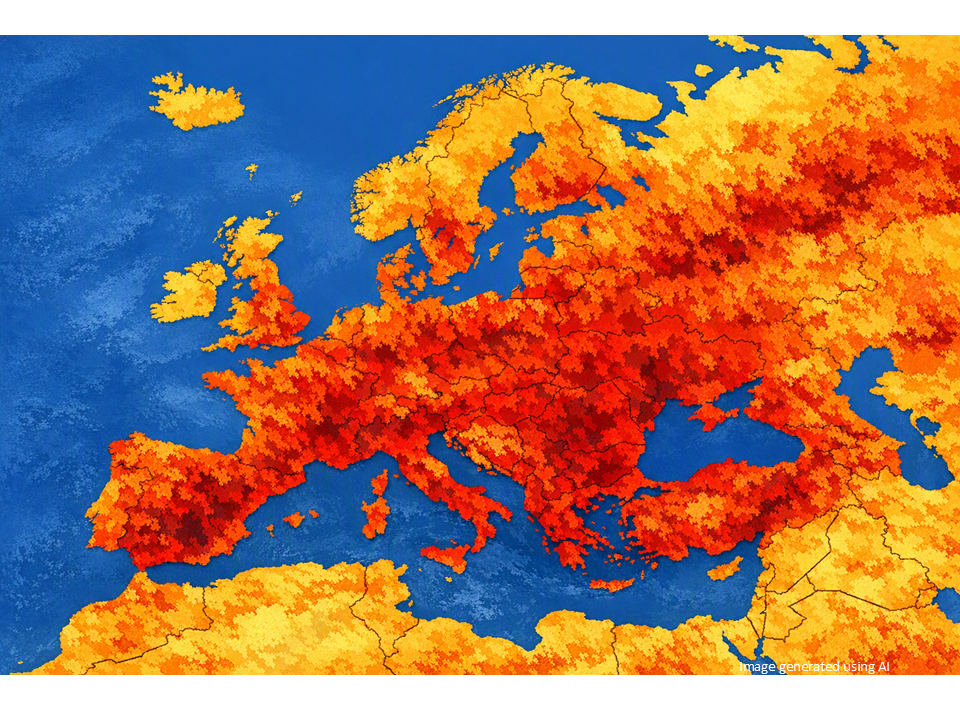
During the spring and early summer of 2026, large parts of Europe, from Portugal to Finland, experienced below-average rainfall combined with successive heatwaves, affecting agriculture, water resources, river transport, and energy production.
The World Weather Attribution (WWA) initiative, which examines the links between extreme weather events and climate change, analysed the ongoing European drought and found that human-induced climate change has substantially contributed to the severity of the event.
Using soil moisture as an indicator of agricultural and ecological drought, the study estimated that the April–June 2026 soil moisture deficit in western Europe is an event expected to occur about once every five years under the current climate. In eastern Europe, the January–June soil moisture deficit is estimated to occur about once every fifteen years. The analysis suggests that human-induced climate change has made such soil droughts approximately five times more likely in western Europe and eleven times more likely in eastern Europe.
In western Europe, however, neither observations nor climate models show a long-term change in April–June precipitation deficits, suggesting that climate change did not play a significant role in the meteorological drought itself at the regional scale. Instead, the study found that rising temperatures have substantially increased potential evapotranspiration (PET), leading to more frequent and intense agricultural and ecological droughts. According to the analysis, highly evaporative conditions such as those observed in spring 2026 have become about eighty times more likely in western Europe and about forty times more likely in eastern Europe.
The report notes that the drought is already having widespread impacts across Europe. France is facing its lowest maize harvest in fifty years, while more than one million hectares of maize have been affected in Romania. Many countries have introduced restrictions on non-essential water use, while low river levels are disrupting cargo transport and water shortages are threatening hydropower generation in some regions.
WWA warns that further warming is likely to increase the frequency of droughts associated with high evaporative demand. While the European Union has implemented measures such as agricultural insurance schemes and emergency support programmes, the report notes that drought preparedness and management remain uneven across Member States, highlighting the need for stronger and more coordinated water and drought governance.
Reference
World Weather Attribution (2026). Increasingly Hot Europe Faces More Severe Droughts and Growing Challenges for Water and Land Management.
https://www.worldweatherattribution.org/increasingly-hot-europe-faces-m…
Contributor: Miyuki Iiyama, Strategic Coordination Office