



Pick Up
1525. Disaster Risk in Multi-Hazard Environments: Human Development and Climate-Related Disaster Impacts
Related Research Program
Information
1525. Disaster Risk in Multi-Hazard Environments: Human Development and Climate-Related Disaster Impacts
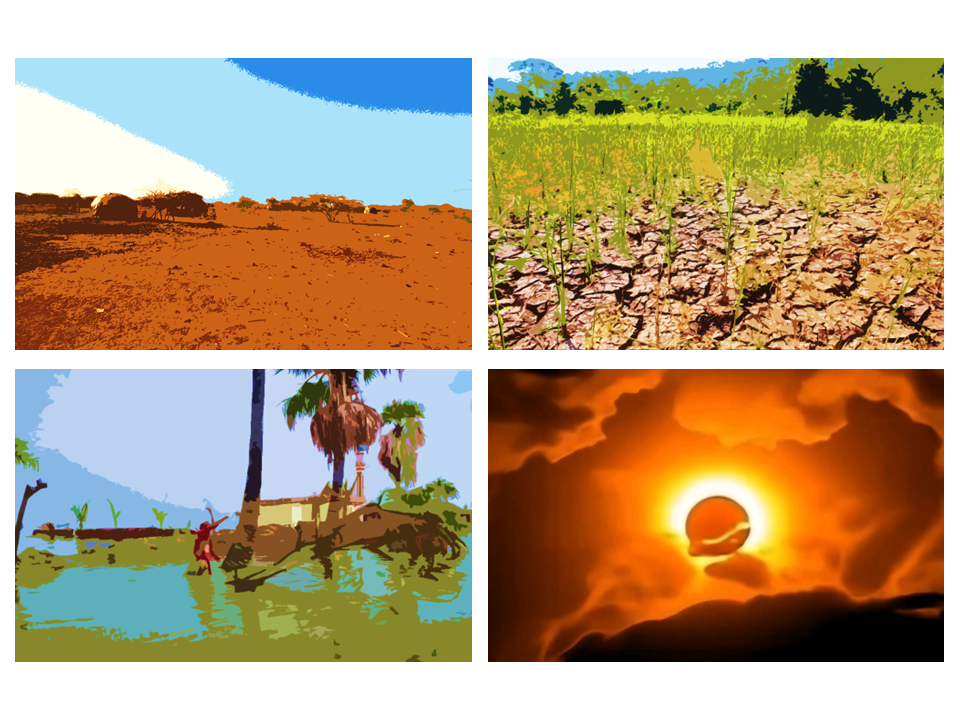
Climate-related hazards—including floods, storms, droughts, and heatwaves—have become increasingly frequent and impactful in many parts of the world as climate change progresses. Disaster risk is influenced not only by the intensity of hazards but also by factors such as population distribution, socioeconomic conditions, and adaptive capacity.
In a study published in Nature Communications, Teber et al. (2026) analyzed 7,061 climate-related disasters recorded in the Emergency Events Database (EM-DAT) between 1990 and 2020. The study examined multiple hazard types, including floods, storms, droughts, heatwaves, and landslides. Rather than relying solely on national statistics, the authors evaluated disaster impacts using the subnational Human Development Index (sHDI) to assess regional differences in vulnerability.
The analysis showed that regions with lower levels of human development tended to face higher relative risks of both human and economic losses. For example, the estimated risk of fatal impacts from storms was approximately eight times higher in regions with low human development than in regions with very high human development. For floods and storms, the study also found that areas with lower human development generally experienced greater impacts even when exposed to hazards of comparable intensity.
The authors further reported that global disaster mortality has declined over the past three decades, particularly with respect to flood-related disasters, suggesting improvements in vulnerability reduction. Nevertheless, regions with lower levels of human development continue to face disproportionately high disaster risks.
Based on these findings, the authors emphasize that disaster risk assessments in multi-hazard environments should consider not only hazard intensity but also regional socioeconomic conditions and adaptive capacity. They further suggest that regional-scale assessments of vulnerability will be important for future climate risk assessments and the development of adaptation strategies.
Reference
Teber, K., Sippel, S., Krause, M. et al. (2026). Inequality in human development amplifies climate-related disaster risk. Nature Communications, 17, 5067.
https://doi.org/10.1038/s41467-026-73873-9
Contributor: Miyuki IIYAMA, Strategic Coordination Office