



Pick Up
1451. Coastal Water Levels Are Much Higher Than Assumed in Most Coastal Hazard Assessments
Related Research Program
Information
1451. Coastal Water Levels Are Much Higher Than Assumed in Most Coastal Hazard Assessments
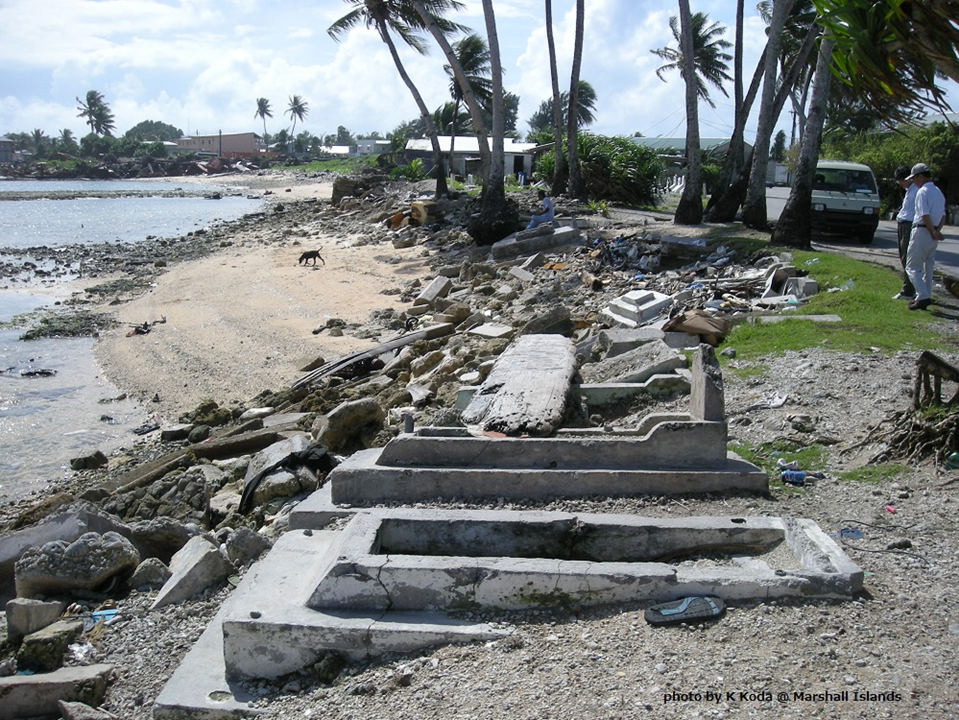
The impacts of sea level rise and other hazards in coastal areas around the world depend on coastal sea level and land elevation. Problems with estimating these baselines could lead to underestimation of damage from climate change-induced sea level rise.
A paper published in Nature found that previous studies and hazard assessments have underestimated coastal water level baselines by an average of 30 centimeters, suggesting that sea level rise due to climate change could threaten tens of millions more people than initially thought.
The researchers examined hundreds of scientific studies and hazard assessments and found that approximately 90% underestimated coastal water level baselines by an average of 30 centimeters. This trend was particularly pronounced in the Southern Hemisphere, the Pacific, and Southeast Asia compared to Europe and the Great Western Coast. Measured mean sea level was sometimes more than 1 meter higher, primarily in the Southern Hemisphere, with the largest discrepancies in the Indo-Pacific region.
The paper attributed the underestimation of coastal baselines to inconsistencies in sea and land elevation measurements. Where the ocean and land meet, many factors are not taken into account when using satellite and land models. Studies calculating the impacts of sea level rise typically use a starting point of 0 meters because they do not take into account actual, measured sea levels. While many studies assume a sea level without waves or currents, in reality, coastal waters are constantly churning due to wind, tides, currents, temperature changes, and El Niño phenomena.
Adjusting for a more accurate coastal elevation baseline, the paper found that if sea levels rise by just over one meter (some studies predict they will reach this level by the end of this century), 31% to as much as 37% more land could be inundated, putting an additional 77 million to 132 million people at risk.
The paper's conclusions suggest potential challenges in planning for and funding the impacts of climate change. Southeast Asia and Pacific island nations, where the study's largest discrepancies were observed, are home to the largest populations already threatened by sea-level rise. The study's results highlight the need for a reevaluation of existing coastal impact assessments and improved standards in the research community, with implications for policymakers, climate change funding, and coastal adaptation.
(Reference)
Seeger, K., Minderhoud, P.S.J. Sea level much higher than assumed in most coastal hazard assessments. Nature (2026). https://doi.org/10.1038/s41586-026-10196-1
Contributor: IIYAMA Miyuki, Information Program