



Pick Up
1505. UNCTAD Warns of Rising Geopolitical Risks and Growing Food and Energy Burdens on Developing Economies
Related Research Program
Information
1505. UNCTAD Warns of Rising Geopolitical Risks and Growing Food and Energy Burdens on Developing Economies
According to Trade and Development Foresights 2026 released by the United Nations Conference on Trade and Development (UNCTAD), the global economy remained relatively resilient through 2025 and into early 2026, supported by growing artificial intelligence (AI)-related demand and expanding industrial production in developing economies. However, the report states that the outlook deteriorated sharply after military tensions in the Middle East intensified in late February 2026.
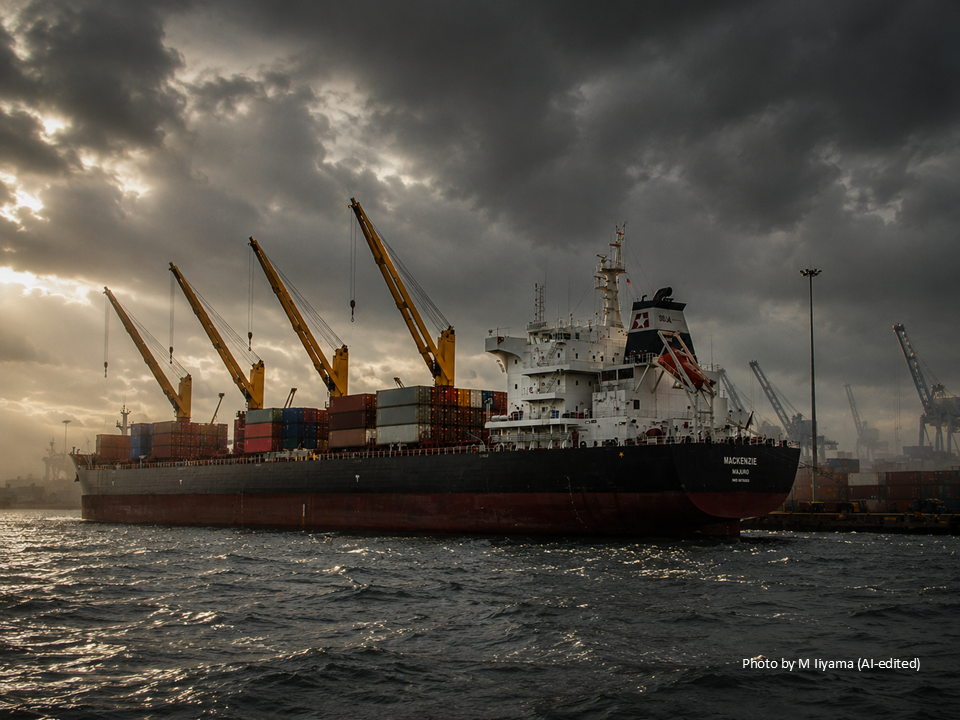
Particularly significant are the tensions surrounding the Strait of Hormuz, one of the world’s most critical routes for oil and natural gas transport. Following the escalation of conflict, oil prices surged by more than 60%, while natural gas prices more than doubled. Maritime freight costs and insurance premiums also increased substantially, placing upward pressure on overall energy and logistics costs.
UNCTAD expresses particular concern about the impacts on developing economies. Many developing countries rely heavily not only on imported fuel, but also on imported food and fertilizers. As a result, higher energy prices are expected to feed through into food prices via increased transportation and agricultural production costs, intensifying inflationary pressures.
The report notes that countries such as Bangladesh, Egypt, Pakistan, the Philippines, Sri Lanka, and Viet Nam have already introduced measures to manage rising fuel prices, including price controls and supply management policies. At the same time, weakening currencies and rising sovereign bond yields are increasing financial vulnerabilities, including the burden of foreign currency-denominated debt.
Global trade growth is also expected to slow considerably. Real merchandise trade growth in 2026 is projected to decline from 4.7% in 2025 to between 1.5% and 2.5%. UNCTAD warns that disruptions to maritime transport could affect not only energy markets but also broad international supply chains involving grains, fertilizers, and industrial products.
Meanwhile, AI-related sectors continue to support global trade activity. Demand for semiconductors, servers, and high-performance computing equipment remained strong, contributing to expanding trade flows across China, North America, Europe, and East Asia.
The report also emphasizes that the current crisis has reinforced the strategic importance of renewable energy investment. From the perspective of energy security, UNCTAD argues that reducing dependence on fossil fuels and accelerating investment in renewable energy, batteries, semiconductors, and other critical technologies will become increasingly important. However, investment remains highly uneven. Despite possessing some of the world’s best solar resources, Africa received only about 2% of global clean energy investment.
Overall, the report suggests that geopolitical risks can trigger cascading effects extending beyond energy markets to food security, financial stability, and developing economies more broadly. It also indicates that economic security and climate action are likely to become increasingly interconnected in the years ahead.
(Reference)
UNCTAD, Trade and Development Foresights 2026: Global economy faces a geopolitical challenge – An update to the Trade and Development Report 2025 (UNCTAD/GDS/2026/1), 13 May 2026.
https://unctad.org/news/global-economy-faces-new-test-trade-food-and-fi…
Contributor: IIYAMA Miyuki, Strategic Coordination Office