



Pick Up
1534. Strengthening El Niño and Rising Risks of Extreme Weather Worldwide
Related Research Program
Information
1534. Strengthening El Niño and Rising Risks of Extreme Weather Worldwide
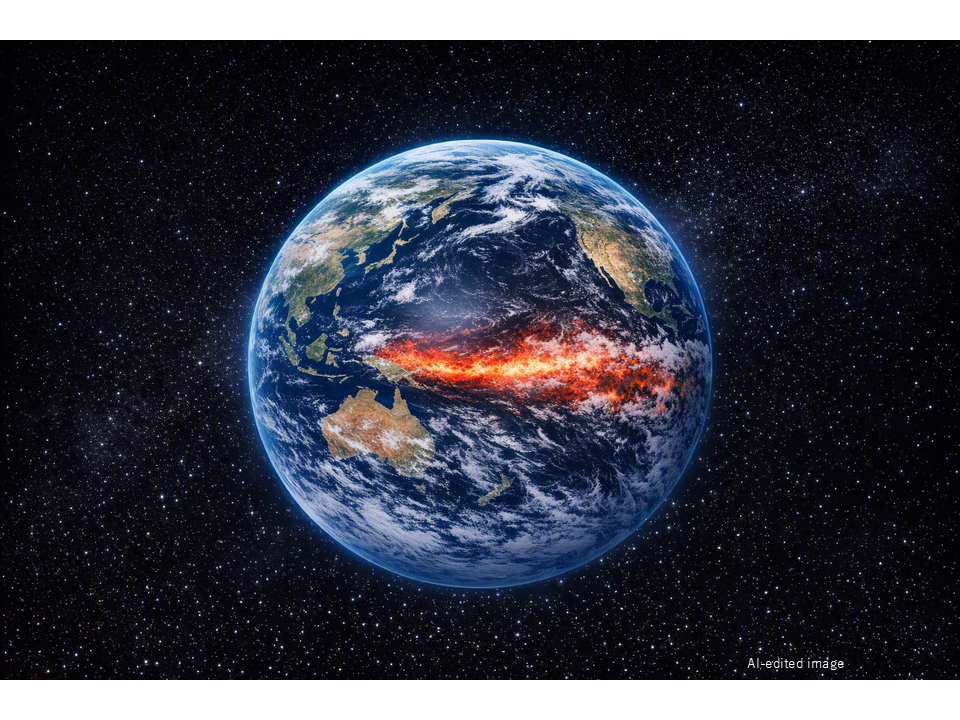
The World Meteorological Organization (WMO) has announced that El Niño conditions are developing in the tropical Pacific and that there is a high likelihood of a strong El Niño event emerging during the latter half of 2026. As a result, the risks of extreme weather events—including unusually high temperatures, droughts, and heavy rainfall—are expected to increase across many regions of the world. The WMO is urging governments to strengthen disaster risk reduction and climate adaptation measures through the use of seasonal forecasts and early warning systems.
According to the WMO’s "Global Seasonal Climate Update for July–September 2026," sea surface temperature anomalies in the central and eastern equatorial Pacific are projected to reach approximately 2°C during the July–September 2026 period, indicating the potential development of a strong El Niño event. Multiple climate models show similar projections, resulting in a high degree of confidence in the forecast. In addition, the report anticipates the development of a positive Indian Ocean Dipole (IOD) and the persistence of elevated sea surface temperatures in the tropical Atlantic. The combined influence of these oceanic conditions is expected to amplify climate impacts in various regions around the world.
The report further indicates a high probability of above-average temperatures across extensive areas, including North Africa, Southern Europe, the Arabian Peninsula, the Indian subcontinent, East Asia, Central America and the Caribbean, South America, and Southern Africa. Regarding precipitation, the forecast reflects the typical patterns associated with a strong El Niño event: below-average rainfall is expected in the Indian subcontinent, Australia, southern Central America, and the Horn of Africa, while above-average rainfall is projected for the eastern equatorial Pacific, western North America, the Gulf of Guinea coast, and Southern Europe.
These projected changes in temperature and precipitation patterns could have wide-ranging implications for water resource management, disaster preparedness, agriculture, and public health. It will therefore be important to closely monitor climate developments over the coming months and consider appropriate response measures across relevant sectors.
Reference
World Meteorological Organization (2026), Global Seasonal Climate Update for July–September 2026
https://wmo.int/media/update/global-seasonal-climate-update-july-august…
Contributor: IIYAMA Miyuki, Strategic Coordination Office