



Pick Up
1485. From JIRCAS Southeast Asia Liaison Office: Salted River Crab "Poo Khem"
1485. From JIRCAS Southeast Asia Liaison Office: Salted River Crab "Poo Khem"
We'll introduce "Poo Khem," salted river crab, from among Thai fermented foods.
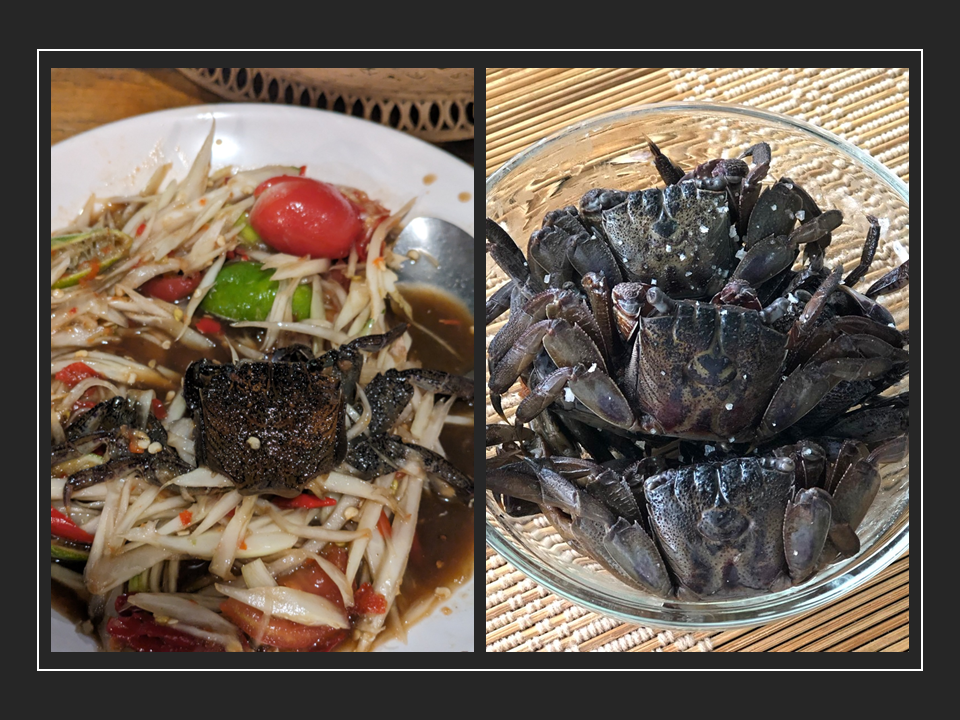
Poo (ปู) means crab. The salted river crab we're introducing this time refers to a small crab called Poo Na (ปูนา), which commonly lives in rice paddies and other similar environments.
Som Tum (green papaya salad) is a popular Thai dish in Japan. While it's usually seasoned with fish sauce (nam pla) when eaten in Japan, adding Poo Khem deepens the flavor and makes it much more delicious.
Som Tum, like in Thailand, uses green papaya. "Som" in Som Tum means sour in Thai, and "Tum" means to pound, so actually, you can put almost anything in Som Tum. The dish mainly consists of vegetables, but also includes seafood such as crab and shrimp, and sometimes sausages. Among these, the salted river crab (Poo Khem) is the most popular, and in Bangkok, you'll almost always find piles of salted river crabs at street stalls. A typical Som Tum Poo dish comes with about two crabs.
According to various sources, the crabs are generally not eaten because they are slightly crushed, allowing their essence and aroma to dissolve into the Som Tum sauce (many people also choose not to eat them for hygiene and safety reasons). However, when I actually tried them, the crab meat was sweet and delicious.
How to make Poo Khem
① Place live crabs in an earthenware pot.
② Add salt and mix well, then close the jar.
③ Let it ferment overnight.
*This fermentation process is said to involve Bacillus siamensis.
Ref.: Poo-khem (Database of Fermented Foods of Thailand)
https://www.jircas.go.jp/ja/database/thaifermented/poo-khem
Contributor: KANAMORI Norihito, Southeast Asia Liaison Office