




On February 9–10, 2026, an international workshop titled “Environmentally Adaptive Forestry Techniques for Southeast Asian Tree Species” was held in Yogyakarta, Indonesia. The workshop summarized the achievements of the medium- and long-term plan under the grant-funded project “Environmentally Adaptive Forestry.” Launched in fiscal year 2021, this project aims to develop technologies for the restoration of forest resources in tropical forests degraded by overharvesting and to establish methods for selecting tree species and varieties with enhanced environmental adaptability.
In addition to researchers from JIRCAS, the workshop was attended by researchers from partner institutions — the Royal Forest Department of Thailand, the Forest Research Institute Malaysia, and Gadjah Mada University. Fourteen presentations were given by researchers from these countries. Keynote lectures were also delivered by Professor IWATA Hiroyoshi (University of Tokyo), Dr. TAKATA Naoki (Forestry and Forest Products Research Institute), and Dr. Riina Jalonen (Bioversity International, now the Alliance of Bioversity International and CIAT), covering topics such as tree breeding, wood properties, and biodiversity, repectively.
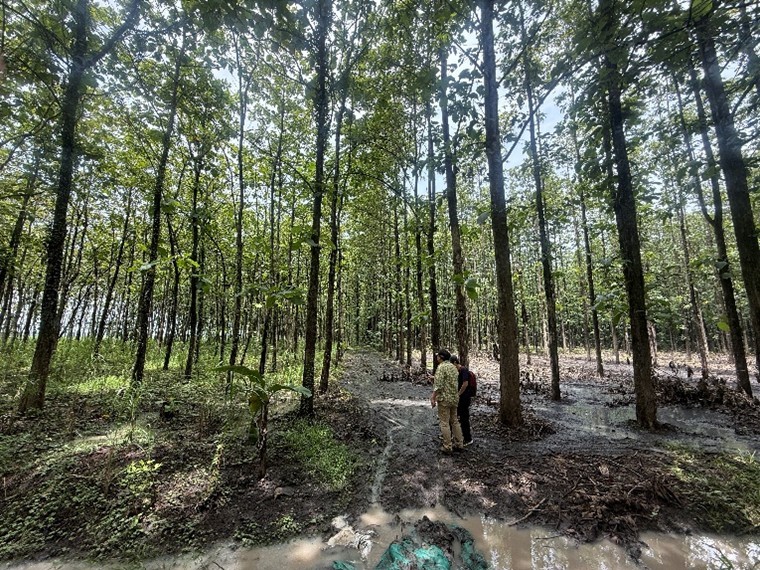
A copy of JIRCAS Working Report No. 97, which compiles the results of this project, was also presented to promote dissemination of the research outcomes. During the excursion, participants visited a clonal teak plantation (Super Teak) and progeny test plots, deepening their understanding of clonal forest characteristics such as growth performance and differences in undergrowth vegetation.
Building on these results, JIRCAS will continue to promote related research activities aimed at realizing sustainable forestry in Southeast Asia, taking into account climate change adaptation and future research directions.
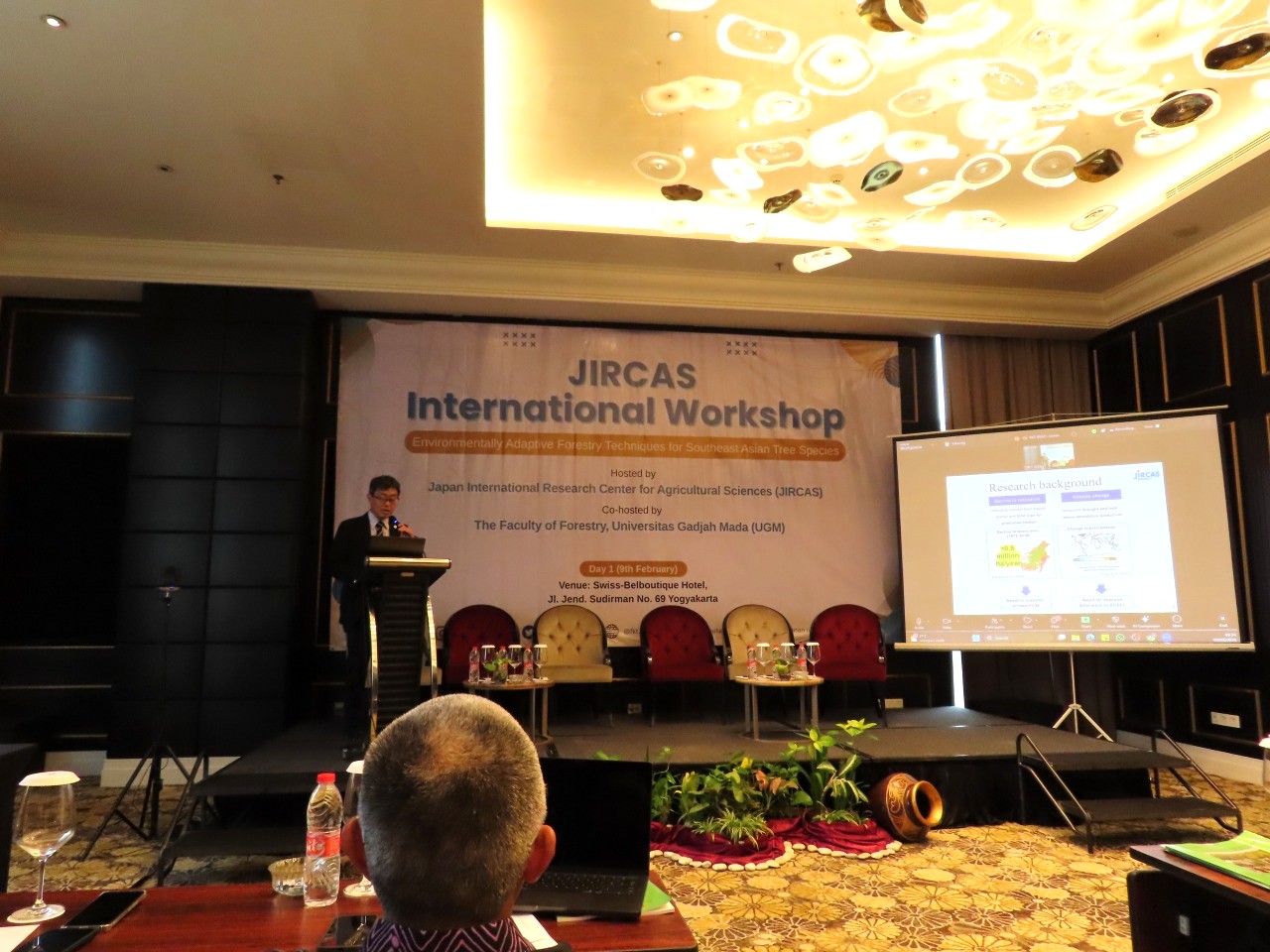
Project overview by Forestry Division Director ABE Hisashi
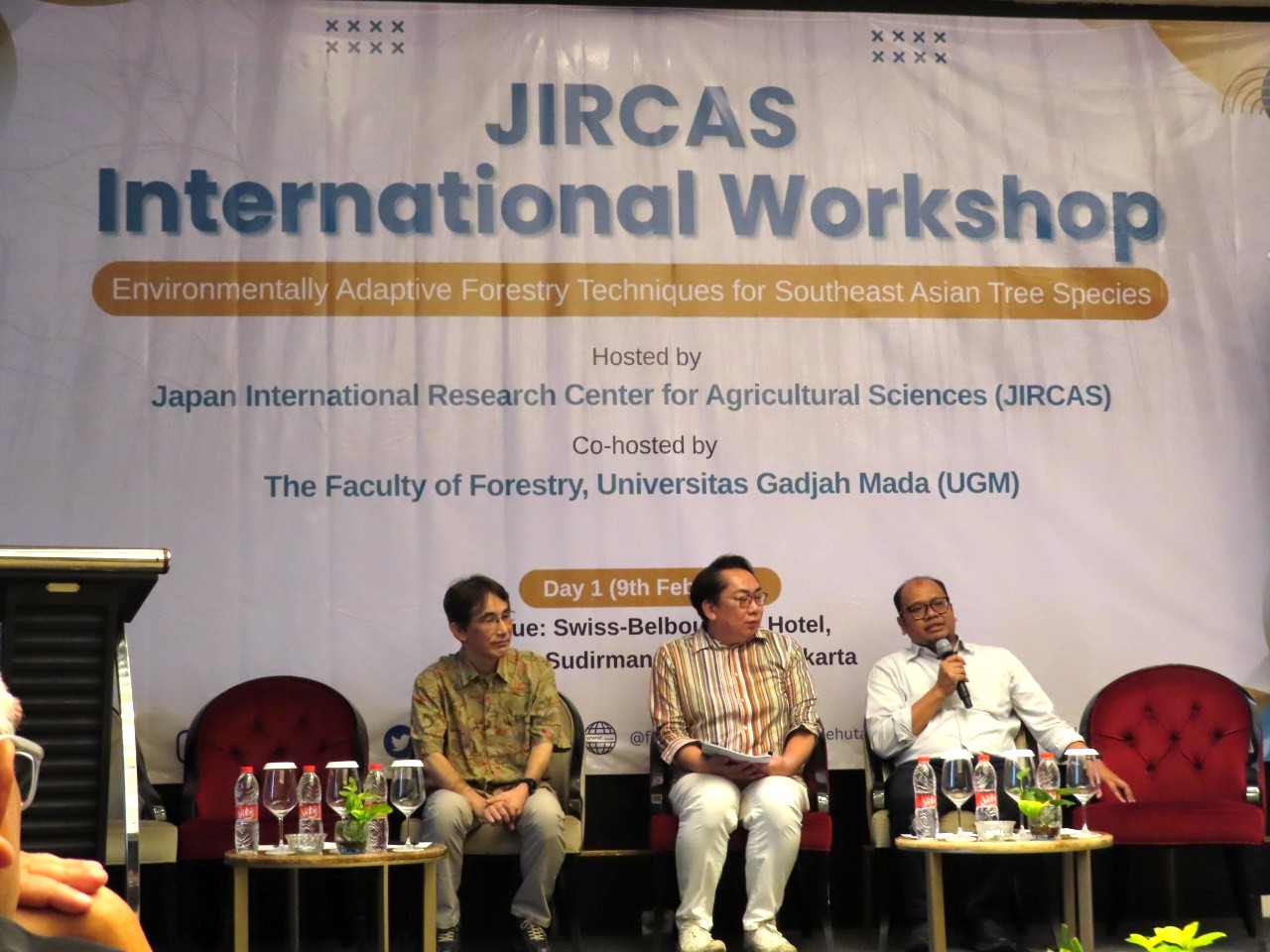
General discussion
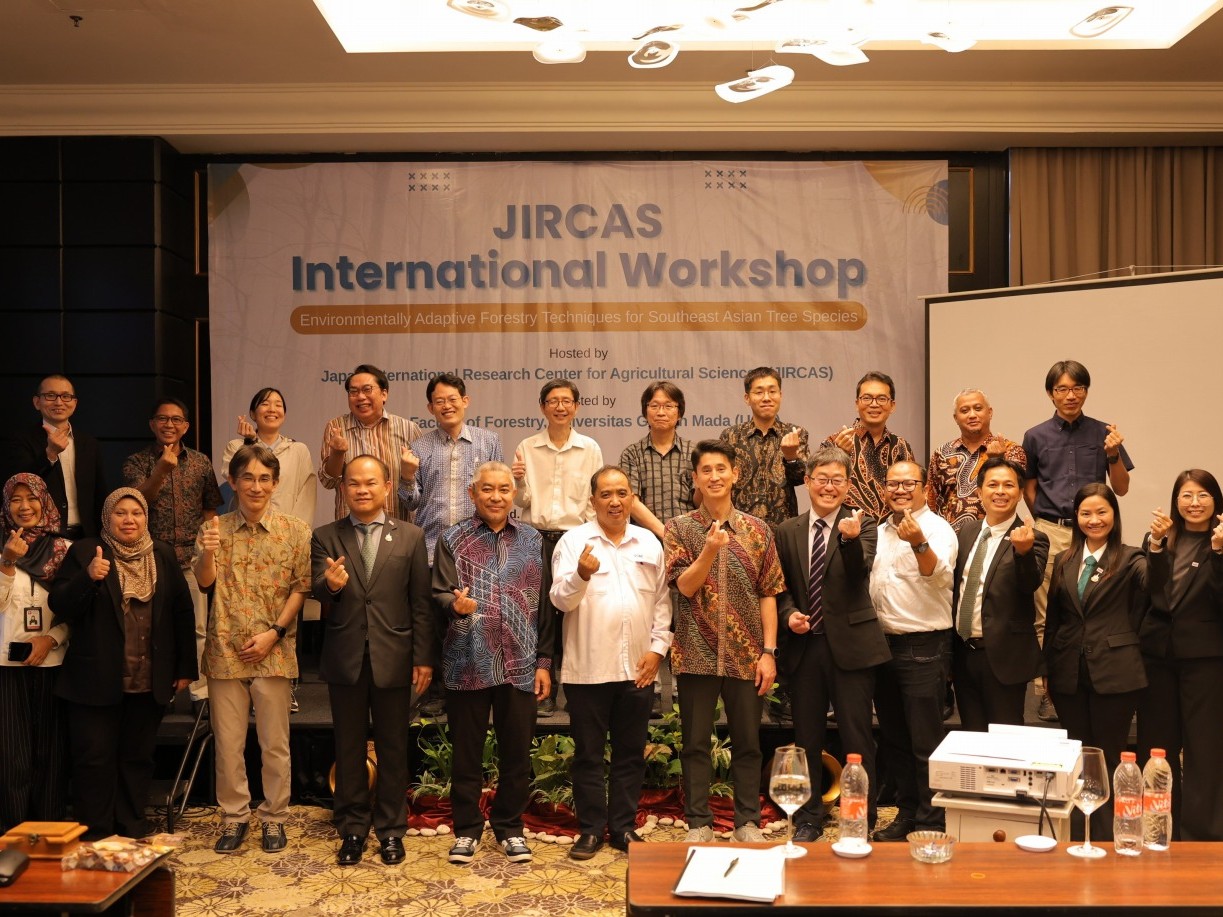
Group photo of participants
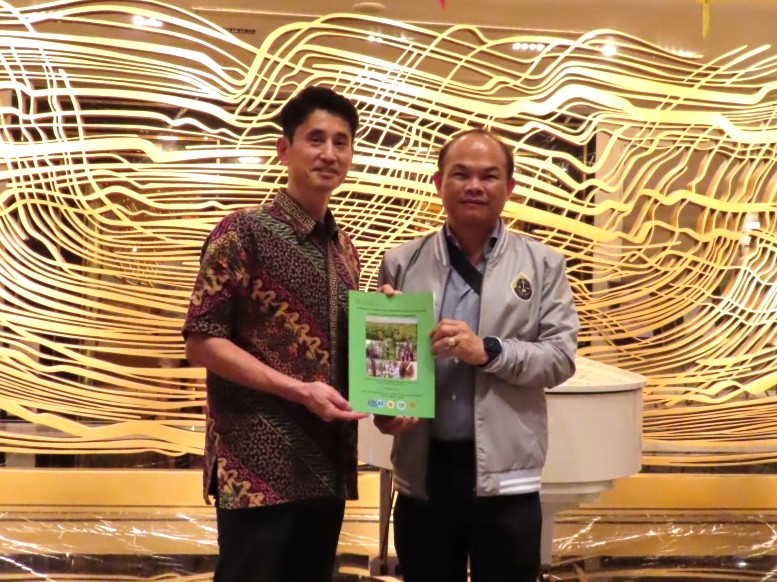
Handover of JIRCAS Working Report summarizing the results