



Pick Up
1438. Ocean Warming Exacerbates Tropical Coral Bleaching
Related Research Program
Information
1438. Ocean Warming Exacerbates Tropical Coral Bleaching
Ocean warming is increasing the frequency, extent, and severity of tropical coral bleaching and mortality.
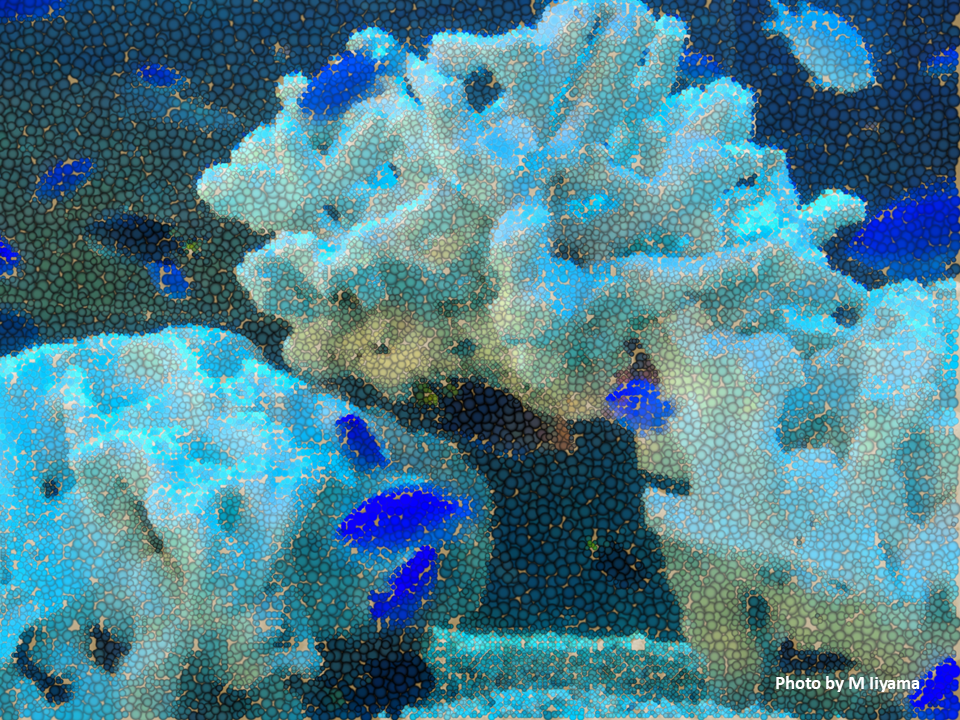
Before the 1980s, large-scale coral bleaching and mortality due to heat stress were rare. Over the past 40 years, these events have become increasingly frequent and severe. Ocean warming is currently the greatest threat to coral reefs worldwide, with repeated, intense marine heatwaves causing large-scale coral bleaching on both regional and global scales. Coral bleaching occurs when the relationship between corals and their photosynthetic symbionts is disrupted. Bleached corals become physiologically damaged, their nutritional status declines, and, if the bleaching is severe or prolonged, they may die.
From June 2014 to May 2017, coral bleaching occurred on coral reefs around the world. At the time, this event was the most severe global heat stress event recorded in coral reef ecosystems, surpassing the two global coral bleaching events recorded in 1998 and 2010. Furthermore, the 2014-2017 event marked the first recorded global coral bleaching event that lasted much longer than a year. Numerous studies have demonstrated that this event had the most severe impacts on record, with locally severe effects observed across coral reefs worldwide.
A paper published in Nature Communications analyzed data from 15,066 coral reef surveys conducted worldwide between 2014 and 2017 to assess the thermal stress that affected coral reefs and the resulting bleaching and mortality. The researchers then derived statistical relationships between remotely sensed thermal stress and on-site surveys of global coral bleaching and mortality. These relationships were then used to estimate the global impact of large-scale coral bleaching, taking into account the actual distribution of thermal stress across the world's coral reefs. While temperature sensitivity to bleaching and survival varied significantly across years and basins, overall, it is estimated that more than half of the world's coral reefs experienced moderate to severe bleaching, and 15% experienced moderate to severe mortality. In 2016, more than 15% of the world's coral reefs reached heat stress, including parts of the tropical Pacific, Indo-Pacific, and Northwestern Hawaiian Islands. Surveys conducted in these regions showed that most reefs experienced rapid and severe mortality of many coral species. This heat stress correlated with a very high probability of moderate bleaching, a greater than 50% probability of severe bleaching, and a greater than 50% probability of moderate mortality.
The Third Global Coral Bleaching Event, which occurred from 2014 to 2017, was more widespread and devastating than any other bleaching event in recorded history. This highlights the threat to coral reefs from increasingly severe and widespread marine heatwaves, which exceed the physiological capacity of corals to withstand heat stress. The magnitude, frequency, and severity of marine heatwaves on coral reefs and elsewhere are predicted to worsen.
The paper states that the Fourth Global Coral Bleaching Event is currently underway, and that observed impacts may be similar to or even greater than those observed from 2014 to 2017. One consequence of more frequent bleaching events is a shortened recovery time for corals and ecosystems, resulting in a deterioration of coral reef structure. The paper notes that coral reefs are a critical component of ecosystems that protect coastlines from wave flooding and erosion and provide food, medicine, cultural identity, and livelihoods for more than one billion people, and calls for their urgent protection.
(Reference)
Eakin, C.M., Heron, S.F., Connolly, S.R. et al. Severe and widespread coral reef damage during the 2014-2017 Global Coral Bleaching Event. Nat Commun 17, 1318 (2026). https://doi.org/10.1038/s41467-025-67506-w
Contributor: IIYAMA Miyuki, Information Program