



Pick Up
1410. Topics to Follow in 2026
Related Research Program
Information
1410. Topics to Follow in 2026
2026 has begun. Our first Pick Up of the year will introduce the International Years and upcoming international events.
First, 2026 will be designated by the United Nations as the "International Year of Volunteers for Sustainable Development." It will also be the "International Year of Rangelands and Pastoralists" and the "International Year of the Woman Farmer," both of which are related to agriculture, forestry, and fisheries, shedding light on essential yet often overlooked contributors to sustainable development.
International Year of Rangelands and Pastoralists
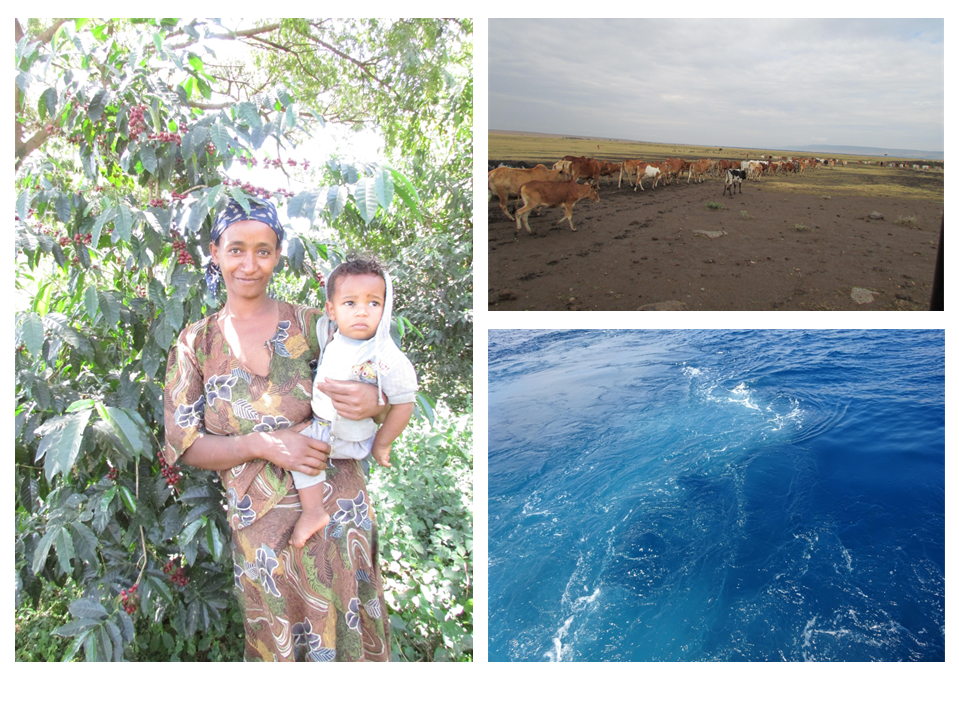
Rangelands—including ecosystems such as grasslands, savannas, shrublands, deserts, wetlands, and mountains—cover approximately half of the Earth's land surface, conserving native flora and fauna, providing vital services such as carbon storage and water regulation, and supporting the livelihoods, nutrition, and cultural identity of millions of pastoralists. Pastoralists manage approximately one billion animals worldwide, from sheep and goats to cattle, camelids, yaks, horses, reindeer, and buffalo, contributing to food security while safeguarding ecosystems, cultural heritage, and local and indigenous knowledge. However, these ecosystems are under increasing pressure from drought, floods, and other climate change impacts, land degradation, animal diseases, and competing land uses, limiting pastoralists' mobility and threatening their way of life. For example, pastures account for approximately 30% of the world's soil organic carbon stocks, yet approximately half of them are estimated to be degraded. This International Year prioritizes political, technical, and financial commitments to ensuring pastoralist communities' access to and governance rights to pastoralist areas, sustainable pasture management, strengthening value chains, and restoring degraded ecosystems.
International Year of the Woman Farmer
Women are central to agri-food systems, from production and processing to trade and innovation. Women make up a large proportion of the global agricultural workforce and are integral to the entire agri-food value chain, from production and processing to distribution and trade, playing a central role in household food security and nutrition. In 2021, women accounted for nearly 40% of agri-food system workers, about as numerous as men. Despite this, women's contributions remain undervalued, and their working conditions are often more precarious. Employment is often irregular, informal, part-time, low-wage, labor-intensive, and highly vulnerable. Women continue to face systemic barriers in accessing land, capital, technology, education, extension services, and participation in decision-making at all levels. The International Year of Women in Agriculture will catalyze action to close gender gaps, improve access to resources and services, and support women's leadership in agri-food systems.
2026 will also see significant international events.
First, this January, the so-called High Seas Treaty, the first agreement to protect wildlife in the high seas, the only area not regulated by international law, will enter into force. The official name is the Agreement under the United Nations Convention on the Law of the Sea on the Conservation and Sustainable Use of Marine Biological Diversity of Areas Beyond National Jurisdiction (abbreviated as the BBNJ Agreement)). This agreement came into force on June 19, 2023. The BBNJ Agreement, adopted by 193 UN Member States, achieved the required 60 ratifications on September 20, 2025, and is set to enter into force on January 17, 2026. Covering two-thirds of the world's oceans beyond national borders, the Agreement aims to establish legally binding rules for the conservation and sustainable use of marine biodiversity, the equitable sharing of benefits from marine genetic resources, the establishment of protected areas, and the strengthening of scientific cooperation and capacity building. The BBNJ Agreement provides an international framework for the sustainable use of oceans and the conservation of biodiversity, and is expected to have a significant impact on future ocean policy.
In addition, the 2026 United Nations Water Conference, co-hosted by Senegal and the United Arab Emirates (UAE) from December 2 to 4, will discuss the timeline for achieving Sustainable Development Goal (SDG) 6, "Water and Sanitation," by 2030.
With regard to international rule-making events such as these, the actions of major powers will have an impact on the progress of multilateral discussions. COP 31, the Conference of the Parties to the United Nations Framework Convention on Climate Change, is scheduled to be held in Antalya, Turkey from November 9 to 20. COP 30, held last year in Belém, Brazil, was the first conference at which the United States did not send a top-level delegation, and uncertainty remains about the role the United States will play in climate change and environmental diplomacy in 2026 and beyond.
Contributor: IIYAMA Miyuki, Information Program