



Pick Up
1397. UN Food Systems Coordination Hub Highlights JIRCAS and NARO as "Japan's Innovation Engine"
Related Research Program
Information
1397. UN Food Systems Coordination Hub Highlights JIRCAS and NARO as "Japan's Innovation Engine"
On November 28, 2025, the official website of the UN Food Systems Coordination Hub, which was established within FAO as a follow-up mechanism of the 2021 United Nations Food Systems Summit (UNFSS), published an online article introducing the Japan International Research Center for Agricultural Sciences (JIRCAS) and the National Agriculture and Food Research Organization (NARO) as "Japan's Innovation Engine" driving Japan-originated agricultural research innovations.
The article, "Japan's Innovation Engine: How JIRCAS and NARO Are Shaping the Future of Sustainable Food Systems," highlights the important role that Japanese research institutions, particularly JIRCAS and NARO, play in the transition to a sustainable food system, both internationally and domestically.
The article featured JIRCAS's "Technology Catalog Contributing to Production Potential and Sustainability in the Asia-Monsoon Region (Version 4.0)," which was created as part of the Green Asia Project. The article praised the organization for collaborating with relevant countries to identify and disseminate information on sustainable agricultural, forestry, and fisheries technologies suited to the Asia-Monsoon Region. The article also noted that the catalog contributes to the transformation of food systems throughout the region through the sharing of technologies currently in the demonstration and deployment stages, in collaboration with international frameworks such as the ASEAN-Japan MIDORI Cooperation Plan.
The article further noted that "Japan provides a model for effectively connecting national research systems with regional and global platforms," demonstrating that Japan's efforts are worthy of international recognition.
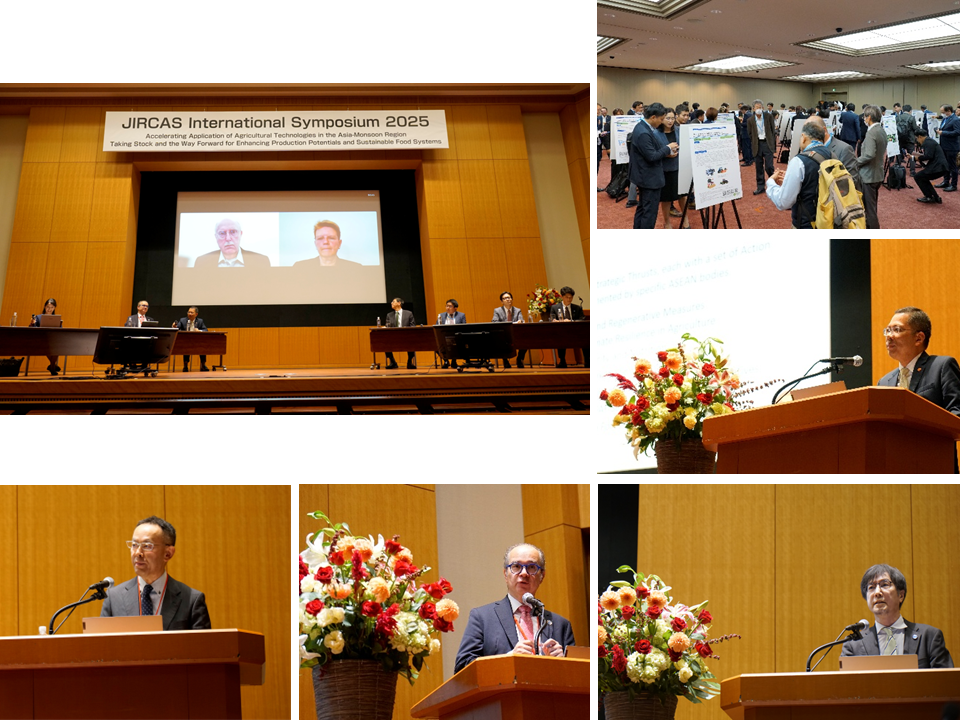
At the "JIRCAS International Symposium 2025: Accelerating Application of Agricultural Technologies in the Asia-Monsoon Region: Taking Stock and the Way Forward for Enhancing Production Potentials and Sustainable Food Systems," held on October 27, 2025, at Hitotsubashi Hall in Tokyo, results from the Green Asia Project were shared. The symposium also served as an opportunity to strengthen partnerships with research institutes and international organizations, promoting dialogues and collaboration toward building sustainable food systems in the Asia-Monsoon region.
This communication by the UN Food Systems Coordination Hub demonstrates to the international community that Japanese agricultural, forestry, and fisheries research is contributing to the realization of sustainable food systems by linking it with domestic and international policy dialogue and on-site implementation. It also marks an important step in raising the international presence of related Japanese research institutions. Going forward, JIRCAS will continue to contribute to food system transformation through science and innovation in collaboration with research institutions and related partners both in Japan and abroad.
Contributors: FUNAKI Yasuro (Social Sciences Division) and OMORI Keisuke (Information and Public Relations Office)