



Pick Up
1531. Cassava Breeding and Flowering Induction
Related Research Program
Information
1531. Cassava Breeding and Flowering Induction
Cassava is one of the world's most important root crops, alongside potato and sweet potato. In tropical and subtropical regions, it serves as a staple food for approximately 800 million people. In recent years, starch derived from cassava roots has also become increasingly important for both food and industrial applications. Tapioca starch, produced from cassava, is colorless, odorless, and characterized by its unique chewy and elastic texture. In fact, it is widely used in a variety of foods and dishes in Japan as well. Beyond the tapioca pearl drinks that once sparked a major consumer boom, cassava starch contributes to the elasticity and chewiness of frozen udon and other noodle products, as well as to the distinctive texture of pão de queijo and similar chewy breads commonly sold in convenience stores and doughnut shops. In addition, cassava starch is highly valued as an industrial raw material for products such as paper, adhesives, and bioethanol. Despite its global importance, however, cassava is rarely cultivated in Japan, and domestic demand depends largely on imports from Southeast Asia (Tokunaga, 2024).
In Thailand, cassava is a vital agricultural product, second only to rice and sugarcane. Thailand is one of the world's leading producers, with an annual production of approximately 30 million tons, much of which is used for processing into starch, animal feed, and bioethanol raw materials. In recent years, the spread of cassava mosaic disease and the effects of climate change have led to production instability, making the development of resistant varieties and the establishment of productivity-enhancing technologies crucial.
The Rayong Field Crops Research Center (RYFCRC), located in Rayong Province in eastern Thailand, is a research institution under the Department of Agriculture (DOA) of Thailand and a core hub for research, breeding, and technology dissemination of field crops, primarily cassava. Since the 1970s, the center has been actively engaged in cassava breeding, developing many major varieties, including "Rayong 1," "Rayong 5," and "Rayong 60." Currently, research continues on genetic resource preservation, variety improvement, tissue culture, and disease resistance studies.
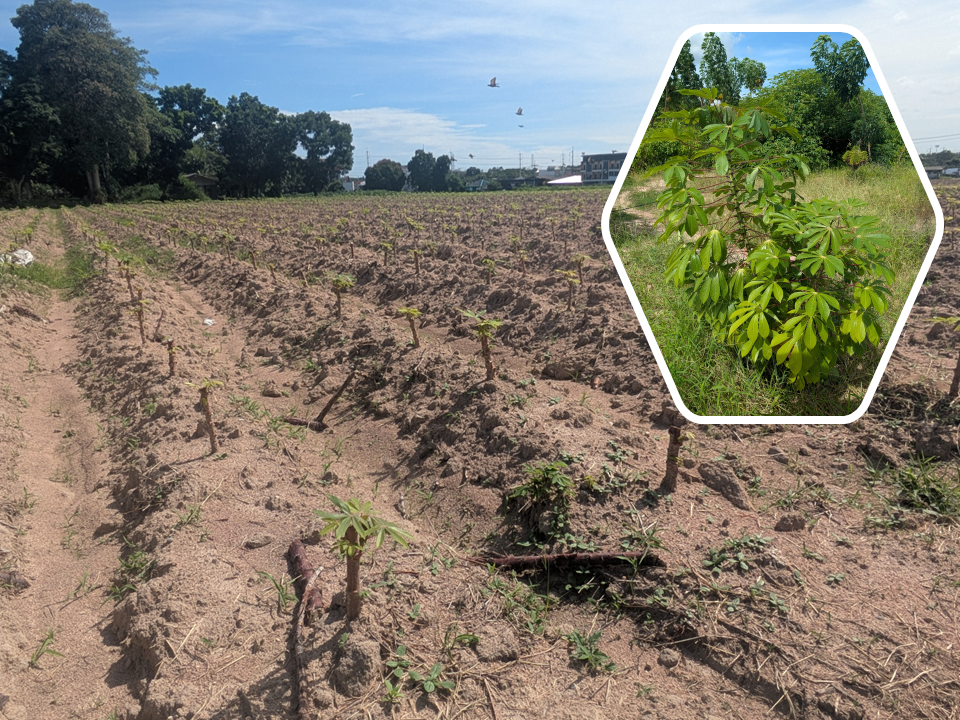
Cassava is not cultivated by sowing seeds, but by planting a portion of the stem in the soil. Because it does not require seeds, many currently cultivated cassava varieties do not flower. Flowering is essential for crossbreeding to develop new varieties, but this remains a challenge in breeding. To address these challenges, JIRCAS and RYFCRC plan to collaborate on the development of technologies to promote flowering and regulate flowering time in cassava, utilizing multiple approaches including plant hormone treatments, night lighting, and grafting.
Contributor: KANAMORI Norihito, Southeast Asia Liaison Office