



Pick Up
1461. The Mechanism of Flowering
Related Research Program
Information

1461. The Mechanism of Flowering
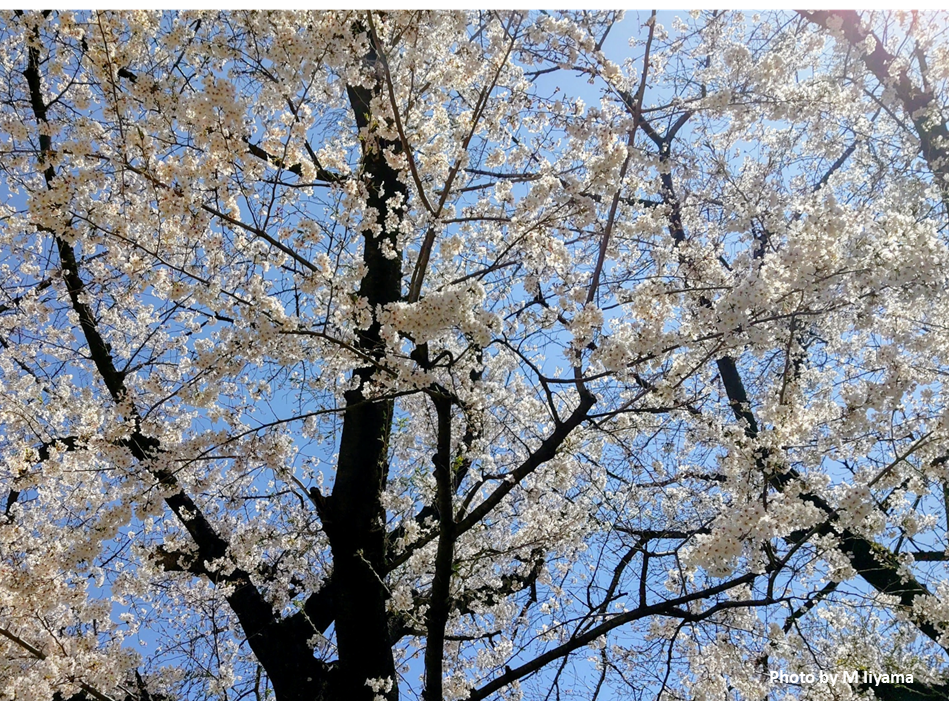
Since last week, cherry blossoms have begun to bloom in various parts of Japan. While flowering signals the arrival of spring, it is actually controlled by intricate physiological mechanisms. This article introduces research on the mechanism of flowering based on genetics and physiology, based on a review paper recently published in the journal Plant Physiology.
Flowering is a crucial developmental stage in the plant life cycle. The appropriate timing of this process greatly influences the success of reproduction, and therefore has been considered extremely important in plant breeding. Various pollination strategies have evolved to ensure successful pollination, synchronizing flowering times with pollinators and enabling sexual reproduction under favorable external conditions. However, as environmental conditions change, the key factors influencing flowering timing also change. Flowering is the last line of defense against severe stresses such as high temperatures and drought, as it increases seed viability.
Each plant species has developed distinct and intrinsic requirements for environmental and endogenous signals to induce flowering. Initially, this diversity of requirements was thought to reflect the action of different molecular mechanisms, and early research focused on flowering physiology, namely the generation of signaling pathways from the leaves to the apex and changes in the reproductive capacity of the meristem. However, genetic and molecular biological analyses of the model plant Arabidopsis thaliana have revealed that the network of environmental and endogenous signal input pathways converges and controls a common set of flowering pathway integrating factors. Arabidopsis thaliana mutants with altered flowering timing have revealed an integrated pathway network of environmental and endogenous factors. These converge to quantitatively control the expression of flower bud formation pathway integrators, and when expression exceeds a certain threshold, the transition to flowering is triggered. Changes in the dominance of different input pathways within the network can create the diversity of requirements observed across species. This provided a conceptual framework to explain the diversity of physiological requirements in different species. Since then, significant progress has been made in elucidating flowering mechanisms in other species, such as rice, wheat, and model temperate grasses.
Variation in flowering time is one of the important traits in crop domestication. The current cultivation areas of many crop species are often very far from their places of origin. Therefore, many aspects of the biological characteristics of crops have been improved to accommodate latitudinal expansion. Traits such as growth habits (annual, biennial, perennial), adaptability to high-density monoculture, and stem structure have been modified by breeders' selection aimed at increasing yield. In early domestication, it is likely that predictability of flowering time and increased yield through maximizing the growing period were selected, perhaps unconsciously. The subsequent expansion of crop distribution required regional adaptation of crops to new environmental conditions, leading to the selection of extreme phenotypes within different cultivars of the same species. Examples include short life cycles to meet strict crop rotation requirements and significant delays in bolting (the process by which plants form flower buds and eventually flower) to increase the size of storage organs.
Currently, attention is focused on the mechanistic analysis of the function of flowering time genes and their changes during adaptation processes, which is expected to be useful in breeding strategies for climate change-resistant crops. Comparing genes supporting natural diversity in Arabidopsis thaliana and its close relatives with genes selected during the domestication process of major crops reveals that crop domestication has utilized a small number of loci with reduced allelic diversity. Perhaps nature diversifies risk by maintaining high variability within populations, while crop domestication prioritizes predictability over maximizing plant fitness under fluctuating environmental conditions.
The discovery that flowering time regulators are involved in many other plant developmental pathways highlights the importance of a deep understanding of flowering-related processes in food crops. The application of omics tools to generate all kinds of data, and improved capabilities to analyze such datasets, have enabled plant breeders to identify key loci and allele mutations that should ultimately be bred. Researchers aim to identify flowering pathway integrators across various crops that could potentially function as breeding targets. This opens up possibilities for designing strategies for optimal flowering and fruit and seed production even under unfavorable growing conditions, maximizing yield and quality potential, and developing resilient crops with minimal trade-offs.
(Reference)
Maple R, et al. (2024) Flowering time: From physiology, through genetics to mechanism. Plant Physiology, Volume 195, Issue 1, May 2024, Pages 190–212, https://doi.org/10.1093/plphys/kiae109
Contributor: IIYAMA Miyuki, Information Program