



Pick Up
1522. Call for Integrating Indirect Greenhouse Gases into Climate Policy Frameworks
Related Research Program
Information

1522. Call for Integrating Indirect Greenhouse Gases into Climate Policy Frameworks
Current international climate policies are primarily structured around the set of greenhouse gases established under the Kyoto Protocol. However, this framework does not sufficiently account for “indirect greenhouse gases” (iGHGs), which contribute to warming through atmospheric chemical processes.
A policy article published in Science underscores the significance of these overlooked substances and calls for their integration into existing climate policy and emissions accounting systems. The authors demonstrate that emissions of carbon monoxide (CO), non-methane volatile organic compounds (NMVOCs), nitrogen oxides (NOx), and hydrogen (H₂) can influence climate by driving atmospheric reactions that alter concentrations of greenhouse gases. They argue that incorporating these species into climate strategies could reveal additional mitigation opportunities.
According to the authors, approximately 15% of the total temperature increase since pre-industrial times—equivalent to about 0.3°C—is attributable to factors outside the conventional greenhouse gas framework. Notably, around 80% of this “beyond-the-basket” warming is driven by iGHGs.
The paper focuses on four major iGHGs: carbon monoxide (CO), non-methane volatile organic compounds (NMVOCs), nitrogen oxides (NOx), and molecular hydrogen (H₂). While these substances do not exert strong direct radiative forcing, they affect the climate through several indirect pathways, including the formation of tropospheric ozone (O₃), changes in the atmospheric lifetime of methane (CH₄), and secondary production of carbon dioxide (CO₂).
The authors estimate that emissions of CO and NMVOCs together may contribute approximately +0.25°C to global warming—exceeding the contribution from nitrous oxide (N₂O), a major greenhouse gas included in the Kyoto basket, which is estimated at about +0.11°C. Additionally, CO, NMVOCs, and NOx are key precursors of tropospheric ozone, while CO and NMVOCs can prolong the lifetime of methane by reducing the availability of atmospheric oxidants.
The study also points out emerging risks in the context of energy transitions. For instance, expanded use of hydrogen could introduce additional warming if leakage and emissions are not adequately controlled, due to its indirect effects on atmospheric chemistry.
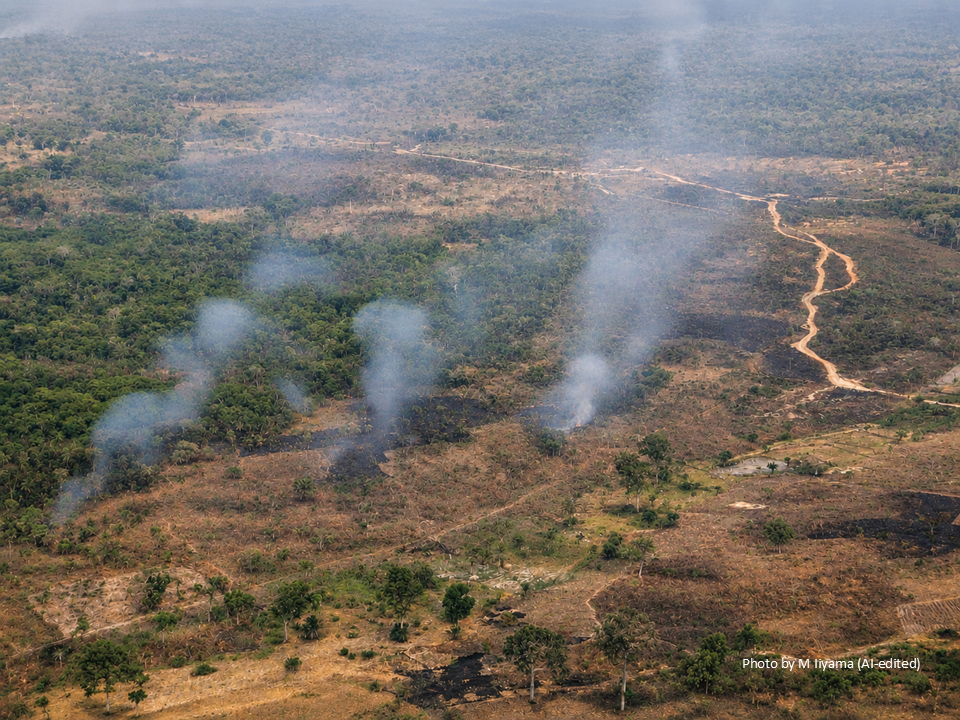
Furthermore, tropospheric ozone—formed partly through iGHG emissions—not only contributes to global warming but is also a major air pollutant linked to adverse health impacts and reduced crop yields. This overlap reinforces the need to integrate climate and air quality policies, as coordinated strategies could deliver both environmental and societal benefits.
To address these gaps, the authors recommend incorporating iGHGs into climate frameworks across multiple domains. These include policy design (e.g., inclusion in Nationally Determined Contributions, or NDCs), emissions inventories, and research efforts. They also stress the importance of enhancing coordination between climate and air pollution governance, and improving understanding of emissions sources, including those from agriculture and land use.
The paper is a policy-oriented perspective that synthesizes existing research and IPCC assessments rather than presenting new observational data. The authors note that significant uncertainties remain, as the climate impacts of iGHGs vary depending on factors such as geographic location, atmospheric chemistry, and seasonal conditions. They call for further observational studies, model development, and improvements in emissions accounting methodologies to refine understanding and support more effective climate action.
Reference:
Ocko, I. et al. (2026). Integrating indirect greenhouse gases into climate frameworks. Science.
DOI: 10.1126/science.aee5790
Contributor: IIYAMA Miyuki, Strategic Coordination Office