



Pick Up
1496. Tropical Rainforest Loss Temporarily Slowed in 2025 – Yet Wildfires Are Expanding Worldwide and Regional Challenges Persist
Related Research Program
Information
1496. Tropical Rainforest Loss Temporarily Slowed in 2025
– Yet Wildfires Are Expanding Worldwide and Regional Challenges Persist
According to the latest analysis released by the World Resources Institute (WRI), global loss of primary tropical rainforests declined in 2025 compared to the previous year. At the same time, the growing threat of forest fires and regionally distinct drivers of forest loss are becoming clearer, underscoring that the situation facing the world’s forests remains serious.
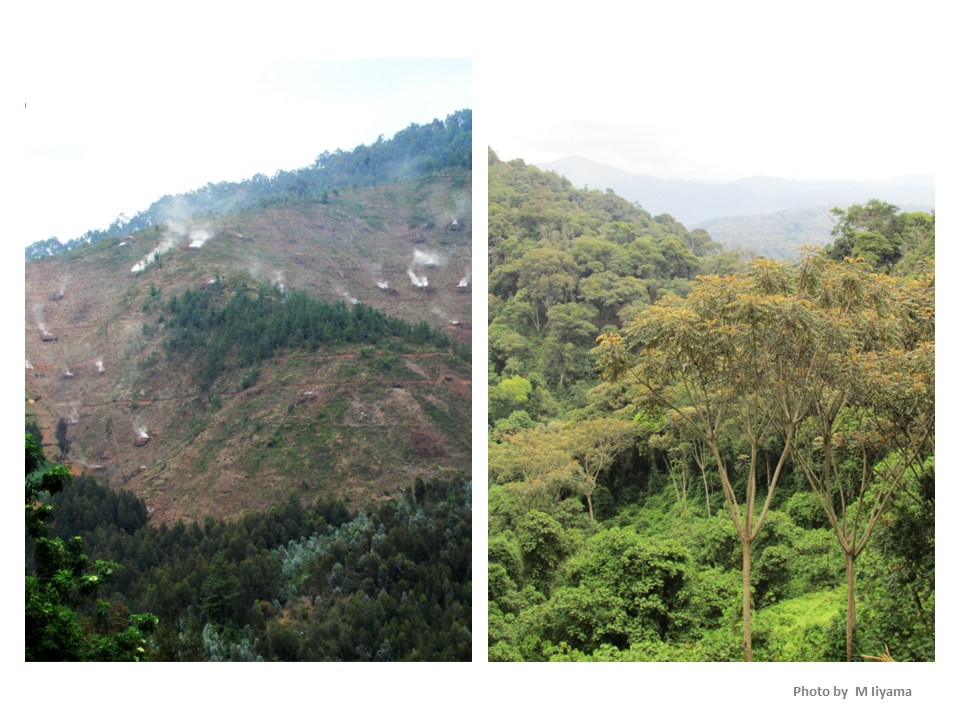
WRI’s Forest Pulse, compiled using the latest satellite data from university research institutions, shows that tropical primary forest loss in 2025 declined by 36% year over year. After record-breaking losses driven by extreme forest fires in 2024, this reduction represents a temporary improvement. Nevertheless, approximately 4.3 million hectares of tropical primary forest were still lost in 2025 — equivalent to more than 11 soccer fields per minute. From a long-term perspective, forest loss remains at a high level.
WRI emphasizes that forests provide essential ecosystem services that support human livelihoods, including biodiversity conservation, water regulation, carbon absorption and storage, and the supply of food and medicinal resources. Continued loss of primary forests therefore poses serious risks to climate change mitigation efforts and ecosystem stability.
Data from 2025 indicate that reduced forest loss in several countries, particularly Brazil, contributed to the overall decline. According to WRI’s analysis, Brazil achieved a significant year-on-year reduction in primary forest loss. However, due to the sheer scale of its forest area, Brazil still recorded the largest absolute loss of tropical rainforest globally. Elsewhere, Colombia, Indonesia, and Malaysia showed relatively stable trends compared with recent years, while high levels of forest loss persisted in countries such as Bolivia and the Democratic Republic of the Congo.
WRI further notes that in parts of Africa and Asia, forest loss is strongly driven not only by commercial agricultural expansion, but also by subsistence farming, reliance on fuelwood and charcoal, and pressures linked to poverty and population growth. These factors are closely intertwined with governance challenges and broader economic conditions, creating persistent structural drivers of deforestation.
Agricultural expansion continues to be the leading cause of forest loss. According to WRI, this includes both large-scale commercial production — such as soy, cattle, and palm oil — and small-scale farming for household subsistence. In recent years, forest fires have become an especially severe driver of forest loss. Over the past three years, fire-related forest loss has more than doubled compared with levels two decades ago, with climate change intensifying fire risks through rising temperatures and prolonged droughts.
WRI also highlights that large-scale forest fires occurred in temperate and boreal regions, including North America and Europe, in 2025. In Canada in particular, vast areas of forest were burned, with serious consequences for people’s livelihoods and health. Because fire occurrence varies greatly depending on weather conditions and satellite detection can be delayed by smoke and haze, accurately assessing fire-related forest loss remains a challenge.
WRI warns that, compared with the global goal of halting and reversing forest loss by 2030, deforestation levels in 2025 remain far above what would be required to achieve that target. If forest loss continues at current rates, the risk of crossing irreversible ecological tipping points will increase, accelerating climate change impacts and biodiversity loss.
This WRI analysis shows that stronger policies and improved forest governance can lead to meaningful reductions in forest loss. At the same time, it underscores the growing threats posed by climate change and rising global demand for land and resources. The future of the world’s forests will be shaped by decisions and actions taken over the coming years. Understanding forest trends and maintaining public attention are essential steps toward a sustainable future.
(Reference)
“Tropical Rainforest Loss Slowed in 2025, but Fire Is a Growing Threat to Forests Worldwide.” Global Forest Review, updated April 29, 2026. Washington, DC: World Resources Institute.
Available online at: https://research.wri.org/gfr/latest-analysis-deforestation-trends
Contributor: IIYAMA Miyuki, Strategic Coordination Office