



Pick Up
1472. Socio-Economic Pathways Supporting the Transformation of Sustainable Food Systems: Insights from a Systematic Review
Related Research Program
Information



1472. Socio-Economic Pathways Supporting the Transformation of Sustainable Food Systems: Insights from a Systematic Review
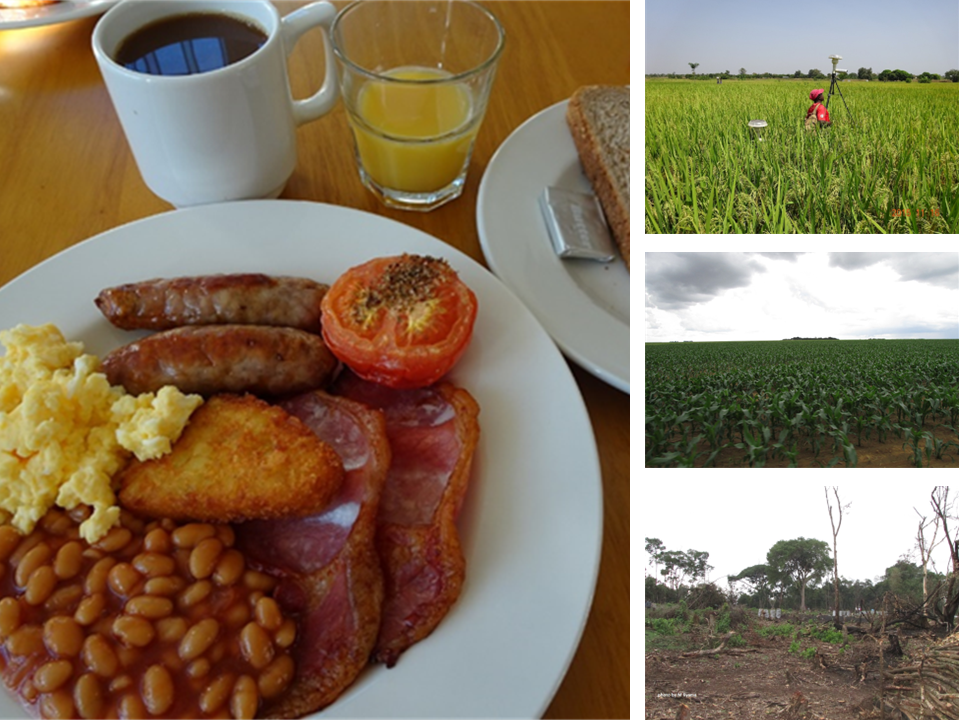
Discussions on the sustainable transformation of food systems have intensified in recent years, but their implementation is strongly affected by socio-economic conditions. A paper published in Nature Food systematically reviewed more than 1,700 relevant articles, selecting 349 for detailed review to analyze the role of socio-economic factors across different regional contexts.
The analysis identified seven key areas for transforming food systems sustainably: soil and land resource health, precision agriculture, dietary changes and adoption of novel foods, nutrition and health, food loss and waste reduction, freshwater and marine ecosystem conservation, and climate change mitigation and biodiversity conservation. Socio-economic factors affecting these transformations include networks and values, demographic characteristics (gender, age, household composition), education and information, income and prices, policy and institutions, and infrastructure. Among these, income and prices were shown to be particularly influential for both producer adoption and consumer behavior.
Regionally, studies in Europe and Oceania focus on dietary changes, reflecting high meat consumption and obesity concerns. In contrast, research in Asia and North Africa emphasizes precision agriculture, while sub-Saharan Africa and Latin America focus on land and soil management, reflecting regional differences in economic development and resource constraints. Even when sustainable options exist, adoption may be hindered by high costs, cultural resistance, or policy constraints—for example, reducing food loss requires coordination across the supply chain, and the spread of alternative foods may be limited by price and preference barriers.
Based on these findings, the study proposes socio-economic pathways at different stages of the food supply chain to support sustainable transformations. However, the relative importance and interdependencies of these factors cannot yet be generalized and remain topics for future research. The paper provides policymakers and practitioners with a systematic understanding based on scientific evidence and offers concrete recommendations for different stakeholders.
Reference
Chrisendo, D., Heikonen, S., Piipponen, J. et al. A systematic review of sustainable food systems identifies socio-economic pathways driving food systems transformations. Nat Food 7, 234–246 (2026). https://doi.org/10.1038/s43016-026-01317-0