



Pick Up
1468. The Role of Information Gathering, Analysis, and Provision in an Age of Uncertainty
Related Research Program
Information
1468. The Role of Information Gathering and Analysis in an Age of Uncertainty
Today, April 1st, marks the start of JIRCAS's 6th Medium to Long-Term Plan (7 years). This new period begins in an international environment that is more complex and uncertain than ever before.
What Has Changed in the Past Few Years?
Looking back, this recent period has been a major turning point for the global food system. Four years ago, on February 24th, Russia's invasion of Ukraine triggered a rapid escalation of geopolitical turmoil, leading to food and fertilizer prices reaching record highs. Furthermore, the world is facing significant changes in terms of climate. Coupled with the effects of the El Niño phenomenon, global average temperatures reached a record high in 2024, temporarily exceeding the Paris Agreement's 1.5°C target.
Changes are also significant in the political and economic spheres. In the United States, under the second Trump administration, there has been a growing movement reversing the trend of globalization, such as the closure of USAID and the strengthening of tariff policies.
Meanwhile, in Japan, a situation known as the "Reiwa Rice Riot" occurred in 2023, against the backdrop of high temperatures and increased demand. The rapid depreciation of the yen led to a rise in imported food prices, and the Engel coefficient reached its highest level in 44 years, making food issues a crucial theme in domestic politics.
A New Crisis Currently Unfolding
In this context, new tensions are currently shaking global food security.
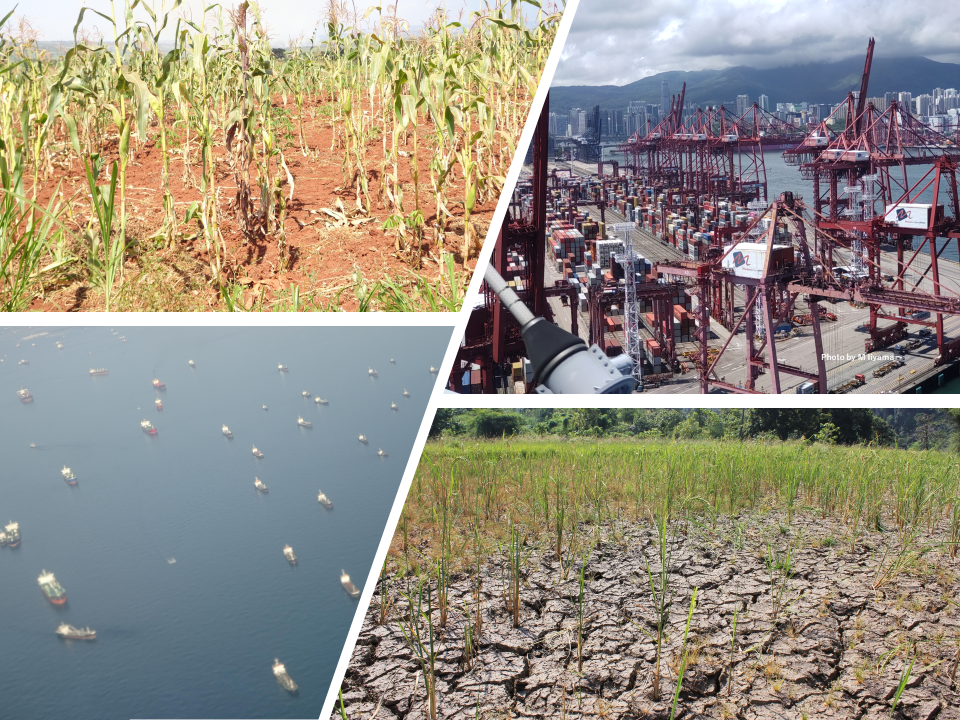
Regarding the escalation of conflict in the Middle East, UN Secretary-General António Guterres warned the UN Security Council of the "risk of triggering a chain reaction that no one can control." Particularly serious is the situation in the Strait of Hormuz. The disruption to maritime transport there is having a significant impact not only on oil and gas but also on the distribution of fertilizers. According to the Food and Agriculture Organization of the United Nations (FAO), tanker traffic has decreased by more than 90%, severely impacting agricultural production and global food security. The UN Office for the Coordination of Humanitarian Affairs (OCHA) also points out that this crisis is causing the most severe disruption to humanitarian supply chains since COVID-19 and the Ukraine crisis. The supply routes for humanitarian aid have been severely damaged, threatening access to food, medical care, and emergency assistance for millions of people.
International Response and Uncertainty
In response to this situation, the UN has announced the appointment of a special envoy to lead peace efforts and the establishment of a specialized task force on the Strait of Hormuz. This framework aims to ensure the safe transport of critical materials, including fertilizers and related supplies. This initiative builds upon past experiences such as the Black Sea Grain Initiative, but there is currently no prospect of the conflict ending.
Required Perspective
Amidst rising geopolitical risks, accelerating climate change, the instability of globalization, and the vulnerability of supply chains, the global food system faces unprecedented complex risks. The impact is particularly severe in the Global South, where disruptions in fertilizer supply directly lead to reduced yields and food shortages.
In today's world of constant uncertainty, the role of international agricultural research extends beyond mere technological development. It also requires the collection, analysis, and dissemination of information to grasp global changes and respond strategically. Over the next seven years, we aim to make more effective contributions to global food issues, including those in the Global South.
Contributor: IIYAMA Miyuki