



Pick Up
1446. Information Dissemination and Discovery (Takaragawa’s Newsletter Vol. 12)
Related Research Program
Information
1446. Information Dissemination and Discovery (Takaragawa’s Newsletter Vol. 12)
Researchers are required to design research questions, conduct experiments, analyze the results obtained from those experiments, repeatedly discuss and consider the findings, and then disseminate their work externally in the form of papers. When designing research questions, they gather diverse information—such as exploring research subjects and needs, and reviewing extensive previous research—through fieldwork and online sources. When writing papers, they organize literature based on their findings to clarify the reliability and positioning of their results and interpretations. Thus, researchers require strong information gathering skills in many situations.
Information-gathering ability can be defined as the capacity to collect information, organize it, and extract issues from it. In recent years, the environment surrounding information has been changing constantly, and the information-gathering skills required of researchers have also evolved. With the proliferation of the internet, smartphones, and social media, an overwhelming amount of information now surrounds us. Furthermore, the demand for information has diversified as it must track the rapid changes in climate and social conditions. In addition, as information gathering tools like generative AI evolve, researchers are now expected not only to effectively utilize these tools but also to possess the ability to discern and select information, and to judge its validity. This situation presents challenges for researchers who routinely gather information, but it also brings new possibilities. At JIRCAS, researchers from diverse fields collaborate to collect and disseminate information concerning food and environmental issues related to agriculture, forestry, and fisheries, primarily in developing countries.
Let's change the subject a bit. As a personal hobby, I enjoy visiting used bookstores and hunting for old books. Lately, I often use domestic and international used book websites, but there's still something special about the fun of actually browsing physical stores. Some might say libraries are just as good in terms of physically visiting places. Libraries certainly offer greater comprehensiveness and the advantage of accessing rare books that would otherwise be completely out of reach. While they are well-organized, they seem to offer fewer opportunities for unexpected discoveries. Naturally, when I go to a used bookstore, I have a specific book in mind and focus on browsing the relevant sections (though it takes time if they aren't organized...). Yet, occasionally, I stumble upon a book I never expected and find myself captivated. I consider this the “discovery of information.”
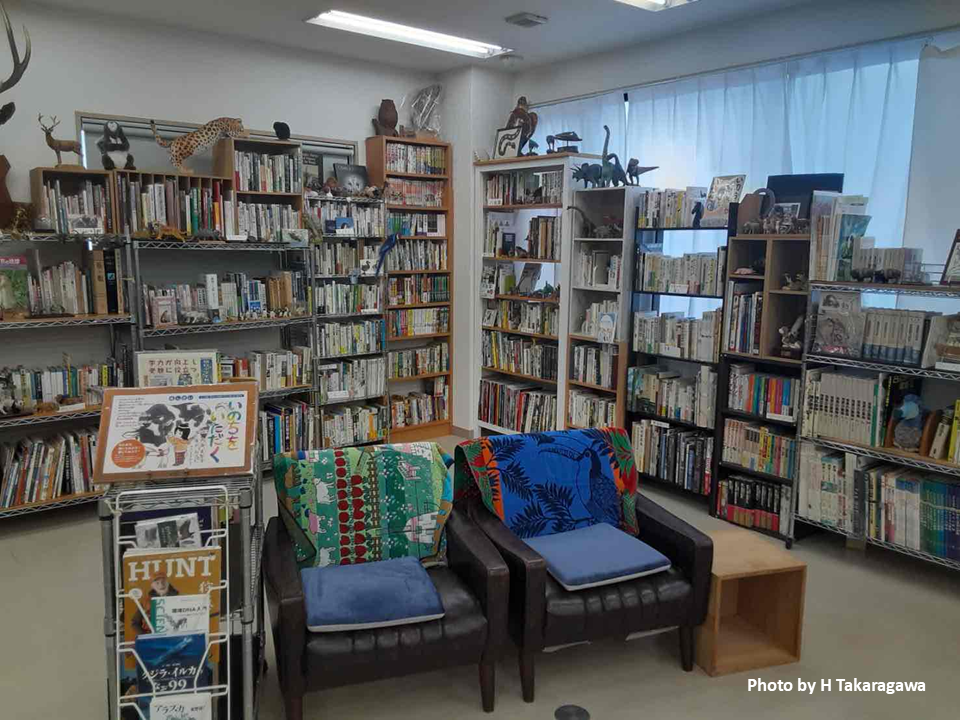
On a personal note, after retiring, my father began a private library in Chiba, gathering books centered on animals and natural history. There, books from genres typically shelved separately in libraries—such as biology, folklore, and picture books—are arranged by topic. This deliberate arrangement encourages unexpected connections. I feel there's a commonality here with information exploration: how unexpected encounters can spark new perspectives.
In the marketing industry, the current era—where short videos on social media are popular, particularly among Generation Z—is sometimes described as an age of information gathering through “browsing” rather than “searching”. Furthermore, the increase in purchasing intent based on information encountered incidentally is also referred to as incidental purchasing. However, as anyone who uses social media knows, AI-optimized content displays can lead to a gradual narrowing of the information you see. This naturally reduces opportunities for discovering new information.
Researchers must pursue comprehensive information while establishing originality in their work, requiring an unbiased perspective. The Pick Up articles published on the JIRCAS website often provide information I wouldn't typically search for, and I feel they encourage the discovery of new information. Such discoveries not only lead to further collection of related information but can also directly boost research motivation. However, when composed of a small number of authors, biases may arise due to personal preferences or access methods to information sources. Moving forward, we aim to build an information collection and dissemination system that facilitates discovery for diverse users with varied backgrounds. We will strive to create a space that promotes the “discovery” of diverse information, coexisting with the powerful search and organization capabilities of generative AI and the strong dissemination power of social media.
Contributor: TAKARAGAWA Hiroo, Tropical Agriculture Research Front