



Pick Up
1431. Who Will Train Researchers? (Takaragawa’s Newsletter Vol. 11)
Related Research Program
Information

1431. Who Will Train Researchers? (Takaragawa’s Newsletter Vol. 11)
Researchers attend academic conferences to present their findings and learn about other researchers' work. I also attend several domestic conferences each year and international conferences every few years, and each time I am inspired and bring that back to enrich my research life. On the other hand, I had not given much thought to what role I myself could play within the academic community. Now that I am approaching an age where I am no longer considered a young researcher within the society, I have begun to reconsider the role of the academic community and the role that researchers affiliated with national research institutions can play within it.
Let's clarify the role of academic societies. Originating in 17th-century Western Europe as forums for exchanging research findings, academic societies were introduced to Japan during the Meiji modernization era. Their primary purpose is to present and share research outcomes, achieved by hosting conferences and publishing academic journals. Through these activities, they are expected to contribute to forming networks among researchers, training the next generation, and disseminating information such as policy proposals to society. By taking on such multifaceted roles, I believe academic fields can achieve sustainable development.
What about the role of national research institutions and the researchers working there? Academic societies are composed of members, and fundamentally, it is the individual members who fulfill the society's functions. Naturally, members are not distinguished based on whether they are university professors or researchers at public institutions. Therefore, at least within the framework of the academic society, researchers at public institutions are also expected to contribute to human resource development. Furthermore, due to challenges like talent shortages and changes in the educational environment, I feel that the role of research institutions in human resource development has grown significantly beyond the scope of academic societies. The Ministry of Education, Culture, Sports, Science and Technology (MEXT) and the Japan Science and Technology Agency (JST) are also taking steps to encourage active involvement, positioning research institutions outside universities not merely as receptacles for talent but as venues for talent development.
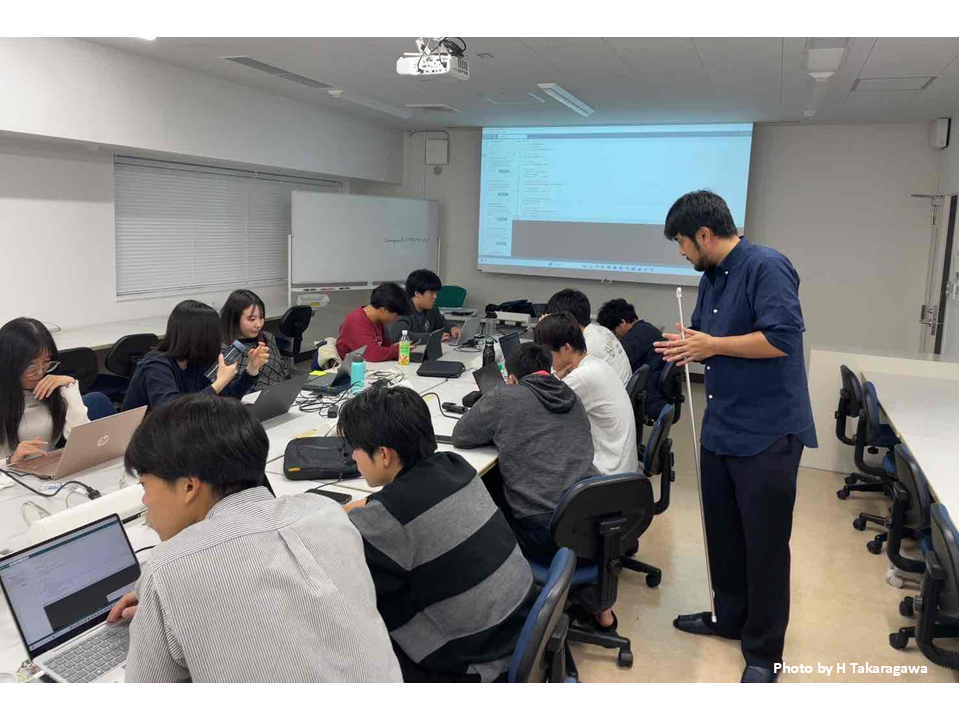
At JIRCAS, fostering research talent both domestically and internationally is one of our core missions. JIRCAS actively recruits postdoctoral researchers for early-career development while also dedicating efforts to training future leaders in international agricultural research through programs like JIRCAS Fellowships, trainee programs, and outreach lectures. As part of these outreach activities, I have delivered lectures at high schools and universities and supervised trainees in research. Unlike experiments or writing papers, talent development is extremely challenging because the goal is not immediately visible. On the other hand, tailoring guidance and research to each student's personality is also deeply rewarding. Not only can you feel the students' growth firsthand, but it also provides opportunities to nourish the seeds of new innovation and to reexamine and advance your own research. The pool of potential candidates for development is shrinking, and in some fields, addressing the shortage of successors is an urgent priority. While grassroots efforts to increase opportunities for elementary, middle, and high school students to learn about research are important, contributing to graduate student education seems likely to be a short-term goal for national research institutions. I believe that society may increasingly demand not only a passive stance focused on accepting talent cultivated within universities, but also a more proactive stance that involves directly engaging in talent development through active collaboration with educational institutions. As a researcher focusing on the minor crop sugarcane, I feel this urgency and hope to leverage academic societies to advance research and development, disseminate information, and contribute more to talent development.
Contributor: TAKARAGAWA Hiroo, Tropical Agriculture Research Front