



Pick Up
1442. The Amazon Became a Weak Net Carbon Emitter in 2023
Related Research Program
Information


1442. The Amazon Became a Weak Net Carbon Emitter in 2023
The Amazon rainforest plays a vital role in the Earth system by storing large amounts of carbon in its biomass. Terrestrial carbon sinks are controlled by the balance between net carbon sources due to deforestation and carbon sinks. In less disturbed forest vegetation, sinks exceed carbon losses. However, disturbances such as droughts can affect the Amazon's carbon sinks.
Notably, in 2023, global average temperatures reached 1.5°C higher than the 1850-1900 baseline period on approximately 50% of days, primarily in the second half of the year, and global sea surface temperatures reached record highs from April to December. These record warming events were accompanied by extreme phenomena observed on land and at sea, including large-scale heatwaves and droughts in many regions. The heatwaves exacerbated the effects of drought and high temperatures in the Amazon, with October temperatures exceeding the 1981-2020 average by more than 3°C, and the port of Manaus recording its lowest water level since records began in 1902.
This complex drought and heatwave event in South America is associated with the transition from a La Niña event in 2022-23 to an El Niño event from mid-2023, as well as widespread and unusual warming in the global ocean. Meanwhile, the rate of increase in global atmospheric CO2 concentrations in 2023 was 2.79 ± 0.08 ppm, the third highest since 2000 and the fourth highest since 1959. By comparison, the average increase from 2010 to 2020 was approximately 2.5 ppm. This abnormally high value in 2023 suggests a temporary weakening of the world's carbon sink that cannot be explained solely by the 1.3% increase in anthropogenic CO2 emissions from 2022 to 2023.
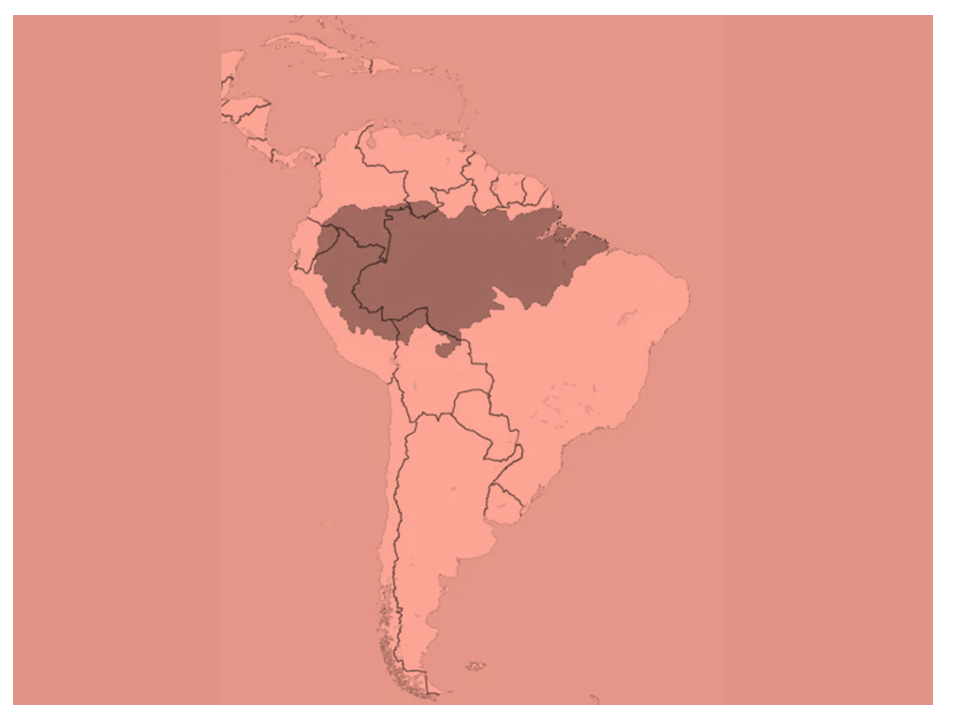
A paper published in AGU Advances analyzed how the extreme drought conditions in 2023 affected the Amazon's carbon sink capacity. The paper combined CO2 measurements, computer simulations, and satellite data to show that the Amazon became a weak net carbon source in 2023. Fire-related emissions, estimated at 150 million metric tons, were within normal levels over the past 20 years (2003-2023). Carbon emissions in 2023 were estimated to be primarily due to a decrease in vegetation absorption capacity, rather than increased fire losses. Computer models indicate that vegetation absorbed more carbon than usual from January to April, offsetting emissions, but that carbon emissions from the Amazon increased in May and peaked in October. Estimated carbon emissions from the Amazon accounted for 30% of the net carbon source for the entire tropics in 2023.
The findings suggest that the Amazon may transition to becoming a net carbon source more rapidly than previously predicted. While a strong El Niño event, such as the one that occurred in 2023, could exacerbate this trend, the findings also highlight the role of widespread ocean warming across the Pacific, suggesting that these factors, combined, contribute significantly to the region's net carbon exchange. Continued research and in situ monitoring are needed to clarify the long-term balance between disturbance and recovery processes in the Amazon.
(Reference)
S. Botía et al., Reduced Vegetation Uptake During the Extreme 2023 Drought Turns the Amazon Into a Weak Carbon Source, AGU Advances (2026). https://agupubs.onlinelibrary.wiley.com/doi/10.1029/2025AV001658
Contributor: IIYAMA Miyuki, Information Program