



Pick Up
1422. Green Innovation Is the Best Policy Option for Reducing Greenhouse Gas Emissions from the Agri-food System
Related Research Program
Information


1422. Green Innovation Is the Best Policy Option for Reducing Greenhouse Gas Emissions from the Agri-food system
Greenhouse gas (GHG) emissions from the agri-food sector account for approximately one-third of global net GHG emissions. Without significant reductions in these emissions, global warming will be unable to stay below 1.5°C. Even if all other emission sources were eliminated, current food production methods could cause warming of approximately 1°C by the end of this century. Meanwhile, climate change is already making food production difficult, especially in the tropics. Without transformative action, some studies predict that agricultural productivity growth will slow significantly, and net emissions from agriculture and land-use change alone will increase by up to 200% between 2020 and 2040, with agricultural land expanding by an additional 56 million hectares, highlighting the urgency of action.
A Nature Food editorial based on analysis by the International Food Policy Research Institute (IFPRI) points out that agriculture's challenges are often overlooked as distinct from those of other sectors, leading to counterproductive policies such as promoting biofuel production and vague regulatory measures, such as requiring agricultural payments to reduce fertilizer and pesticide use, which reduce agricultural productivity and generate political resistance, at least in the short term. Specifically, it is often overlooked that agricultural emissions differ from emissions from other sectors in three important ways:
First, agricultural emissions arise from decentralized production processes with very different emissions profiles, reducing the effectiveness of policies such as carbon taxes. Emissions from combustion are very different from those from burning, which occurs at a roughly constant rate.
Second, emissions from the agri-food sector arise from both production and land-use change. This means that regulatory measures that reduce yields (such as those requiring farmers to transition to fully organic farming) create incentives to expand land use to offset declining food supplies, increasing emissions from land-use change. Approaches that mandate the use of food crops for biofuel production similarly generate emissions from land-use change. In contrast, improved agricultural productivity allows for a reduction in agricultural land area, reducing pressure for land-use change.
Third, policymakers need to be aware of rebound effects, which can reverse the effects of productivity gains. This refers to a situation in which efficiency improvements lower production costs, which in turn create incentives to increase production and ultimately induce increased emissions. However, due to the low price elasticity of food demand, such rebound effects are less severe in agriculture than in other sectors.
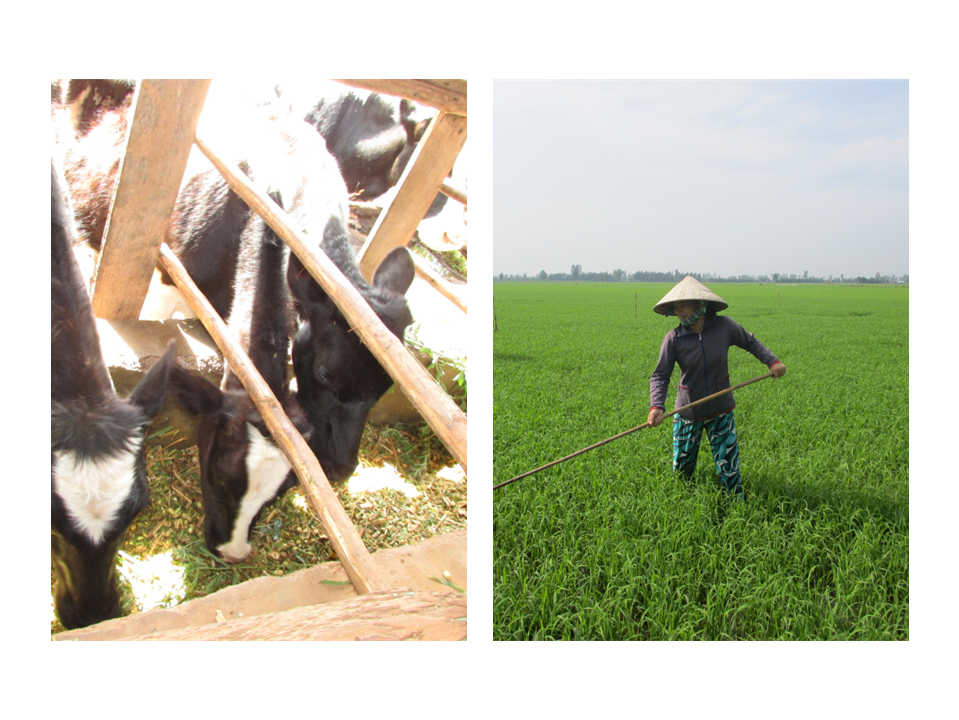
Furthermore, policies need to take into account the magnitude and timing of various emissions in the agri-food sector. More than half of agricultural emissions are methane (CH4), primarily from livestock and rice farming. Over a 20-year period, the global warming impact of methane emissions is 80 to 86 times that of CO2, which accounts for the majority of total emissions, and 28 times that impact over a 100-year period. Therefore, prompt action to reduce methane emissions would help bend the emissions curve. Agriculture also accounts for more than three-quarters of global emissions of nitrous oxide (N2O), another potent GHG.
Taking these specific characteristics of the agri-food sector into account, the paper explores six potential policy pathways for reducing GHG emissions.
- In the context of decentralized and differentiated agricultural production processes, carbon taxes tend to be significantly less effective than taxes on energy generated by combustion.
- Subsidy reductions have limited impact on emissions reductions and may lead to backlash against the resulting increases in food prices.
- Regulations often entail high compliance costs, can lead to lower yields, and can increase emissions due to agricultural expansion and land-use change.
- The current carbon credit system overestimates its benefits and needs to be reformed to resemble an effective cap-and-trade system.
- Investing in research and development (R&D) for green agricultural innovations, such as climate-resilient crops, improved livestock breeding, and improved livestock feed, could significantly reduce emissions while increasing farm incomes and lowering food costs.
- Demand-side strategies (dietary shifts, food waste reduction, and food product innovation) could further reduce emissions, especially from resource-intensive foods, while also benefiting health and the environment.
Based on these findings, the paper shows that green innovations, such as intermittent irrigation for rice and improved livestock feeding techniques, are the most promising and attractive pathways. Given the unique challenges and opportunities of the agri-food system, the contribution of green innovation through intensive R&D is even more important than in other sectors. A targeted mix focused on green innovation combined with demand-side efforts is the most promising path to significantly reducing emissions from the agri-food sector, with potential co-benefits including increased farm incomes, a more stable and affordable food supply, and poverty alleviation. This strategy could potentially be funded through a review of existing agricultural support frameworks.
(References)
Vos, R., Martin, W. Green innovations are the best policy option for reducing greenhouse gas emissions from agrifood systems. Nat. Food (2026). https://doi.org/10.1038/s43016-025-01291-z
Vos, Rob and Martin, Will. 2025. Options for reducing greenhouse gas emissions from agriculture and food systems. IFPRI Discussion Paper 2336. Washington, DC: International Food Policy Research Institute. https://hdl.handle.net/10568/174515
Contributor: IIYAMA Miyuki, Information Program