



Pick Up
1408. The Need for Soil Degradation Countermeasures by Landholding Size
Related Research Program
Information
1408. The Need for Soil Degradation Countermeasures by Landholding Size
Land is the foundation of the global agri-food system, supporting more than 95% of food production and providing essential ecosystem services that support life on Earth. However, as a finite resource, land is facing unprecedented pressure from competing demands, including urban expansion, biofuel production, and shifting consumption patterns due to rising incomes and changing diets.
According to the UN Food and Agriculture Organization's (FAO) State of Food and Agriculture (SOFA) 2025, agricultural expansion has fundamentally transformed land-use patterns across the globe over centuries. Since 1961, global agricultural production has quadrupled, driven by impressive productivity gains despite limited land expansion. However, since the 21st century, global agricultural area has declined by 78 million hectares (-2%) between 2001 and 2023. This includes a decline of 151 million hectares in pastureland and an increase of 78 million hectares in cultivated land. These changes have varied significantly across regions. Sub-Saharan Africa has seen an expansion of 69 million hectares of cultivated land and a loss of 72 million hectares of forest. Meanwhile, Latin America saw an expansion of 25 million hectares of cultivated land and 85 million hectares of deforestation.
Agricultural expansion remains the leading driver of global deforestation, accounting for approximately 90% of deforestation. Another important consideration this century is that approximately 3.6 million hectares of cultivated land are abandoned each year, and land degradation is likely to have significantly contributed to these losses. Worryingly, total factor productivity growth, which reflects technological advances and efficiency gains, has been declining since the 2000s and has even become negative in some countries, particularly in the Global South. This decline, combined with the persistent yield gap between potential and actual production, could threaten future food security and encourage further agricultural expansion into fragile ecosystems.
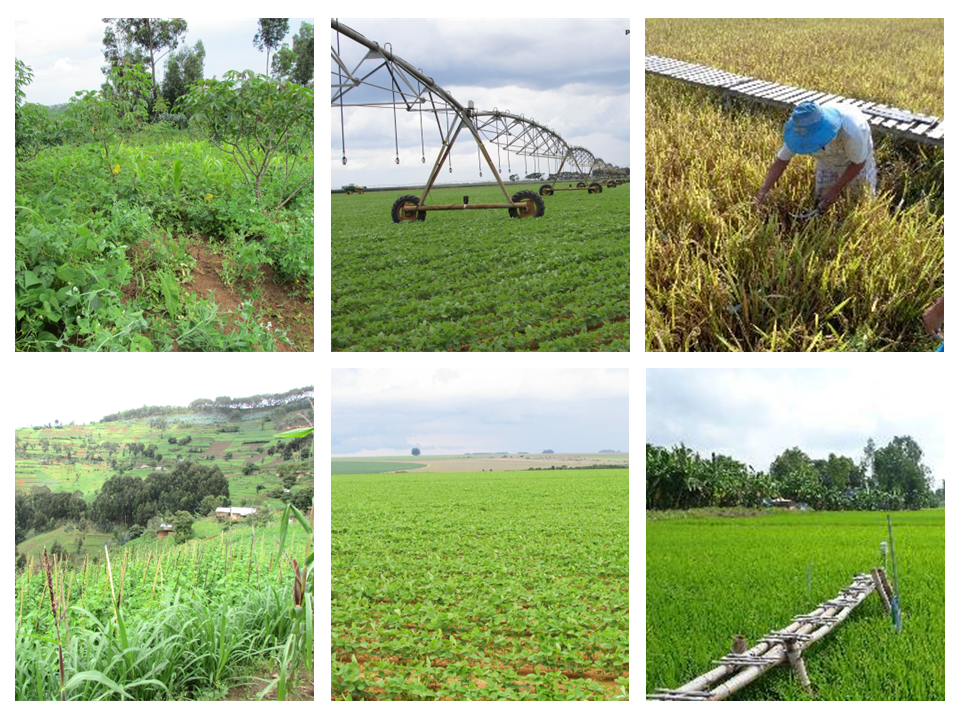
Farm size patterns vary across regions and cannot be explained simply by intensification. Over the past two decades, average farm size has increased in Latin America, Europe, and Central Asia, while it has decreased in most parts of Asia and continues to shrink in sub-Saharan Africa.
The relationship between land degradation and agricultural productivity is uneven, varying significantly across regions and income levels. In high-income countries with intensive agricultural systems, production losses per hectare due to land degradation are particularly severe but are often masked by high use of synthetic fertilizers and other inputs, creating a troubling paradox. While high fertilizer inputs maintain high yields in the short term, they often result in diminishing returns, increase production costs, and exacerbate land degradation through soil acidification, nutrient imbalances, and pollution, potentially leading to land abandonment in areas with a long history of intensive agricultural systems.
In contrast, in Africa, extremely small farms and low soil fertility combine to prevent farmers from producing enough to meet household needs or investing in restoring soil productivity, trapping them in poverty through a vicious cycle of soil degradation and food insecurity. In much of sub-Saharan Africa, yield losses due to land degradation tend to be relatively low. This is not because soils are healthier, but because other constraints, such as limited access to inputs and mechanization, credit, and markets, dominate the yield gap. Addressing constraints to yield improvement could have an immediate impact on closing the yield gap.
Climate change adds further complexity to these challenges, with differential impacts across farm size. Under projected warming scenarios, smallholder farmers in tropical regions will be disproportionately exposed to heat stress, drought, and extreme rainfall. Medium-sized farmers may be most exposed to multiple stressors, while large-scale farmers in temperate regions may benefit from fewer frost days.
Going forward, policies must navigate the tension between supporting the livelihoods of smallholder farmers and addressing the global environmental impacts of large-scale agriculture. Large-scale farmers control the majority of agricultural land and therefore bear primary responsibility for implementing sustainable land management at scale. However, the significant number of smallholder farmers and their vulnerability to both degradation and climate change require targeted interventions to improve productivity without repeating the unsustainable intensification pathways seen in high-income countries.
Interventions tailored to land conditions and farm structure are important. The causes and manifestations of land degradation are not uniform. Even within the same farm, different plots may be in different conditions and require different responses. With the right combination of policies, institutions, and investments, we can transform agriculture into a regenerative force, restoring degraded land, improving food security and nutrition, and ensuring the ecological foundations of our agri-food systems. Investing in land not just as a productive asset but as a cornerstone of human and planetary well-being can pave the way to a more sustainable and equitable future.
(Reference)
FAO. 2025. The State of Food and Agriculture 2025 – Addressing land degradation across landholding scales. Rome. https://doi.org/10.4060/cd7067en
Contributor: IIYAMA Miyuki, Information Program