



Pick Up
1392. To Develop Rice Plants That Can Withstand Excess Iron in Africa

1392. To Develop Rice Plants That Can Withstand Excess Iron in Africa
The path to becoming a researcher, my dream job
I first felt a tangible connection to the profession of “researcher” around the time I was 6 years old. Back then, I was fascinated by dinosaurs. Seeing a dinosaur researcher appear on a children's television programme sparked my aspiration: ‘I want to do this kind of work too!’ My dinosaur enthusiasm eventually waned, but during my junior high and high school years in the early 2000s, Japan experienced a surge in Nobel Prize winners. Influenced by my father, a chemical engineer, and my own love of stargazing, I developed an interest in researching chemistry and astronomy. At the same time, after acquiring a bucket-based rice cultivation kit in fourth grade of primary school, I grew fond of plant cultivation. Growing vegetables in our home garden became a hobby throughout my secondary school years. My fondness for English also led me to dream of providing agricultural guidance overseas from that time. That said, I couldn't quite abandon the paths of physics and astronomy. While I initially pursued science and engineering at university, I eventually changed course to enter the field of agricultural science, specifically rice research. (Ah, just to be clear, my surname –meaning “plants” and “paddy”– wasn't the deciding factor!)
Looking back, environmental factors around me may have played a significant role in my career decisions. Some of you reading this might still be undecided about your future path, but perhaps clues lie hidden within your daily life.
Inspiration strikes suddenly!
Now, many might picture researchers as figures clad in white coats, clutching lab equipment and holed up in laboratories. But in reality, such time is rather limited. Alongside collecting data, there's writing papers, devising experimental plans, discussing with collaborators, keeping abreast of related research trends, securing funding... and many other tasks, all crucial to the research process. While juggling research with raising two children imposes time constraints, ideas can suddenly strike while bathing the children, sometimes leading to research progress. I consider such experiences one of the joys of research life.
Excess iron poses a major problem for rice
Now let us turn to my specialized field of rice research. Have any of you ever grown vegetables yourselves? Cultivating plants successfully is quite demanding, requiring careful management of various conditions such as temperature and nutrition. Among these, balanced nutrient intake is particularly crucial. Seventeen elements are considered essential for plants to grow healthily. However, in many regions worldwide, nutrient levels are inadequate, with some nutrients deficient and others present in excess. Among these nutrients, I focus on iron. While iron is an essential element for plants, in many parts of Southeast Asia and Africa, iron is supplied in excess, adversely affecting plant growth, particularly in rice. This is termed “iron toxicity.” Research into iron toxicity has progressed for over fifty years, yet little is known about the genes or mechanisms involved in improving rice growth in such regions. Therefore, I conduct daily research to unravel the mechanisms behind iron toxicity and discover key rice genes essential for healthy growth under these conditions.
To Madagascar, the stage for my research!
Whilst I usually conduct my research in Japan, I travel to Madagascar, my field site, once or twice a year. Madagascar lies some 11,000 km away, and the journey takes approximately 24 hours. It really brings home the sheer scale of our planet. I have visited over 30 countries to date, and my ironclad rule when visiting a new country is to simply walk everywhere. I plod on not just to tourist spots or work destinations, but also through residential areas and local markets. I want to understand what people in that country do, what their daily lives are like, how they interact, and how they enjoy life. On days off, walking over 10 km is not uncommon. I try to communicate with locals as much as possible, learning about life in that country through trial and error. I've had moments like ordering French fries in my newly acquired French, basking in the sense of achievement, only for rice to arrive instead. It makes me smile wryly, but that's all part of the fun.
To identify the genes
Madagascar is one of the countries experiencing iron toxicity, as mentioned earlier. Together with local researchers and students, I conduct field trials to identify the genes that could lead to solutions. Sweating together, debating together, I sometimes find myself lost in reflection: ‘Ah, this is the future I dreamed of back in high school.’ And in those moments of fascinating discovery, I feel connected to the world.
One of the great joys of conducting research overseas is experiencing things that are so different from Japan in so many ways. I recall giving a seminar for postgraduate students at a university in Madagascar. After it ended, many students came up to me at the front of the classroom. ‘Oh, they understood the content well and came to ask questions – how gratifying!’ I thought. But then they said, ‘Could we take a photo together?’ It felt rather like becoming a celebrity. That day, my photo probably circulated quite a bit on Malagasy social media. I found myself thinking that in the future, once I'd pinpointed the genes involved in iron overload disorders and become truly famous, I'd like to go back and give another seminar.
Contributor: UEDA Yoshiaki, Crop, Livestock and Environment Division
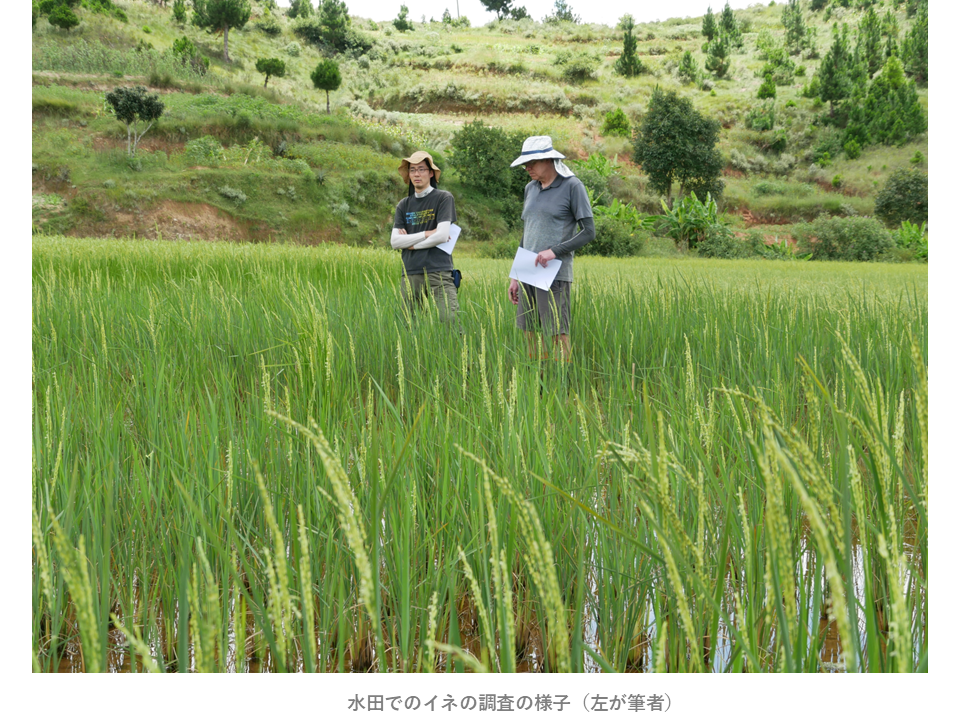
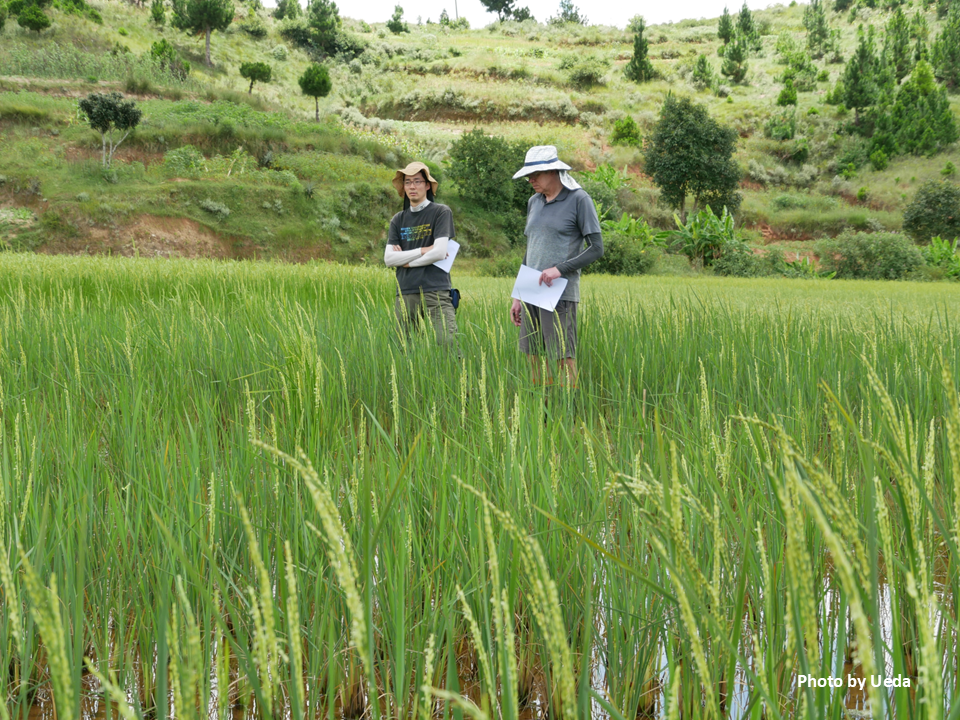
Investigating rice plants in a paddy field (the author is on the left).
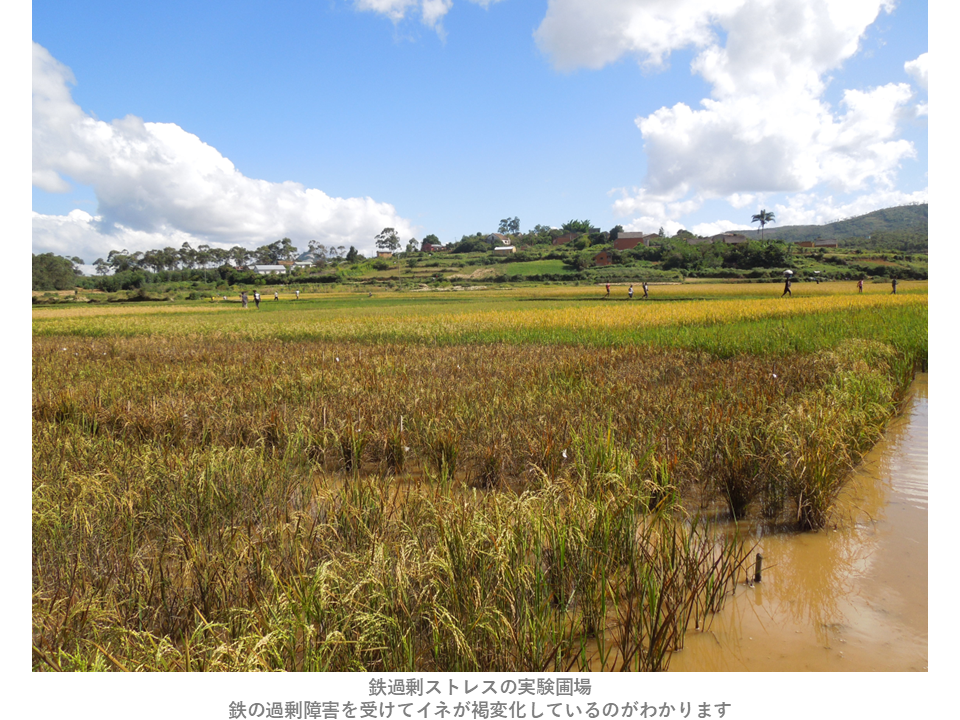
You can see rice plants dying due to iron toxicity.
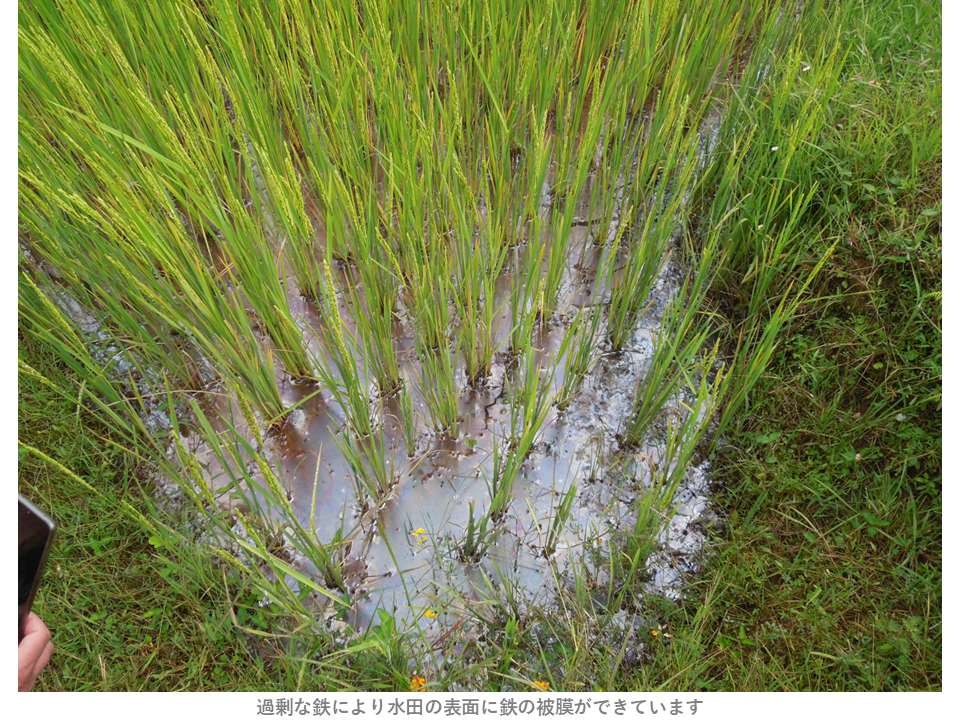
Excess iron has caused iron deposits to form on the surface of the paddy field.
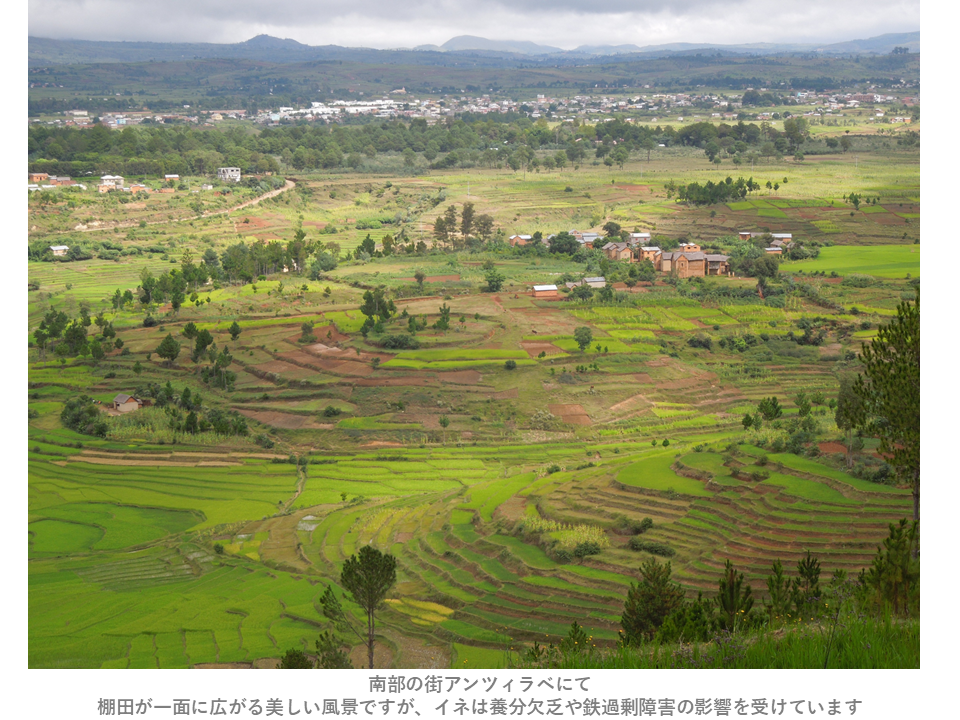
Terraced rice fields spread out across the landscape—a beautiful sight. Rice plants here are influenced by a wide range of hydrological conditions.
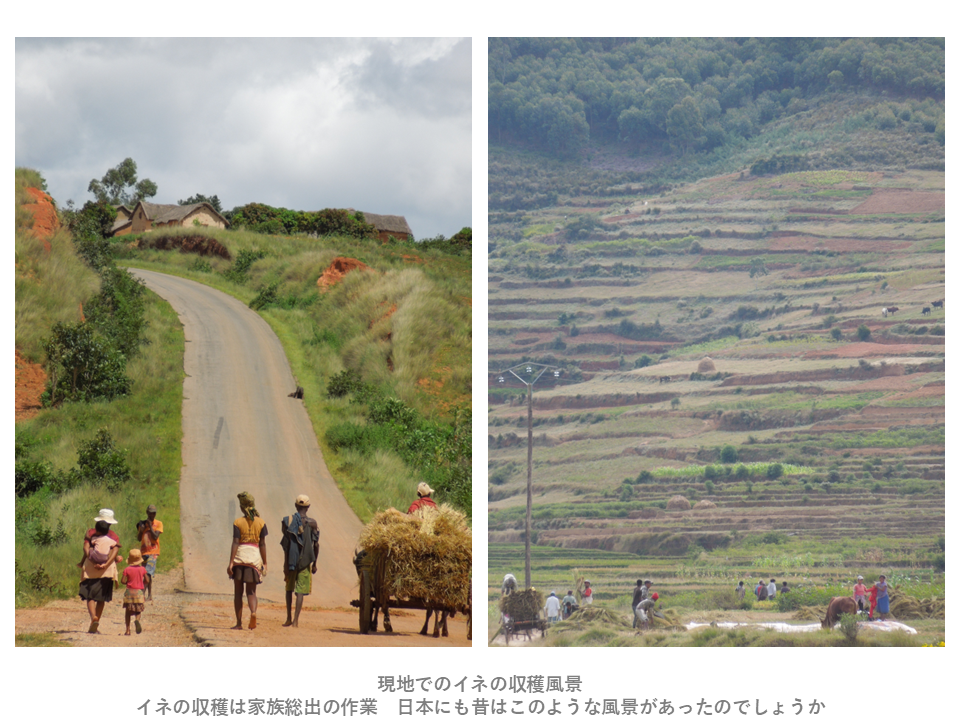
Rice cultivation is shaped by environmental gradients. One wonders whether such landscapes once existed in Japan as well.
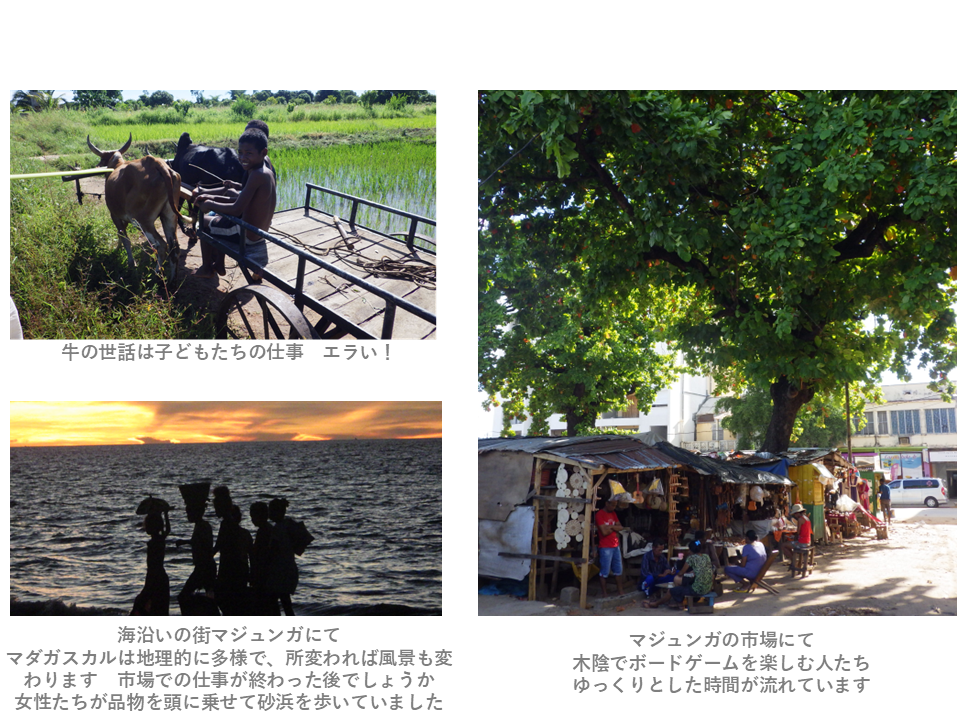
Taking care of cattle is the children’s job — impressive! (Top left)
In the coastal town of Mahajanga, located in northwestern Madagascar. The sunsets here are beautiful.
As expected, it is mostly the mothers who handle childcare and housework, and the women shoulder these responsibilities together with great effort. (Bottom left)
At a market in Mahajanga. People set out tables in the shade and carry out their business. Time flows gently here. (Right)
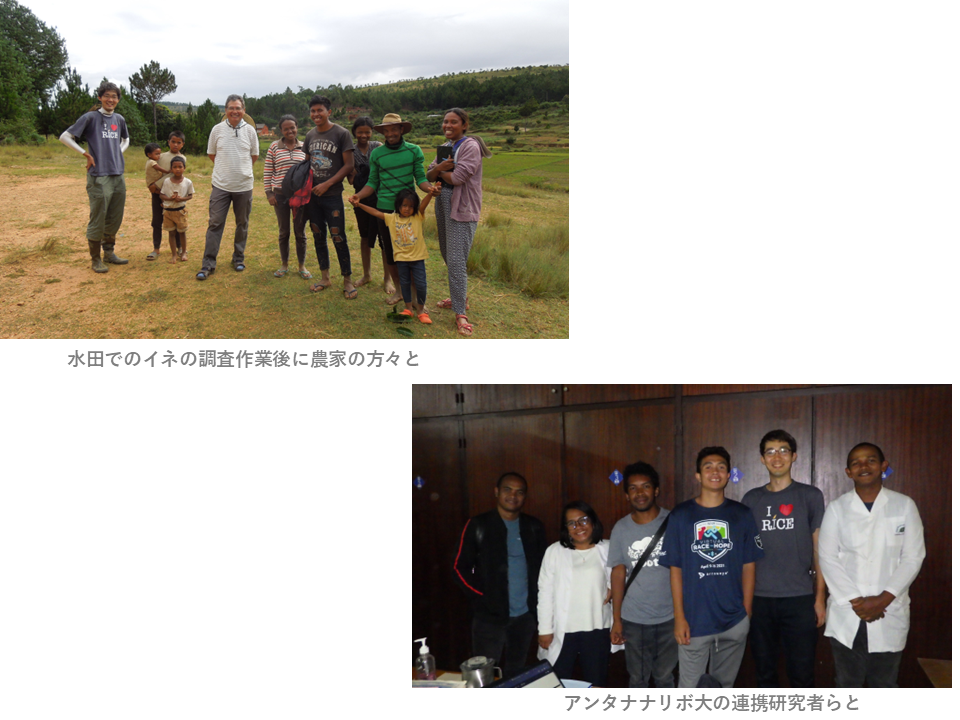
With the researchers who assisted in the rice field investigations. (Top)
With hydrology researchers in Antananarivo. (Bottom)