



Pick Up
1391. Carbon is a Wonderful Partner for Nitrogen in Protecting the Earth



1391. Carbon is a Wonderful Partner for Nitrogen in Protecting the Earth
Introduction
"I want to do something useful for someone." When I had just become a researcher, that was my vague thought. Since 2021, I have been working at the Japan International Research Center for Agricultural Sciences (JIRCAS), visiting places like Ishigaki Island, the Philippines, and Thailand. Seeing the local scenery and children playing energetically, I strongly wished to preserve this nature. Now, I am engaged in research to protect the global environment.
Isn’t nitrogen behind so many things?
Everyone, you studied nitrogen in science classes at elementary and junior high school, right? About 80% of the air around us is nitrogen.
Nitrogen (N2) in the atmosphere changes into substances like ammonia (NH3) due to lightning or volcanic activity. Nitrogen other than N2 that has changed like this is called reactive nitrogen. Reactive nitrogen is essential for life. For example, it is necessary to make proteins and DNA, and fertilizers indispensable for agriculture are also reactive nitrogen. By the way, did you know that humans have been using technology to make fertilizer from atmospheric N2 for over 100 years? Thanks to fertilizers, crops can be harvested abundantly, and now the world population has reached 8 billion. We have truly become able to make bread from air.
Problems caused by nitrogen
Being able to use a lot of fertilizer has freed us from food shortages. But it’s not all good news. If too much fertilizer is applied to fields, the reactive nitrogen that plants cannot use pollutes rivers and the air, causing various environmental problems. Such issues are increasing, so urgent action is needed. Researchers around the world are working to solve problems caused by nitrogen.
As a soil researcher, I thought, "If we could keep fertilizer nitrogen in the soil longer, wouldn’t that allow us to use nitrogen more efficiently?" So I began research focusing first on the effect of adding charcoal to soil.
Challenge to solve problems with charcoal!
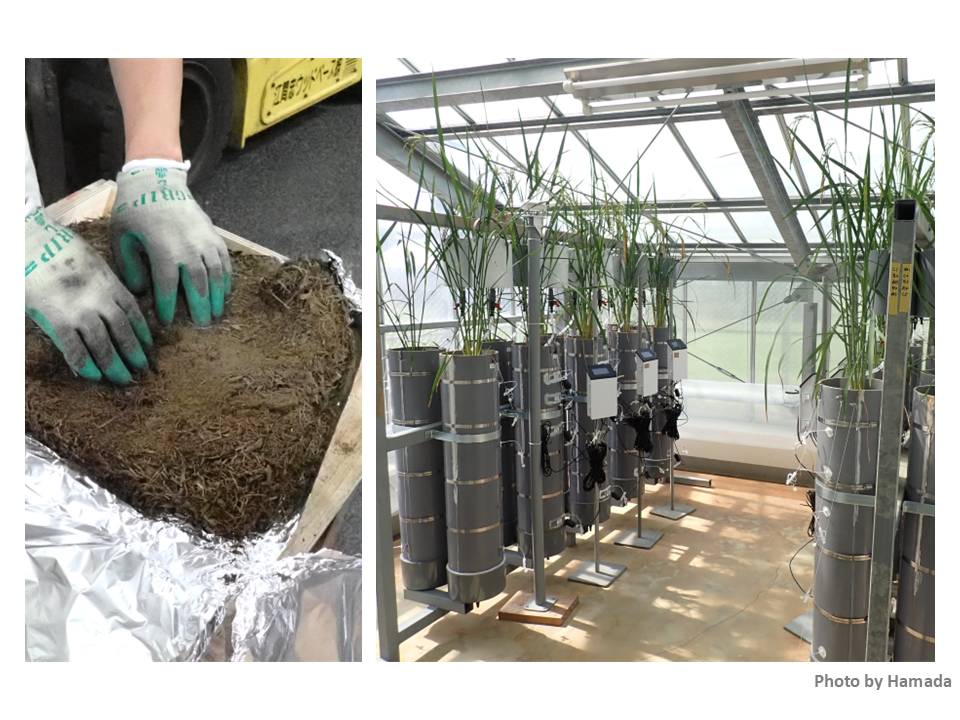
Charcoal does more than just burn; it has various effects. For example, you all know it removes odors. Products placed in refrigerators or shoe boxes are often sold as home deodorizers. Similarly, charcoal is known to have the effect of binding fertilizer nitrogen. However, we didn’t know how deep to place charcoal in the soil for the best results. Even if the amount of charcoal is the same, the effect might vary depending on where it is placed. That would be interesting, right? So I decided to create experimental equipment and tackle this question.
Experiment with original equipment
To track the movement of invisible nitrogen, we need equipment that can hold various sensors. Also, to confirm that the experimental results are not just random (outliers), we need to repeat the same experiment several times. Therefore, the equipment must be reusable, not disposable. At JIRCAS, there are not only researchers but also technical support teams skilled in various tasks, and thanks to them, we were able to build the experimental setup. Using it, we found that mixing charcoal into shallow soil reduces nitrogen that would otherwise flow underground unused by plants.
Let’s find better charcoal!
Using charcoal helps suppress nitrogen waste. The effect also varies depending on the temperature at which the charcoal is made. Among them, charcoal called semi-carbonized material made at 200–300°C not only binds nitrogen but also has the potential to enrich tropical and subtropical soils. To verify this, we are conducting experiments using a facility called a lysimeter at the Tropical Agriculture Research Front on Ishigaki Island. There, we measure not only nitrogen flowing underground but also nitrogen emitted as nitrous oxide (N2O), a greenhouse gas with about 300 times the warming effect of CO2! This large-scale lysimeter facility is unprecedented in Japan and abroad, and having such a facility in the tropics is a strength of JIRCAS. Through these experiments, we should be able to determine the optimal temperature for making charcoal, but more trials are needed to find the answer.
Protecting the global environment
Through various experiments on Ishigaki Island, we have been exploring ways to prevent nitrogen waste in tropical and subtropical regions. Going forward, we will implement these methods in the Philippines and Thailand and verify their effectiveness. The data collected so far will also be incorporated into simulation models. Using simulation models allows us to evaluate nitrogen movement in soil in detail, which cannot be understood through experiments alone. Furthermore, these models can be used for future predictions, such as how effects will change if global warming progresses and temperatures rise.
From now on, we will continue research using experiments, surveys, and simulation models. If this enables us to leave a better Earth for children, nothing would make me happier.
Contributor: HAMADA Kosuke, Tropical Agriculture Research Front
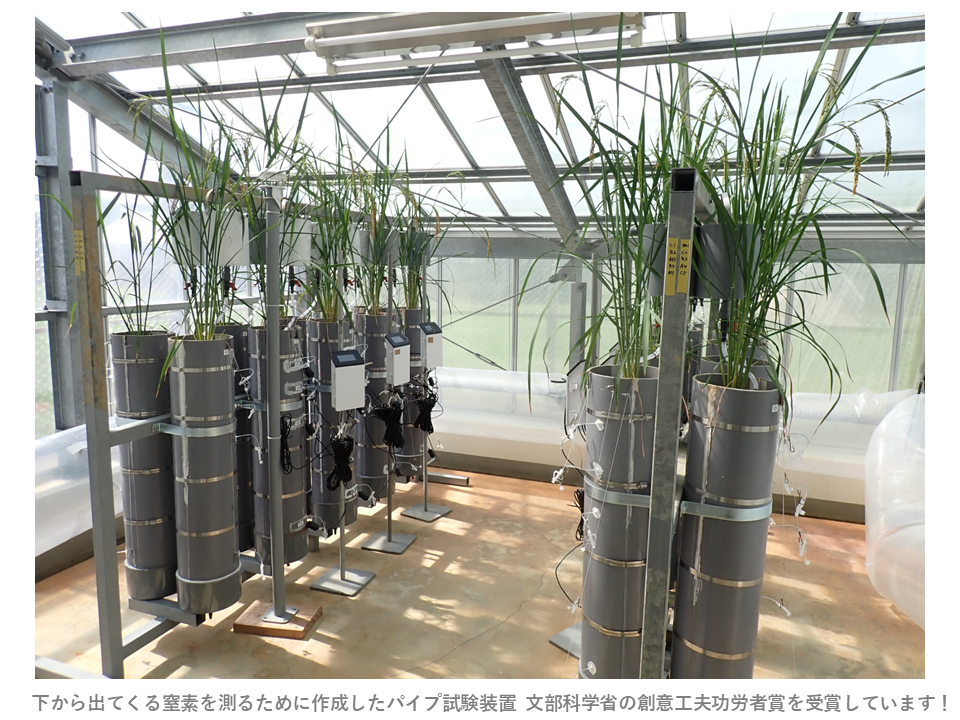
A pipe-shaped device designed so that plants can absorb water from below. It even received the top award in an interdisciplinary science competition!
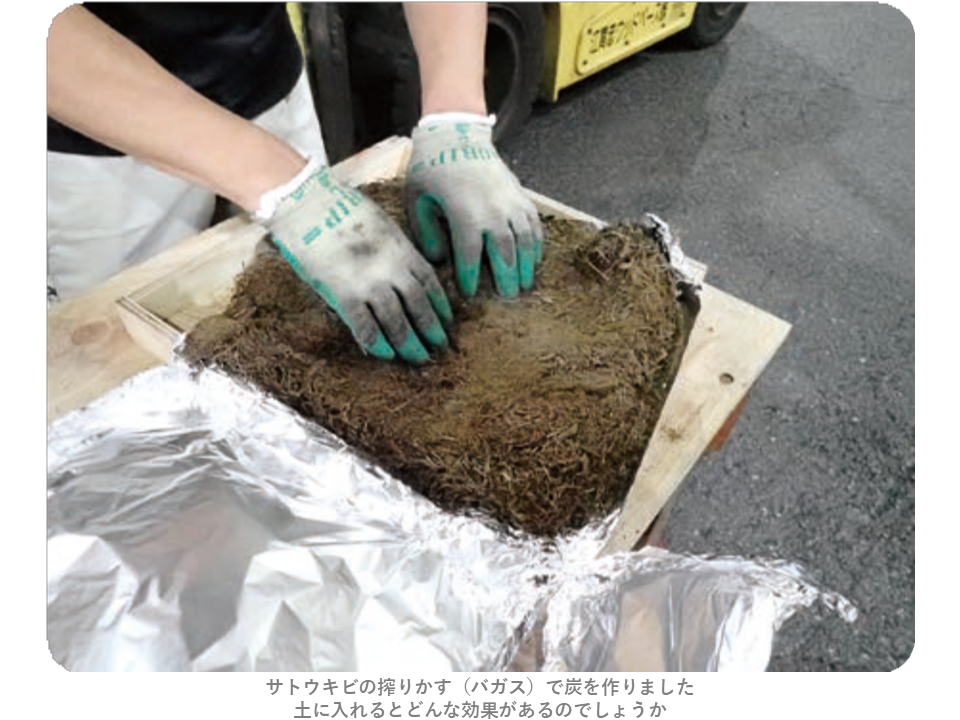
These plants were grown using sugarcane bagasse. What kinds of effects might it have compared to soil?
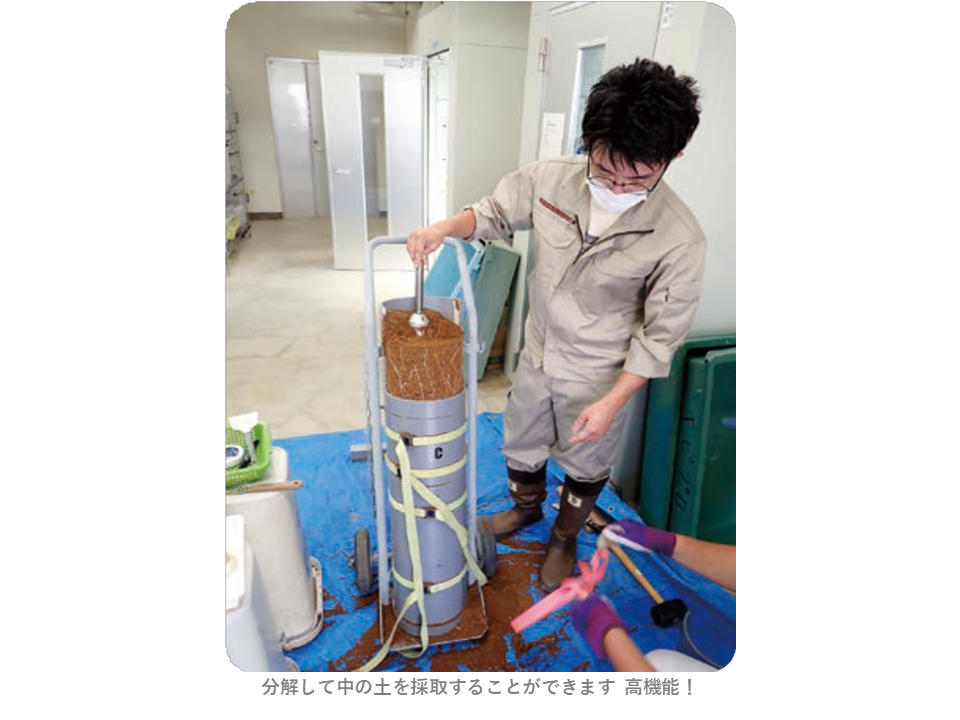
The device can be separated to collect the soil inside — revolutionary!
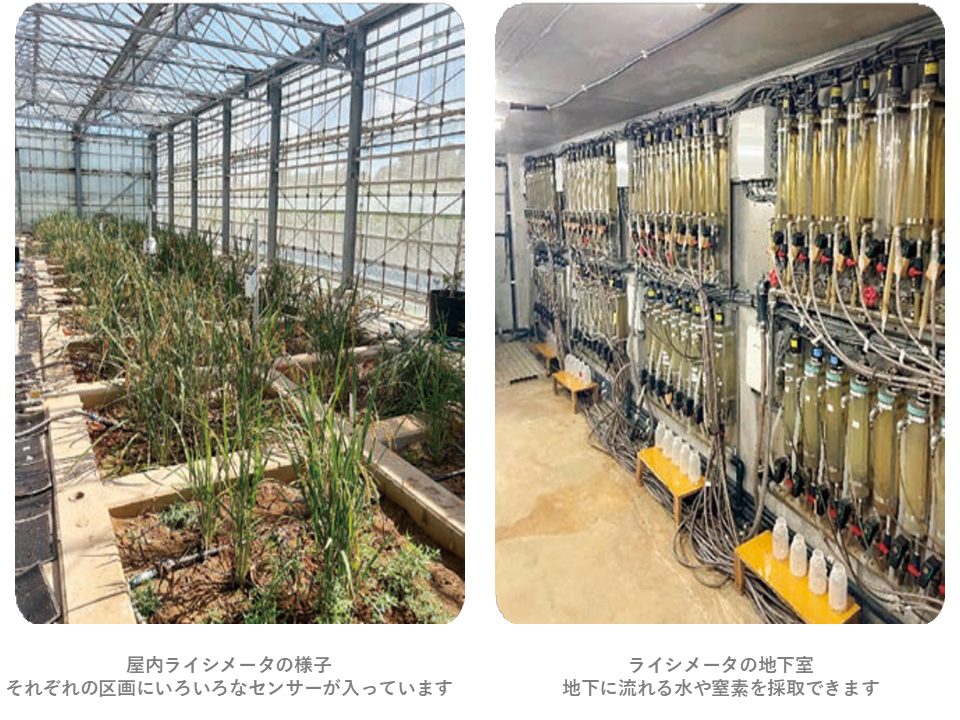
Indoor lysimeter setup. Each unit is equipped with various sensors. (Left)
With the lysimeter system, we can collect water and nutrients flowing underground.(Right)
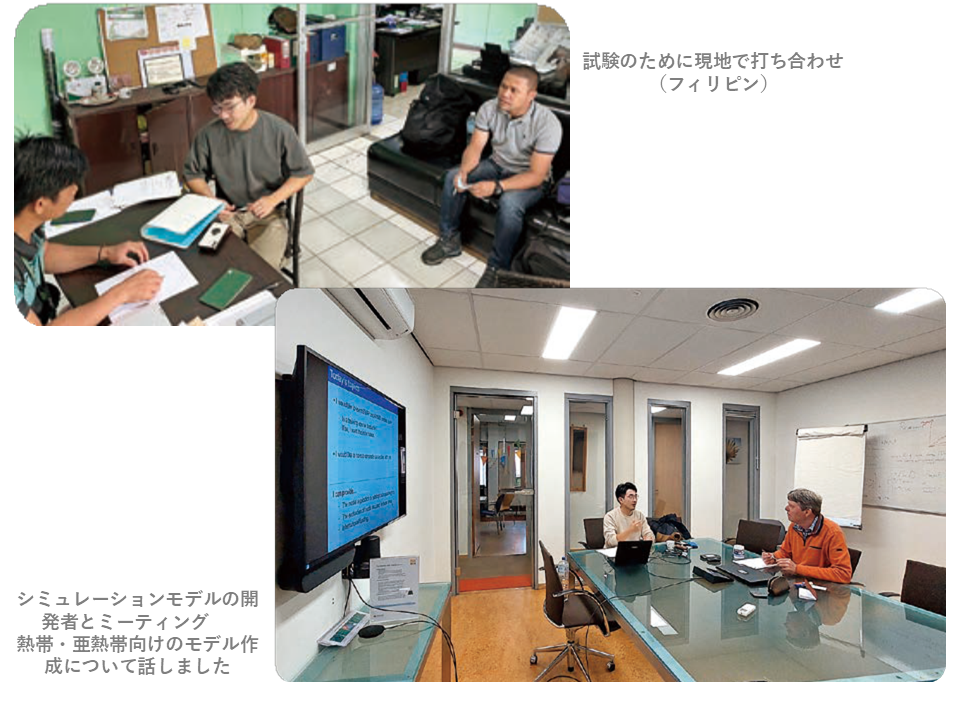
On-site meeting for the experiment (Philippines). (Top)
Meeting on simulation model development — working on modeling heat and nutrient transport. (Bottom)