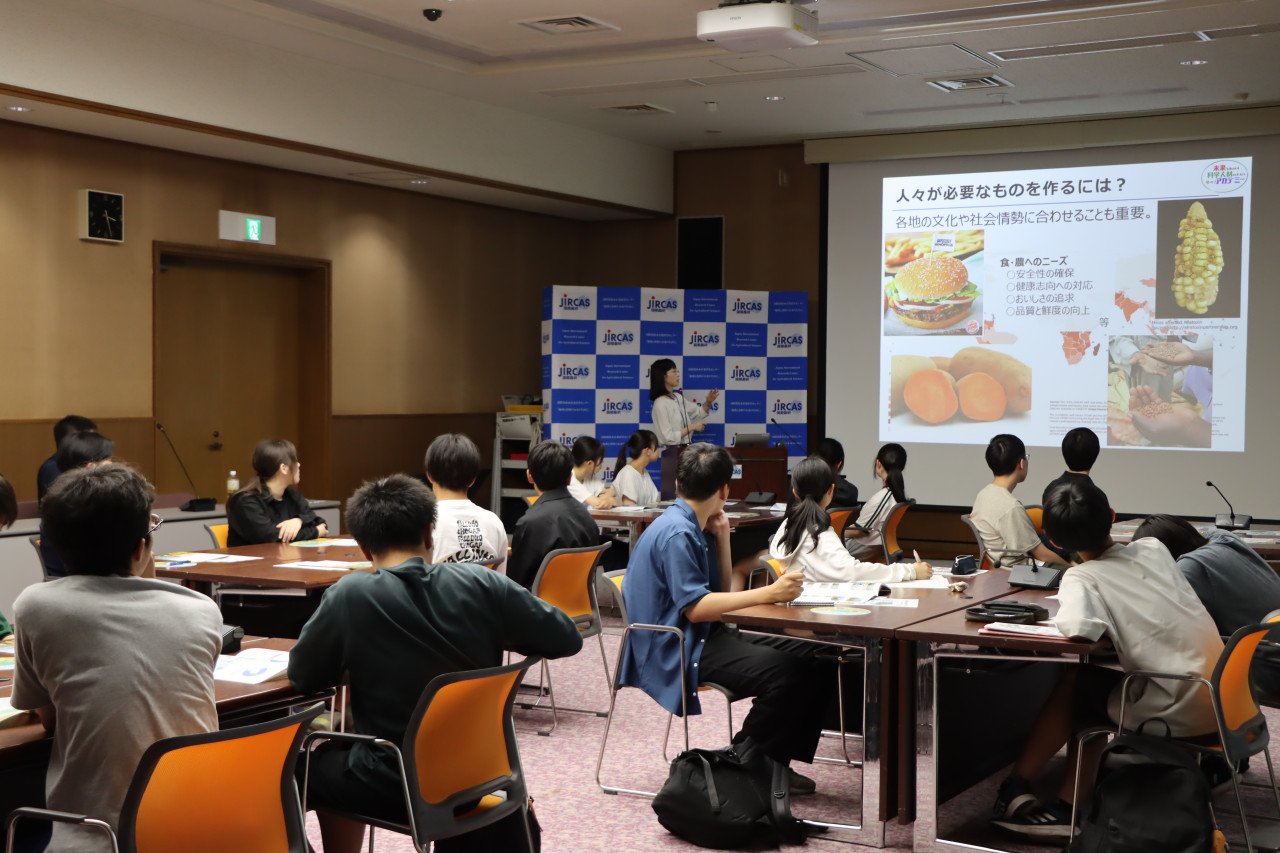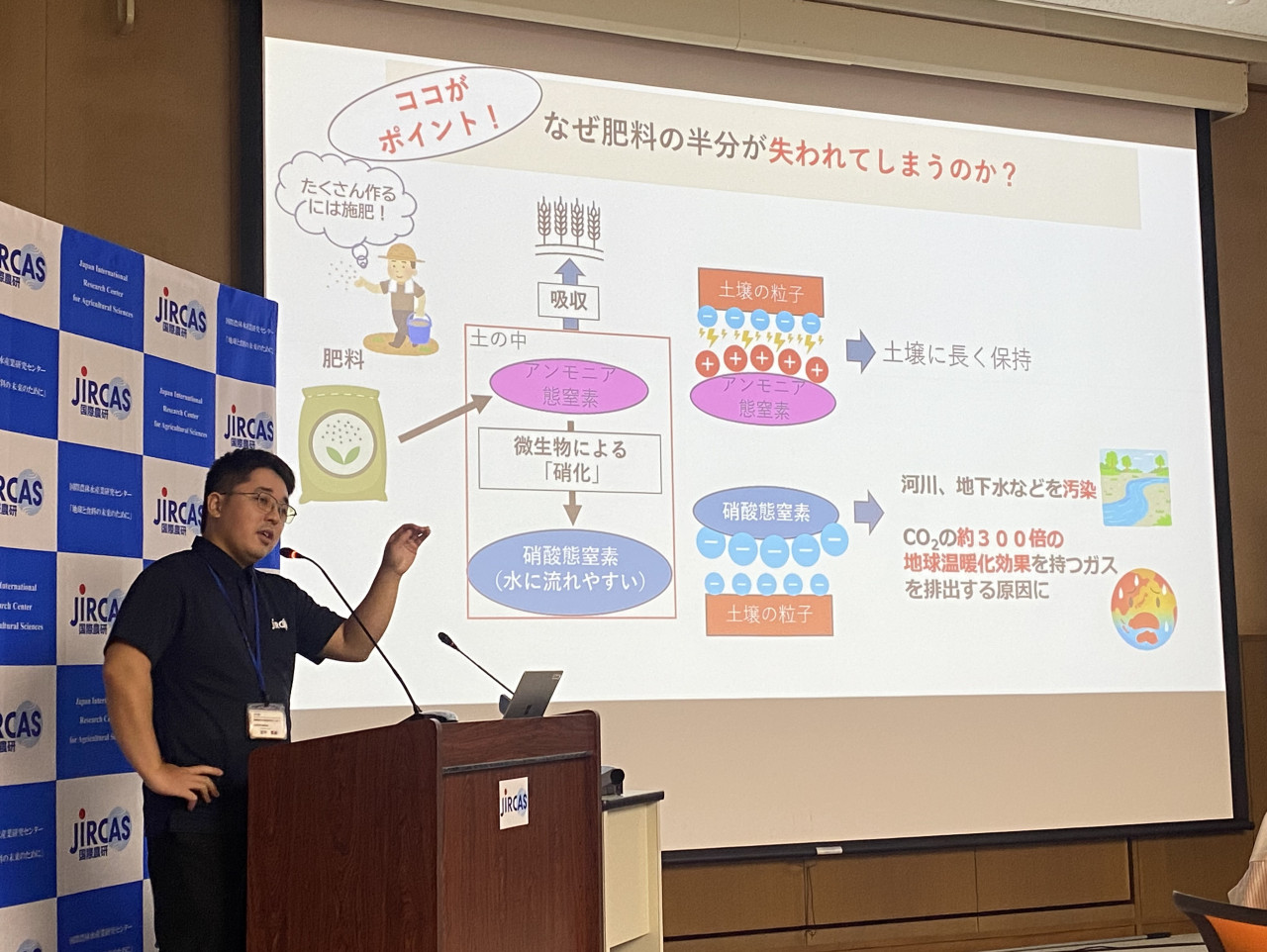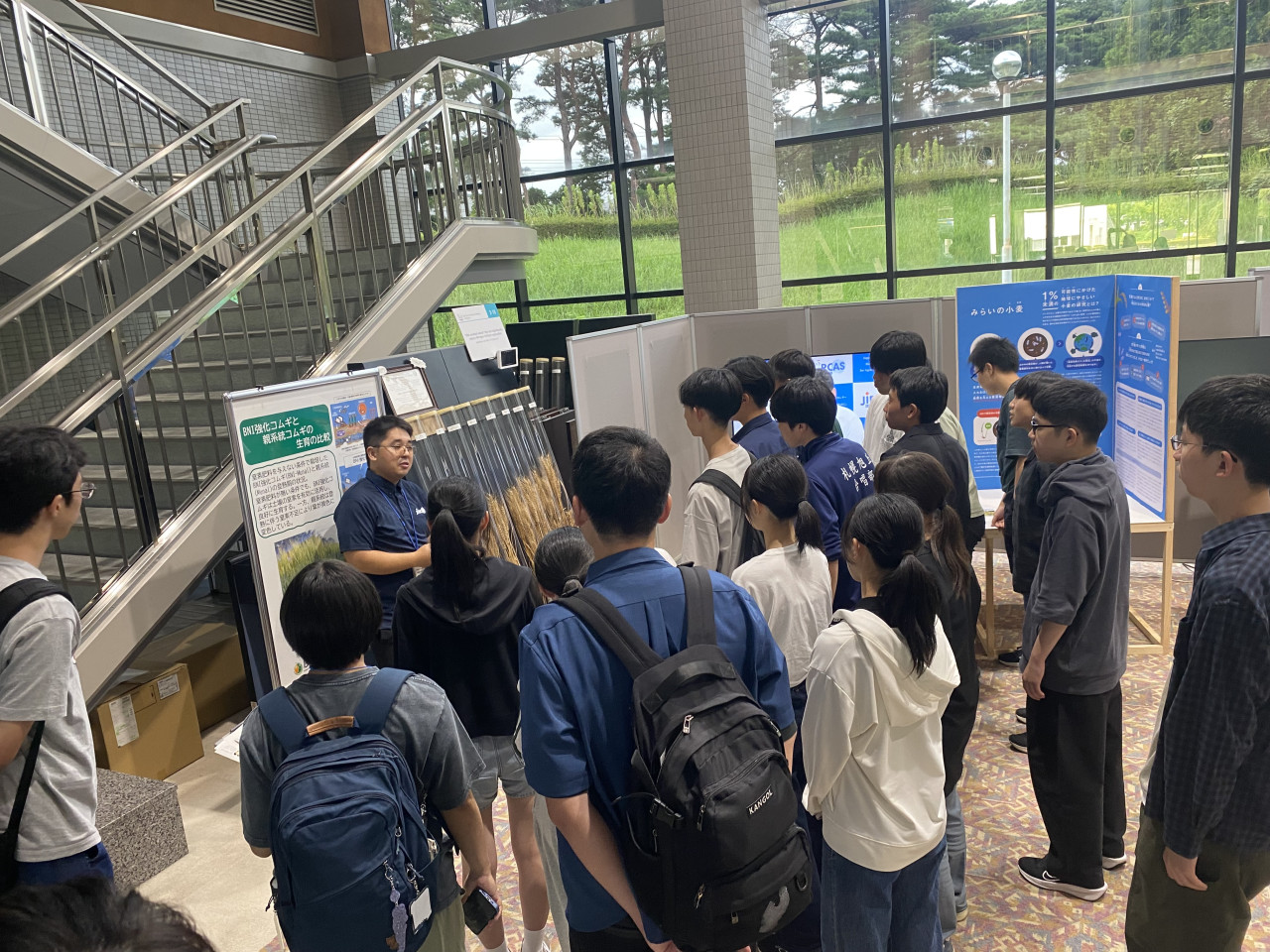
On Monday, August 3, 2026, JIRCAS welcomed 20 second-year students from Sapporo Asahigaoka Senior Senior High School for the 35th session of the Future Science Talent Academy. The lecture was delivered by Dr. MIYANAKA Noriki, Researcher in the Crop, Livestock and Environment Division, who introduced JIRCAS's efforts to address food security and environmental challenges through agricultural, forestry, and fisheries research in developing regions.
In the first half of the session, staff from the Partnership and Exchange Section introduced JIRCAS's research activities and international collaborative research initiatives, particularly projects conducted in cooperation with research institutions in Asia and Africa. The importance of conducting agricultural research at the international level to achieve food security and sustainable agricultural production was also explained, helping students gain a deeper understanding of the role of research in addressing global challenges.
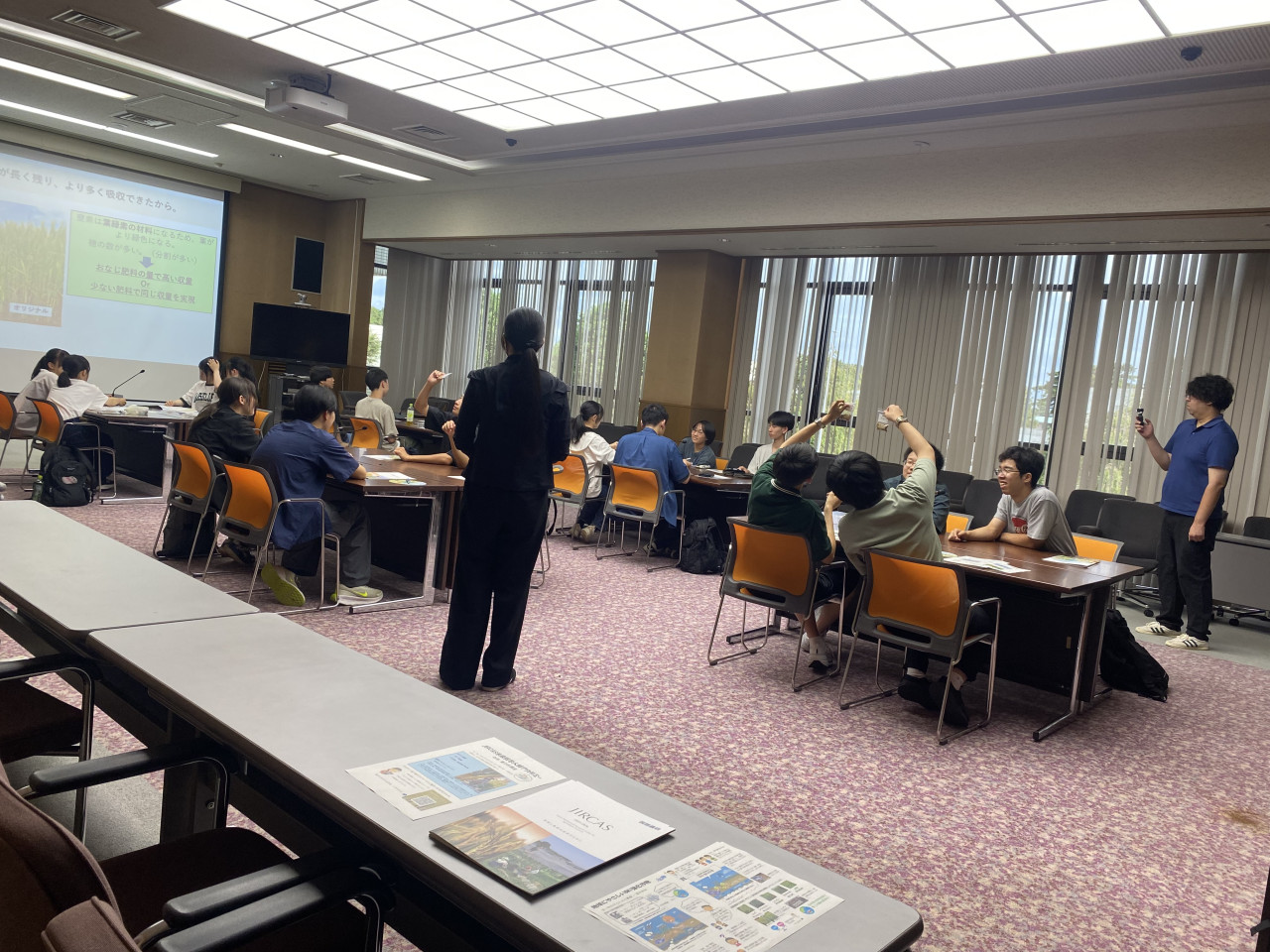
In the second half, Dr. Miyanaka delivered his presentation titled “Eliminating Wasteful Use of Nitrogen Fertilizers to Create Environmentally and Human-Friendly Agriculture." He explained why crops need fertilizer and how fertilizer affects the environment and crops, using wheat and nitrogen fertilizer, which are common agricultural products, as examples. He also discussed the necessity and benefits of Biological Nitrification Inhibition (BNI)-enhanced wheat. During the practical session, each group was provided with seeds of both BNI-enhanced wheat and conventional wheat. The students examined the seeds and presented their observations on the differences between the two types.
In addition, Dr. Miyanaka shared what inspired him to pursue agricultural research and spoke about his journey toward becoming a researcher. For students preparing to make decisions about their future careers, he offered practical advice on choosing universities and research fields, emphasizing the importance of following one's own interests and curiosity.
The students asked a number of highly insightful questions, including “What are the limitations of BNI?”, “What specific trials are being conducted for variety registration in India?”, and “To what extent can nitrogen use be reduced through BNI?” Other questions focused on future career paths, such as “Why did you choose to work at JIRCAS after graduating from a university in the United States?” and “How did you build relationships with Ph.D. researchers in the United States?” The session was lively and highly engaging.
Through this lecture, the students deepened their understanding of the potential and social significance of scientific research, as well as the importance of international cooperation. JIRCAS will continue to provide opportunities for young people to experience research firsthand, thereby fostering future scientific talent and promoting interest in science and technology.
JIRCAS offers junior and senior high school students opportunities to learn about cutting-edge research and scientific thinking. For more information about the Future Science Talent Academy and related inquiries, please refer to the program information page.