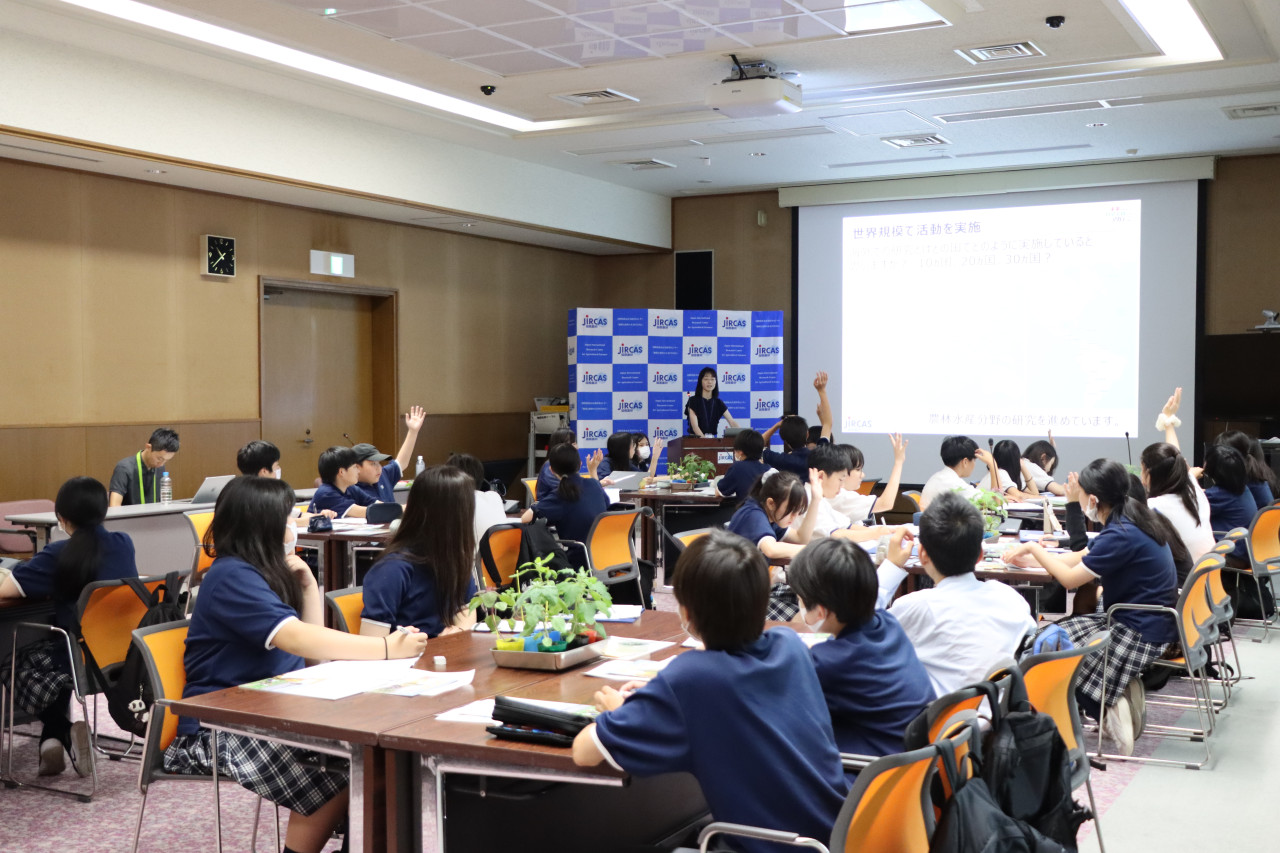
On Friday, July 24, 2026, the Japan International Research Center for Agricultural Sciences (JIRCAS) welcomed 66 first-year students from Salesian International School Setagaya Junior and Senior High School for the 32nd (morning) and 33rd (afternoon) sessions of the Future Science Talent Academy.
The school has been working to enhance students’ interest in science and their motivation to explore by providing off-campus learning opportunities for first-year junior high school students in their regular classes, allowing them to gain knowledge of cutting-edge research and ecosystems. This year marks the third visit. The students learned about the connection between science and society while being exposed to international agricultural research.
In the first half of the sessions, the Partnership and Exchange Section introduced JIRCAS's research activities and international joint research initiatives, and students learned about the total amount of food imported by Japan and measures toward the SDGs through a student-participation quiz format. Through these activities, students deepened their understanding of the role that international research plays in achieving food security and sustainable agricultural production.
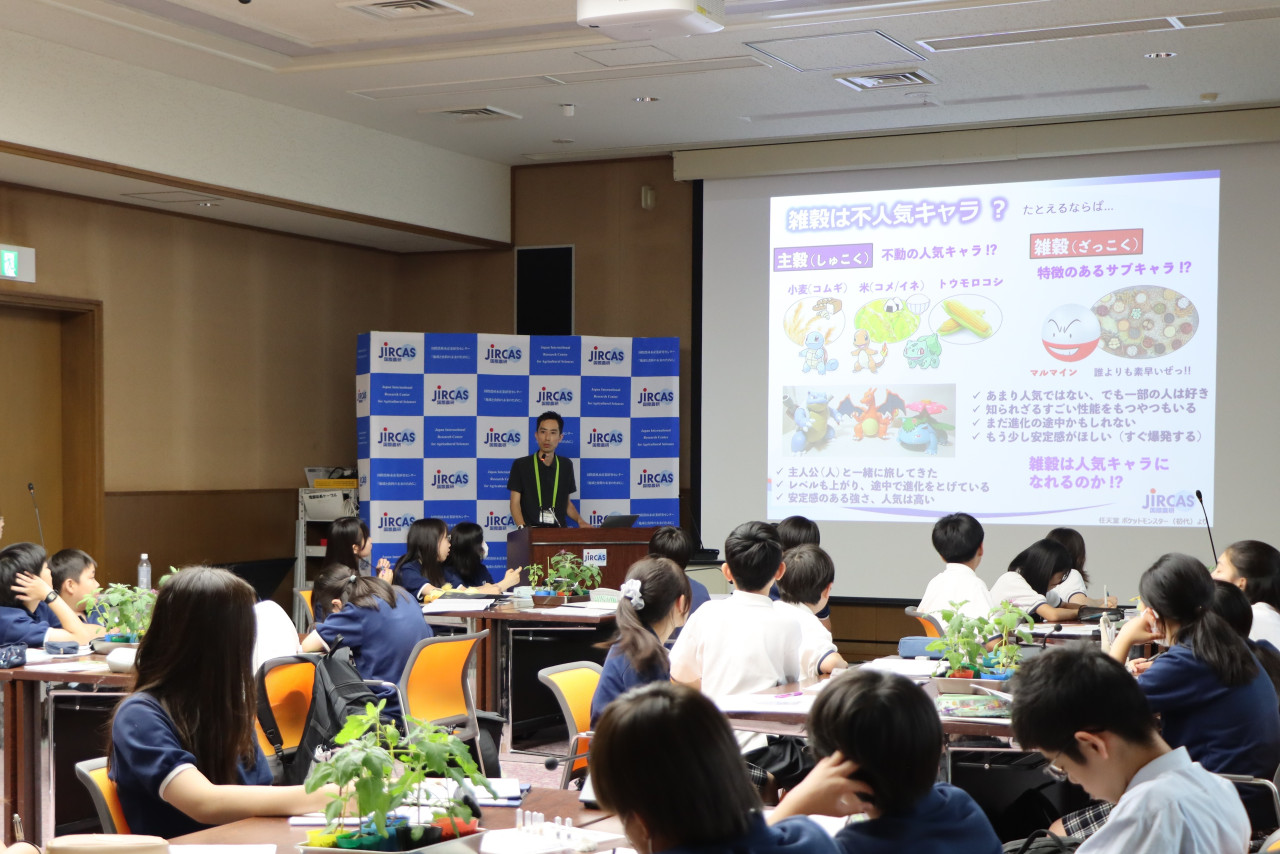
The second half focused on quinoa, a crop gaining attention as a superfood and a potential “food of the future.” Dr. OGATA Takuya (Project Leader, Biological Resources and Post-harvest Division) lectured in the morning (32nd) session, while Dr. KOBAYASHI Yasufumi (Senior Researcher, same division) lectured in the afternoon (33rd) session.
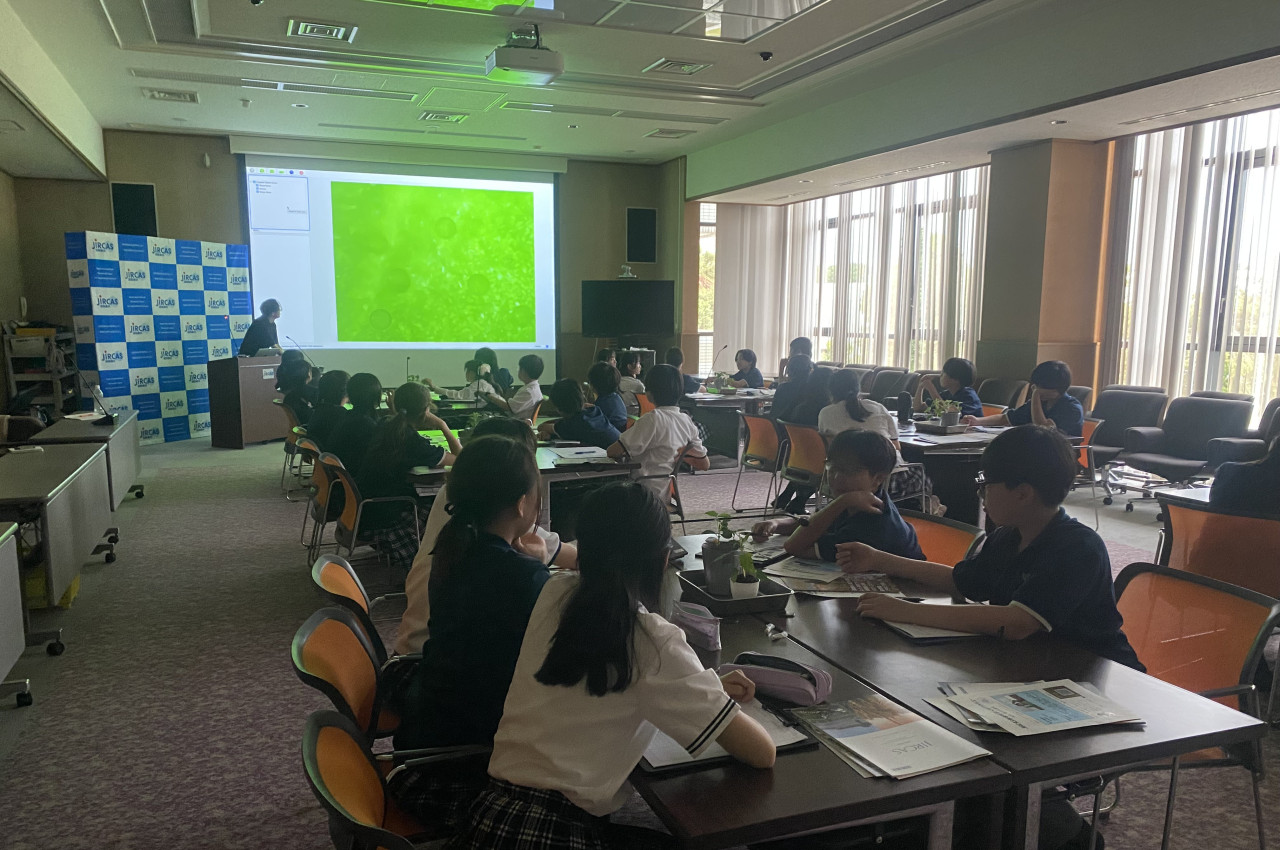
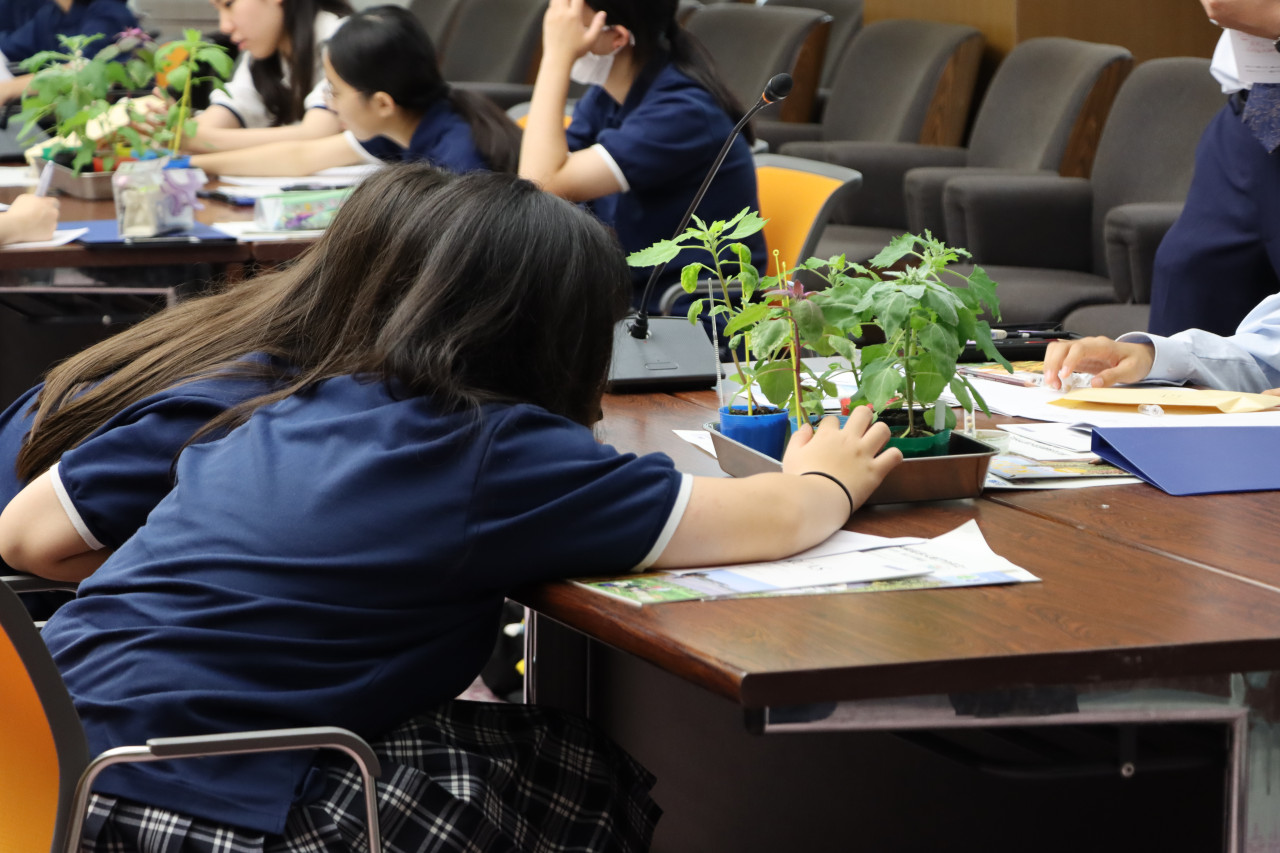
The two lecturers each introduced the characteristics of quinoa, including its ecological mechanisms and potential applications, as well as the latest research in this area. Students also had the opportunity to handle plants and seeds themselves, participating in quizzes to find the parent-child relationship between plants and seeds, and observing bladder cells (sac-like protruding cells found in the epidermis of some halophytes such as quinoa and ice plant) in quinoa leaves using microscopes. Furthermore, group presentations were also provided, creating lectures that truly sparked the students' excitement.
The lecturers also shared what inspired them to pursue a career in agricultural research and their experiences leading up to becoming researchers.
The students asked many insightful questions, such as “Does quinoa store water in its body to make it resistant to drought?”, “What did the ancestors of quinoa look like?”, and “Does quinoa easily change its form to adapt to the environment?”, which sometimes left the lecturers flustered. Towards the end, the accompanying teachers also asked questions, making the lectures highly interactive.
Through these lectures, the students deepened their understanding of the possibilities and social significance of scientific research, as well as the importance of international cooperation. Moving forward, JIRCAS will continue to provide opportunities for future scientific talent to directly experience research environments and contribute to increasing their interest in science and technology.
JIRCAS provides junior high school and high school students with opportunities to learn about cutting-edge research and scientific thinking. For more information about the Future Science Talent Academy and related inquiries, please visit the program information page.