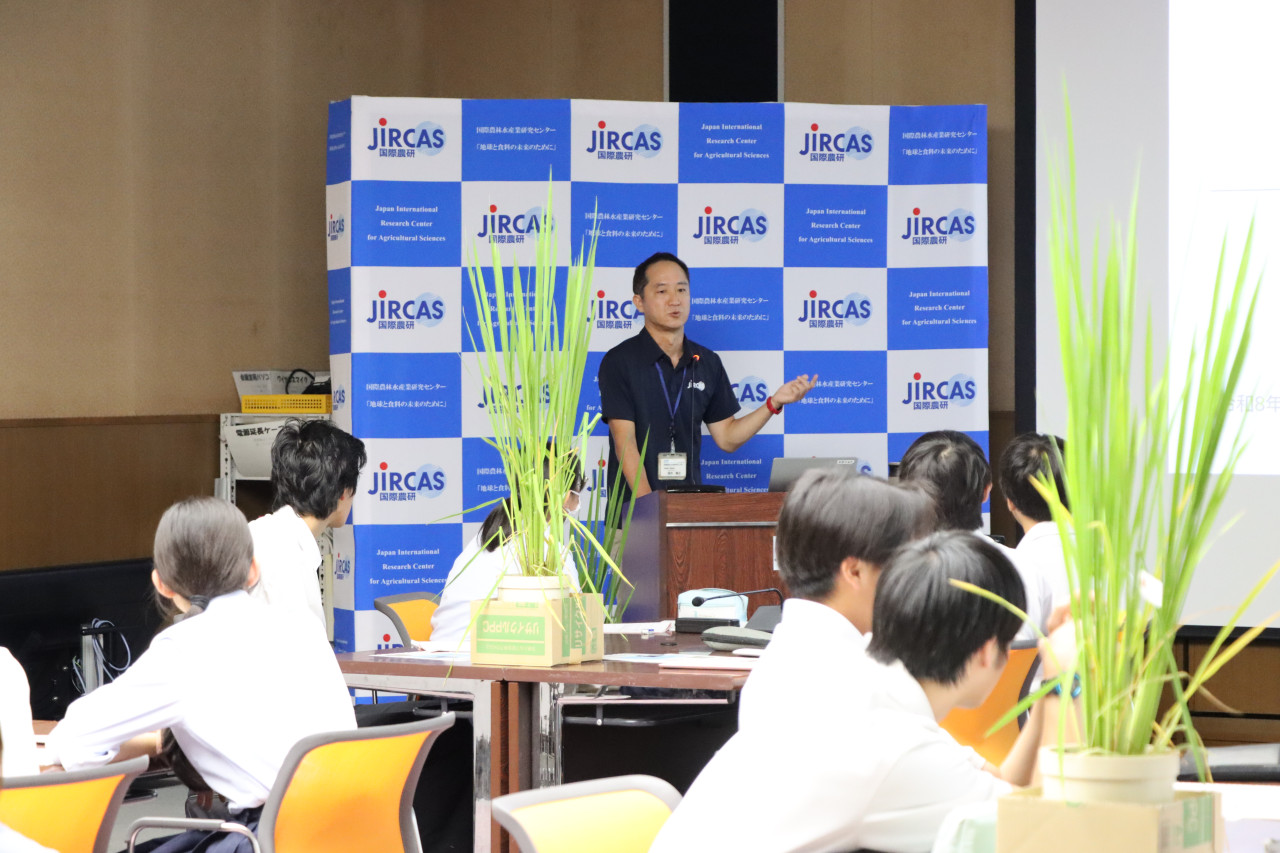
On Thursday, July 30, 2026, the Japan International Research Center for Agricultural Sciences (JIRCAS) hosted 20 second-year students from the Science and Mathematics Course of Fukuoka Prefectural Yahata High School for the 34th session of the Future Science Talent Academy. Dr. TAKAI Toshiyuki, Senior Researcher in the Crop, Livestock and Environment Division, and Dr. SAITO Minoru, Researcher in the Fisheries Division, handled the lectures. They introduced students to research on agriculture, forestry, and fisheries in developing countries, as well as efforts to address global food and environmental challenges.
During the first half of the session, staff from the Partnership and Exchange Section explained JIRCAS’s research activities and international collaborative projects, particularly those being carried out with research institutions in Asia and Africa. The students also learned about the importance of conducting agricultural research on an international scale to achieve food security and sustainable agricultural production. Through these discussions, they gained a deeper understanding of the role scientific research plays in solving global issues.
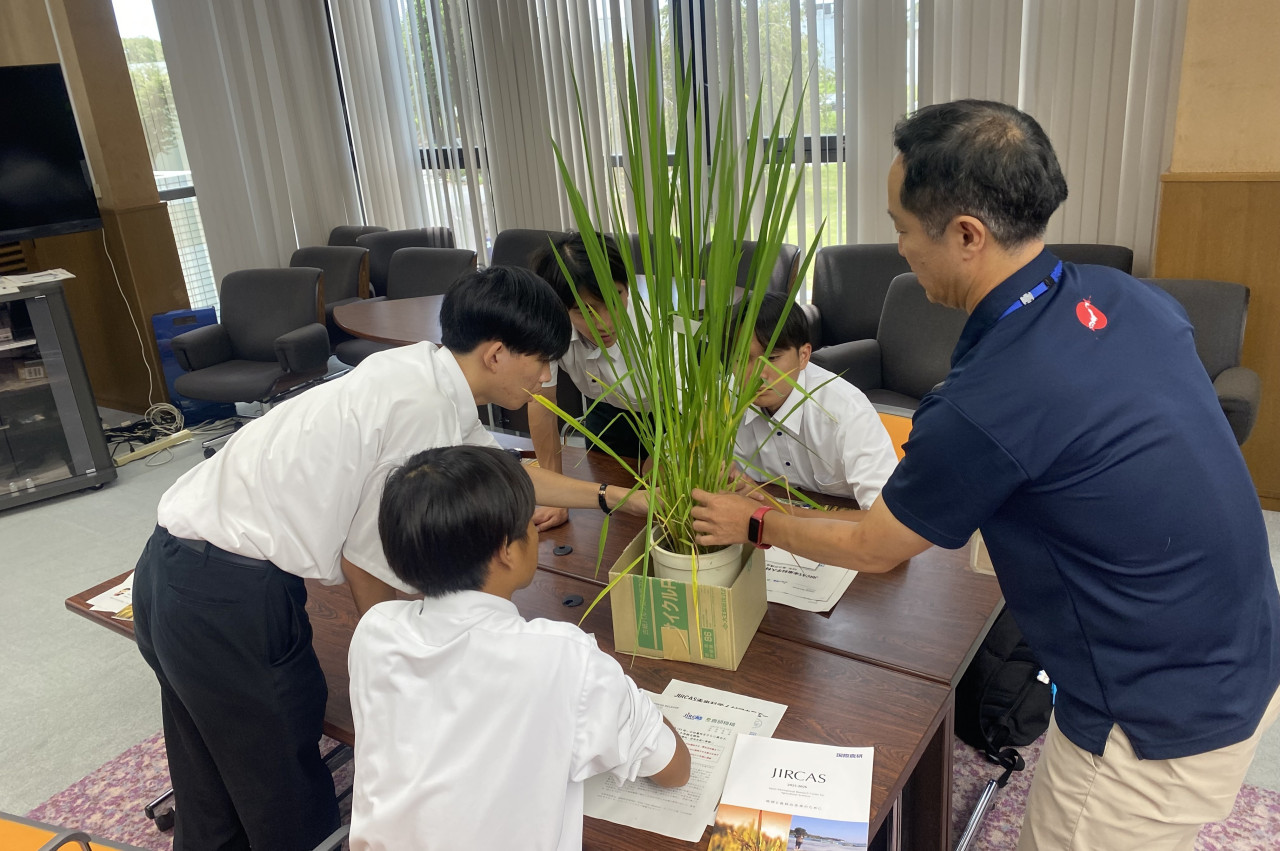
In the second half, Dr. Takai first presented a talk titled “Research Aiming for More Productive Rice Varieties.” He introduced breeding research focused on developing high-yield rice, especially studies examining tiller number (the stems that produce rice panicles) and panicle number. He also discussed breeding research utilizing MP3, a genetic locus discovered during this work that increases panicle numbers without reducing panicle size. Students participated in a hands-on activity comparing tiller numbers among different rice varieties using actual rice plants.
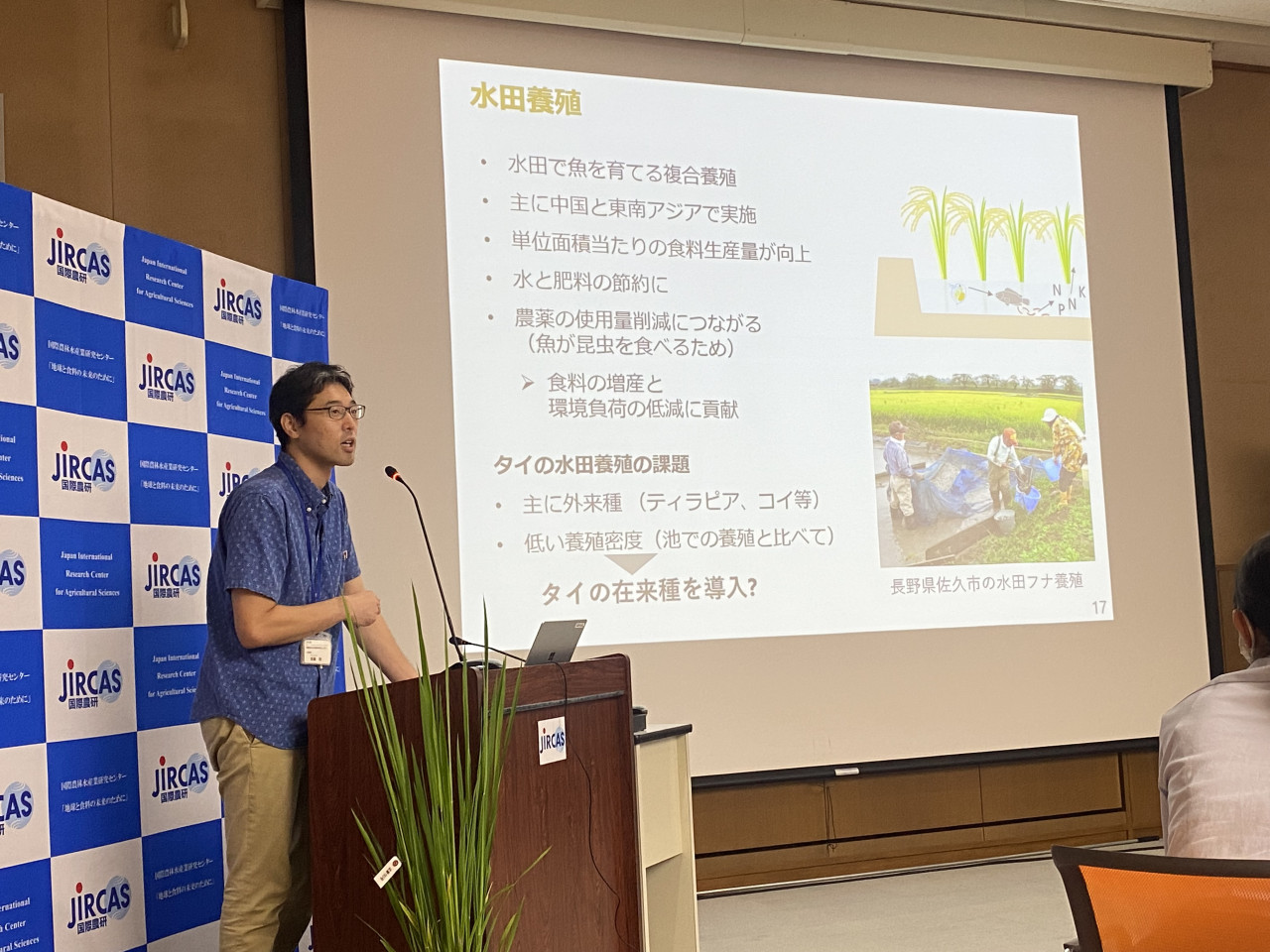
Next, Dr. Saito delivered a lecture titled “Introduction to Fisheries Research in Northeastern Thailand: Rice Paddies and Their Surroundings.” He explained the current state of inland aquaculture in Thailand, particularly rice-fish farming and mixed aquaculture systems, highlighting their benefits as well as areas for improvement. Using numerous photographs, he also introduced collaborative research with local partners, regional market conditions, and the broader context surrounding fisheries research. Following the lecture, the students visited the fisheries laboratory, where they learned about the aquatic animals being raised for research.
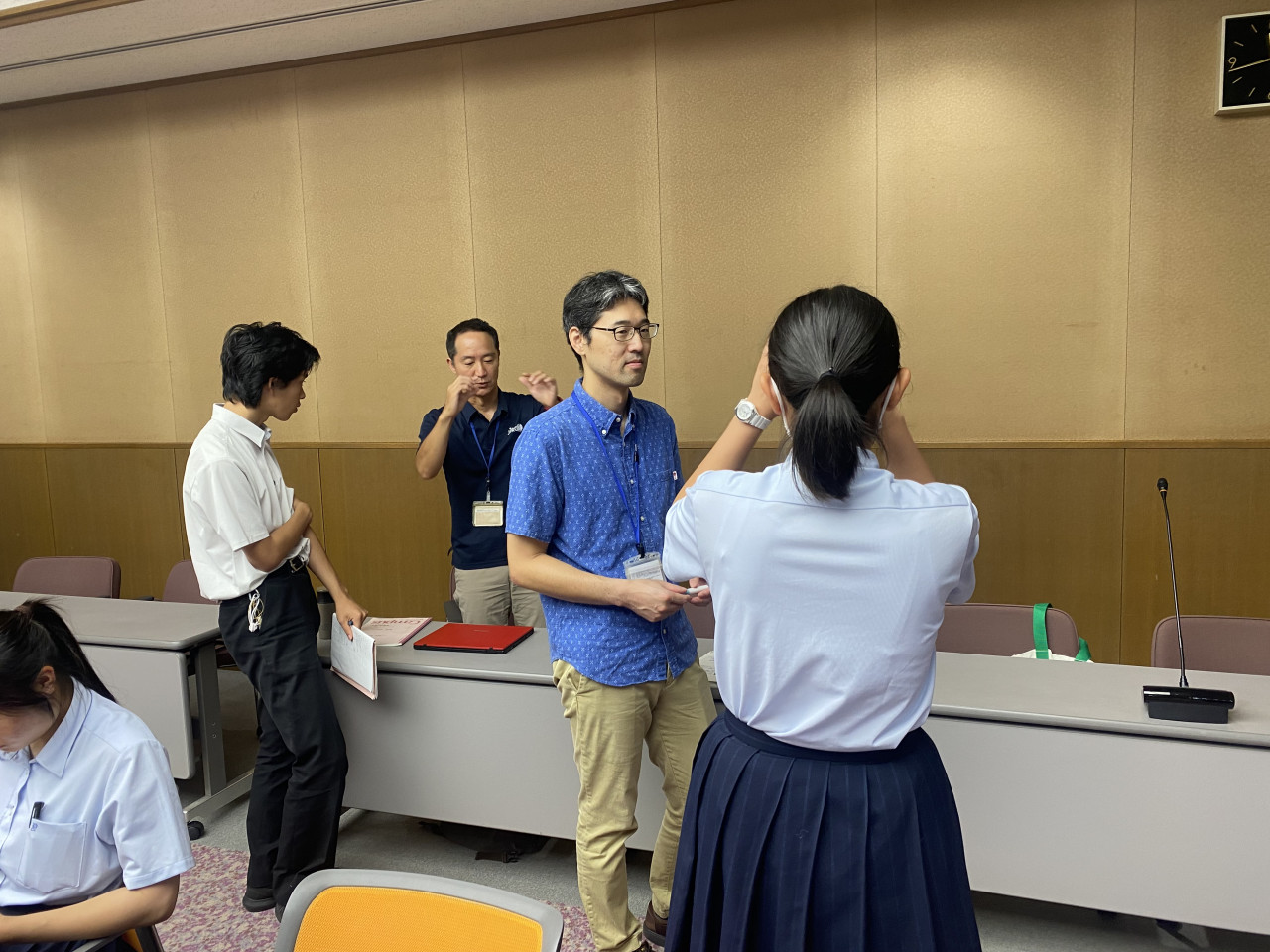
Students asked many insightful questions, including: “When breeding a new rice line by crossing Koshihikari with another variety, can researchers confirm that Koshihikari genes are present?” and “Why does the number of shrimp measured each month vary so greatly?” Some students also sought practical advice, such as how to improve the health of rice crops grown by their families. The session was highly interactive and well received.
The two lecturers also shared their personal journeys into agricultural research and the experiences that led them to become scientists. They offered practical advice to students preparing for future educational and career decisions, discussing how to choose a university and research field and emphasizing the importance of pursuing one's own interests and passions.
Through this lecture, students deepened their understanding of the potential and social significance of scientific research, as well as the importance of international cooperation. JIRCAS will continue providing opportunities for young people to engage directly with research sites and activities, helping foster interest in science and technology and nurturing the next generation of scientists.
JIRCAS offers junior and senior high school students opportunities to experience cutting-edge research and scientific thinking through programs such as the Future Science Talent Academy. For more information about this initiative and contact details, please refer to the program's information page.