On Wednesday, July 22, 2026, the Japan International Research Center for Agricultural Sciences (JIRCAS) welcomed ten second-year students from the Science Inquiry Course of Shizuoka City High School (Shizuoka Ichiko) for the 31st session of the Future Science Talent Academy.
The school conducts science training for second-year students in its Science Inquiry Course with the aim of broadening students' scientific perspectives through exposure to cutting-edge science and technology, while also fostering greater awareness of future career paths through interactions with researchers and visits to research facilities. The visit to JIRCAS was conducted as part of this program and marked the school’s third visit.
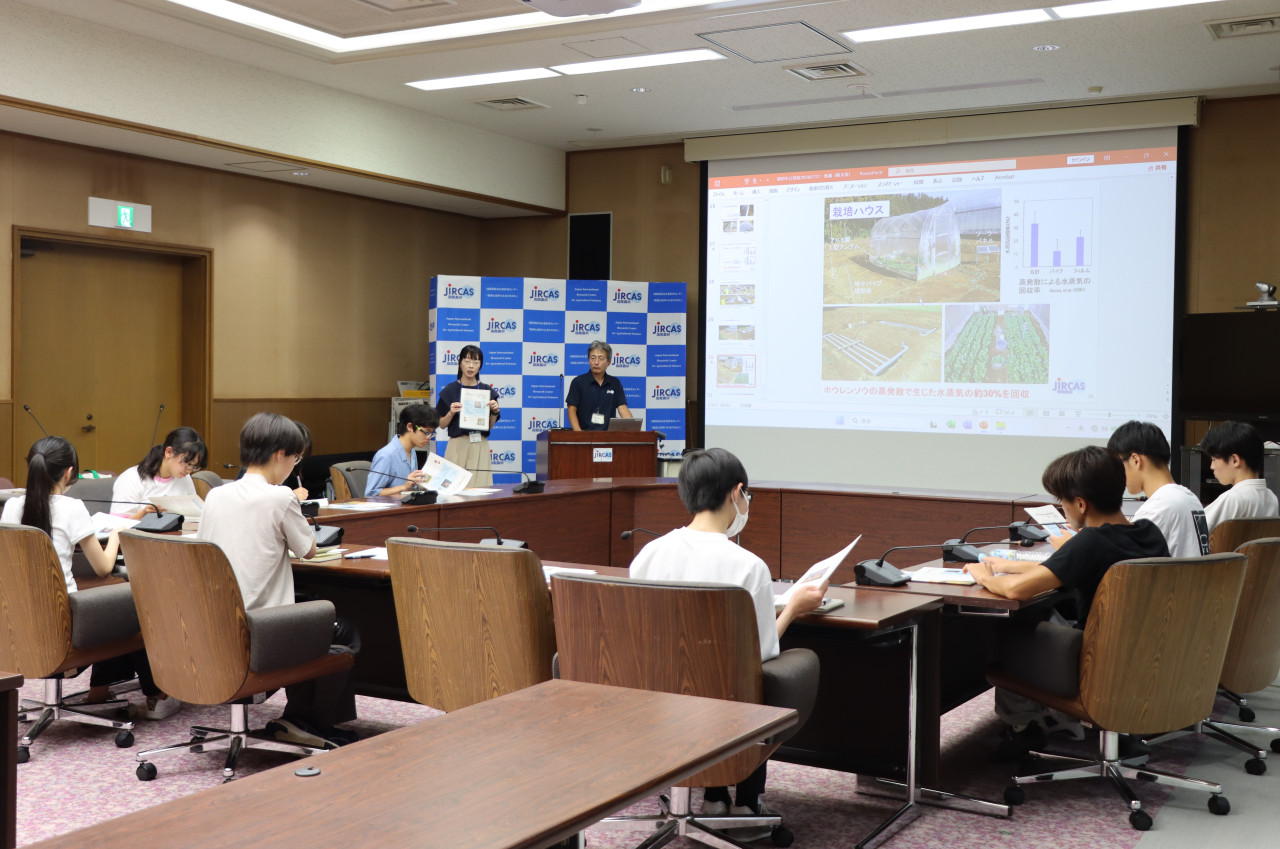
During the first half of the session, participants were introduced to JIRCAS's research activities and international collaborative research initiatives. The lecture explained how agricultural, forestry and fisheries research conducted in cooperation with partners around the world contributes to the food and daily lives of people in Japan. Particular attention was given to the current state of Japan’s food production and to international food production and distribution systems, providing students with an opportunity to consider the significance of Japan's support for research and technology development in developing countries.
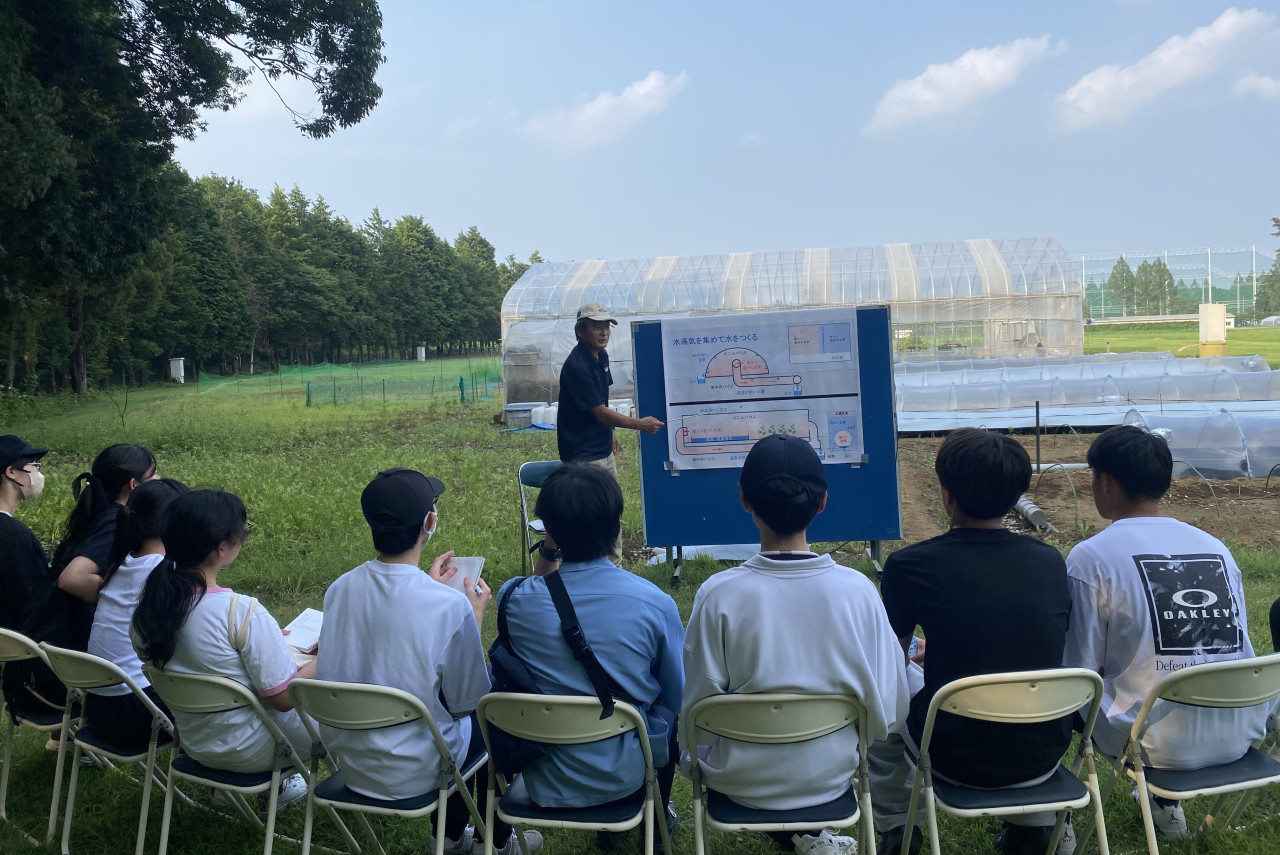
In the second half, Dr. IKEURA Hiroshi (Senior Researcher, Rural Development Division) delivered a lecture on the importance of water in agriculture and technologies for the efficient use of water resources in dryland farming. He also introduced his research on collecting water vapor inside plastic greenhouses and reusing it as agricultural water. The lecture incorporated many concepts familiar from school science classes, including “saturation vapor density,” helping students relate advanced research to the subjects they study in the classroom.
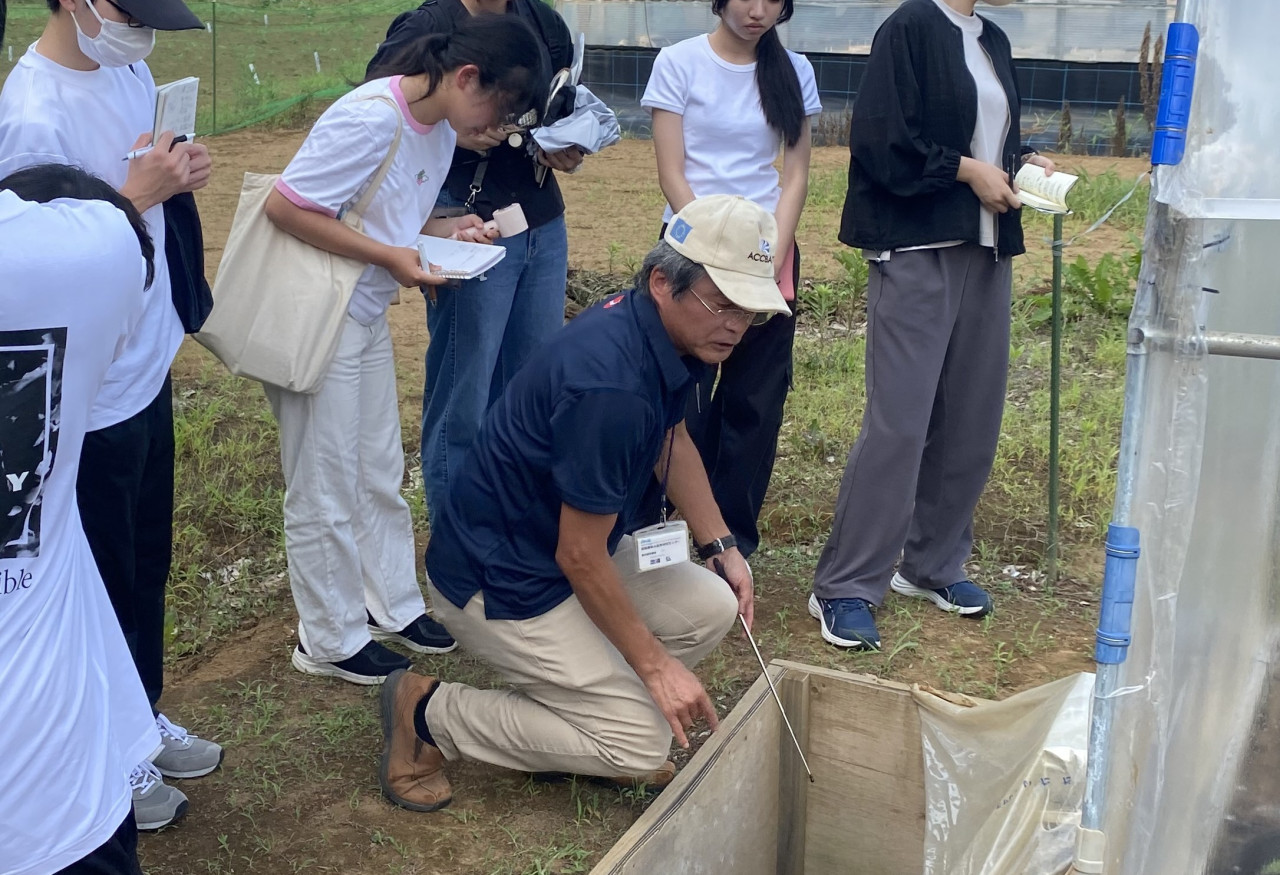
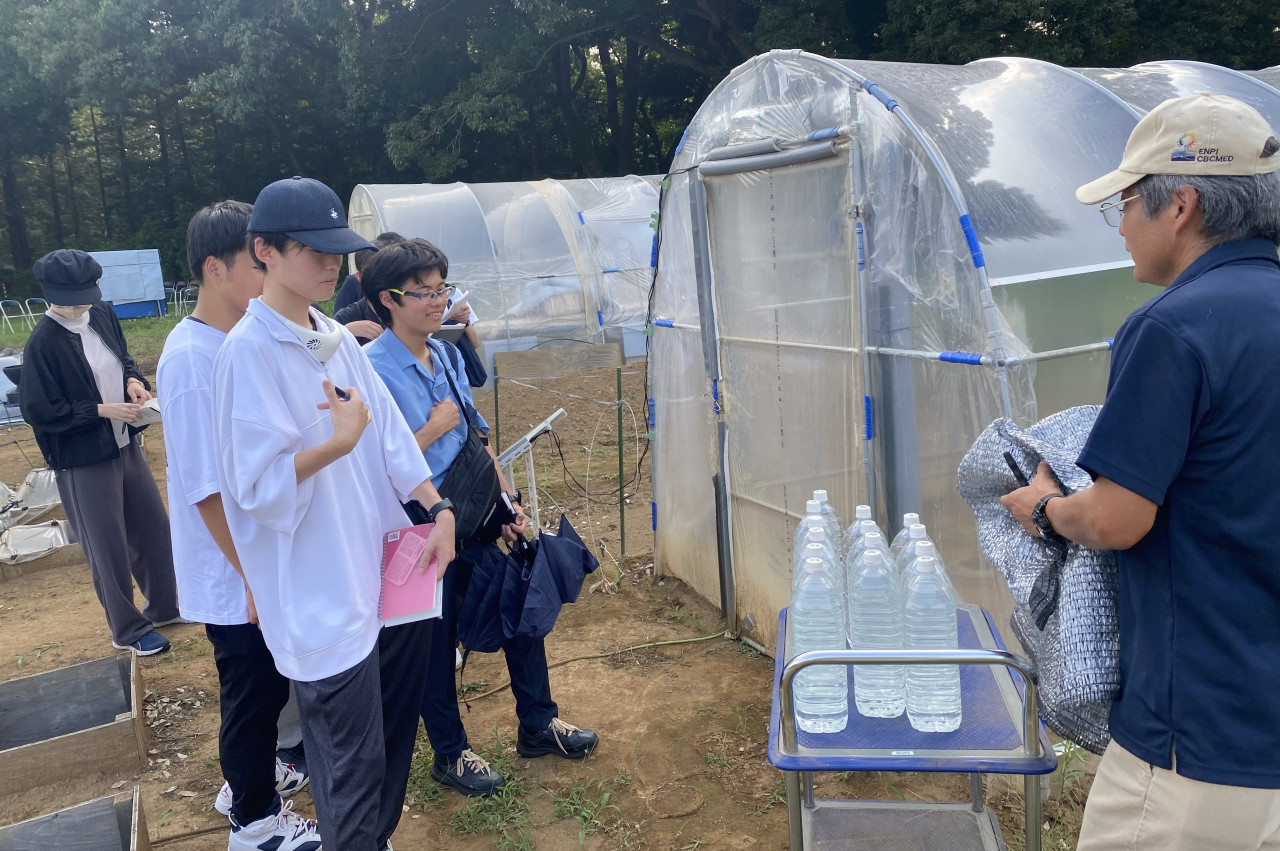
Following the lecture, the students visited the JIRCAS Hachimandai Experimental Field, where they observed field trials conducted by Dr. Ikeura and visited two experimental facilities. Students were able to see water vapor being collected in real time and participated actively, asking even more questions than during the classroom session. The amount of water collected in a single day far exceeded their expectations, prompting many questions about topics such as differences in water collection efficiency between facilities, the cost of introducing the technology in developing countries, and the countries where the technology has already been implemented.
The homeroom teacher who accompanied the students expressed appreciation, noting that it was highly valuable for the school to see scientific concepts learned in the classroom applied and explained in a real research setting. Later, the school also commented:
“The students were impressed both by the opportunity to observe actual experimental facilities and by the unexpectedly large amount of water that could be collected from inside the greenhouse. It was a valuable opportunity for them to learn about cutting-edge research, understand its objectives and significance, and interact directly with an actual researcher.”
The visit provided students with an opportunity to think more deeply about water, a resource they use every day without often giving it much thought.
Through this visit, the students gained a deeper understanding of the potential of science, the social significance of research, and the importance of international cooperation. Moving forward, JIRCAS will continue to provide opportunities for students to experience research firsthand and foster greater interest in science and technology as part of its efforts to nurture the next generation of scientists.
JIRCAS provides junior high school and high school students with opportunities to learn about cutting-edge research and scientific thinking. For more information about the Future Science Talent Academy and related inquiries, please visit the program information page.