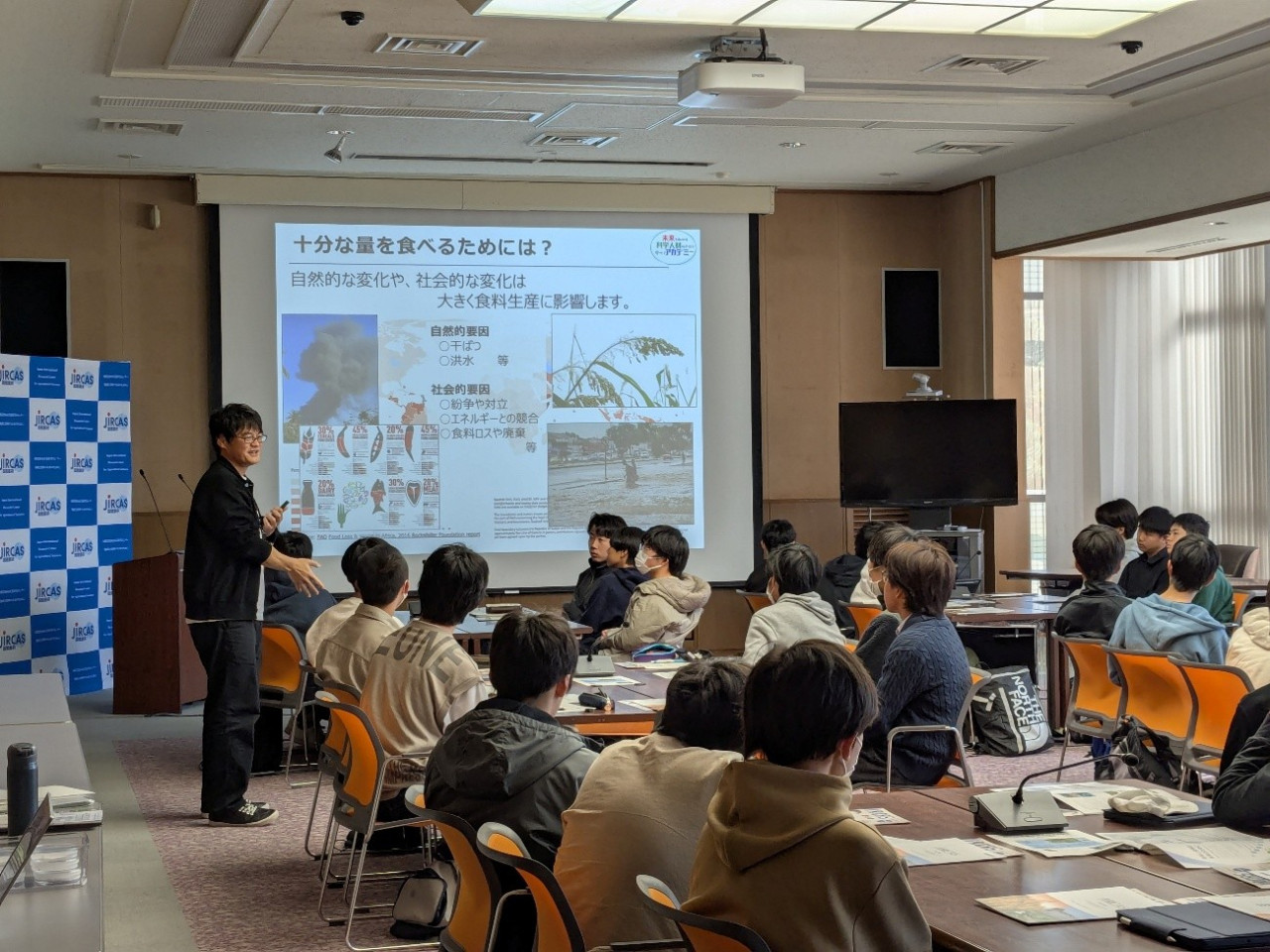
On Friday, November 28, 2025, the Japan International Research Center for Agricultural Sciences (JIRCAS) welcomed 40 first-year students from Saitama Prefectural Kumagaya High School for the 24th session of the “Future Science Talent Academy.” The school has been conducting off-campus training with the aim of cultivating students' inquisitiveness, imagination, and communication skills, and this visit was part of that program.
The first half of the session introduced how research in the fields of agriculture, forestry, and fisheries, conducted in cooperation with partners around the world, contributes to the food and daily lives of people in Japan. The lecture especially focused on the current state of food production in Japan as well as international food production and distribution. Students were given an opportunity to reflect on the significance of Japan’s cooperation in research and technological development in developing countries. It also explained the qualities needed in global human resources and STI (Science, Technology, and Innovation) talent, encouraging students to think about how these relate to their studies at school.
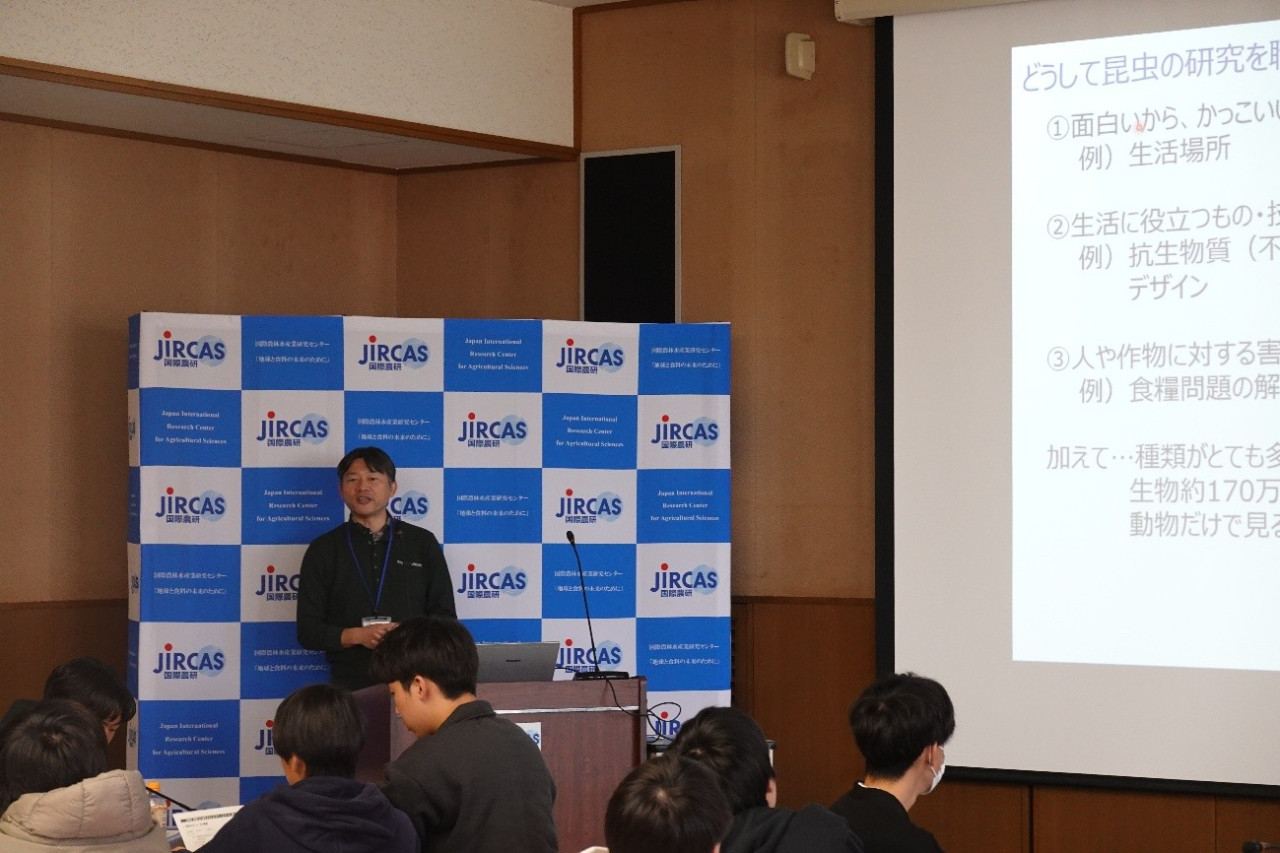
Next, Dr. KOBORI Youichi, Project Leader in the Crop, Livestock and Environment Division, gave a lecture on “Transboundary Pests.” At the beginning, based on interviews with insect researchers, he introduced the diverse reasons and appeals that draw people to entomology. He also presented the origins of pest control and its long research history through case studies, discussing both the fascination and the challenges of insect research. Some students appeared to become interested in entomology, and it was impressive to see them listen attentively as he explained the roles of public and private research institutes and testing centers.
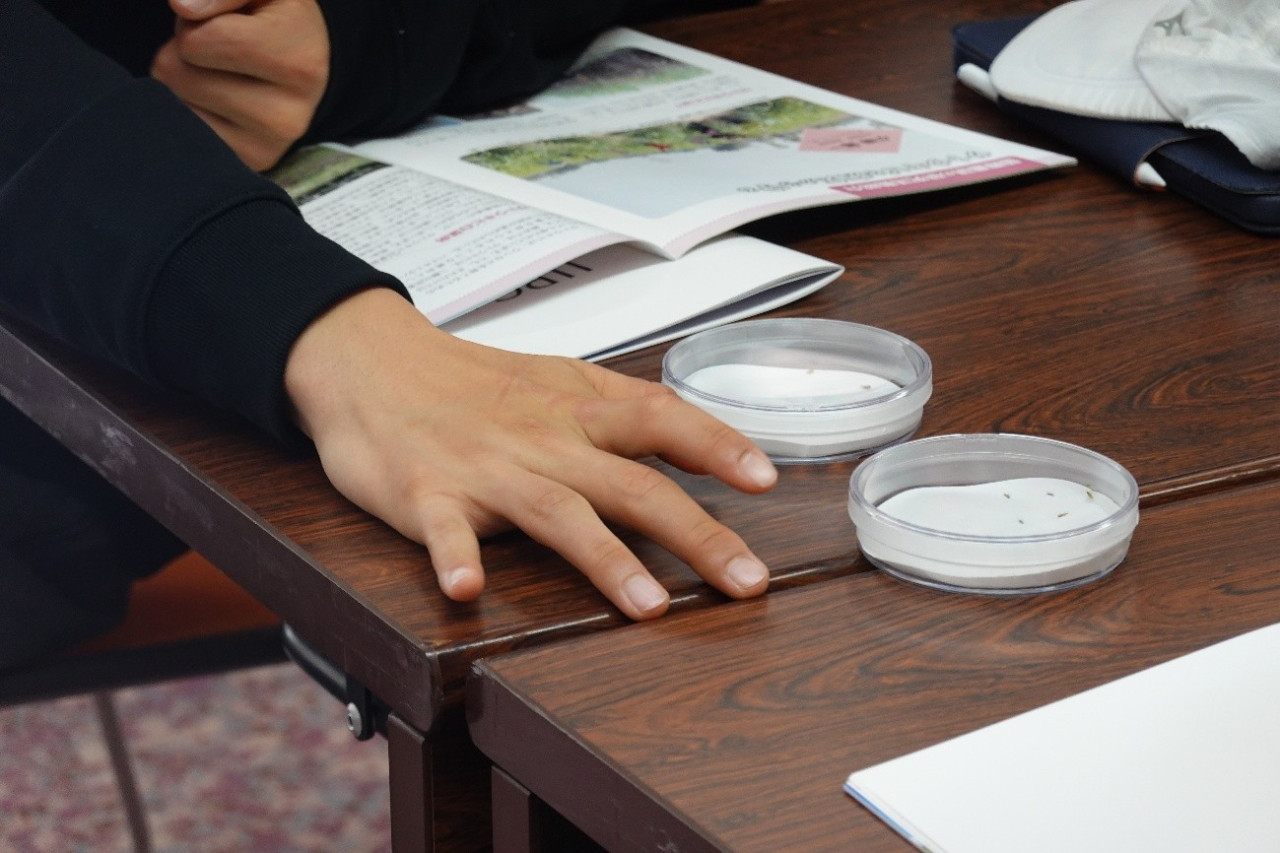
Dr. Kobori also introduced the research conducted in the Transboundary Pests project he leads, using photos and anecdotes. Examples of border-crossing pests—such as the planthoppers that migrate from Southeast Asia every year, and the fall armyworm that became a problem in Africa and rapidly expanded its range across Asia including Japan—drew voices of surprise from the students. They listened intently while looking at projected photos and videos, as well as actual samples of planthoppers and their natural enemies.
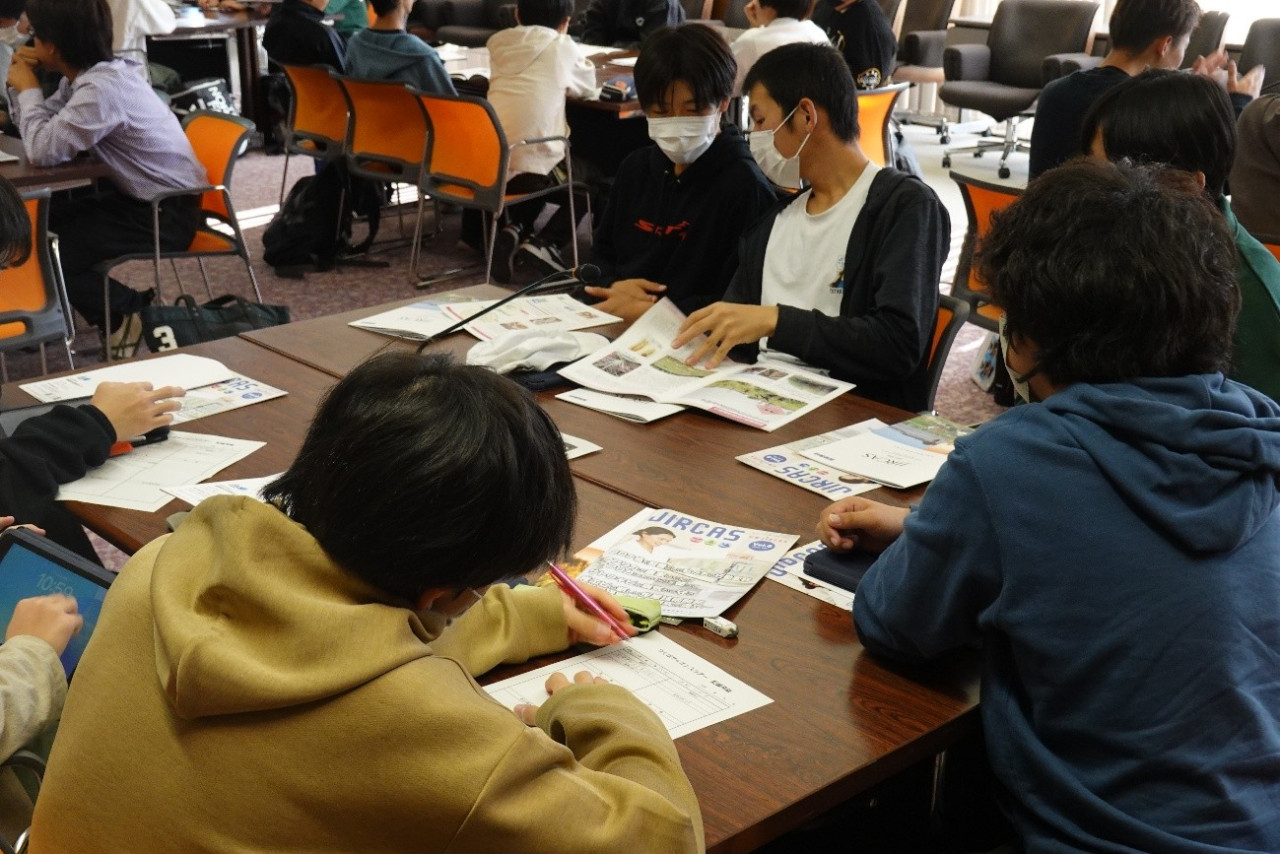
During the lecture, students also engaged in an activity where they formed hypotheses about why pest control is difficult, discussed methods for testing those hypotheses in groups, and presented their results. The hypotheses and testing methods proposed by each group were highly accurate, which impressed Dr. Kobori and demonstrated the students’ knowledge and reasoning skills. During the Q&A session, students posed sharp questions such as “What causes the differences in effectiveness between pesticide application using drones and using small helicopters?” and “Why did the planthopper and its natural enemy we observed as samples show different levels of activity?” Dr. Kobori responded thoughtfully while noting how impressed he was with the students’ understanding and observational skills.
Through this visit, the students deepened their understanding of the potentials of science, the social significance of research, and the importance of international cooperation. It was a valuable opportunity for them to reflect on their own educational paths and future goals. Moving forward, JIRCAS will continue to provide opportunities for students to directly experience research environments and further foster their interest in science and technology, contributing to the development of the next generation of scientific talent.