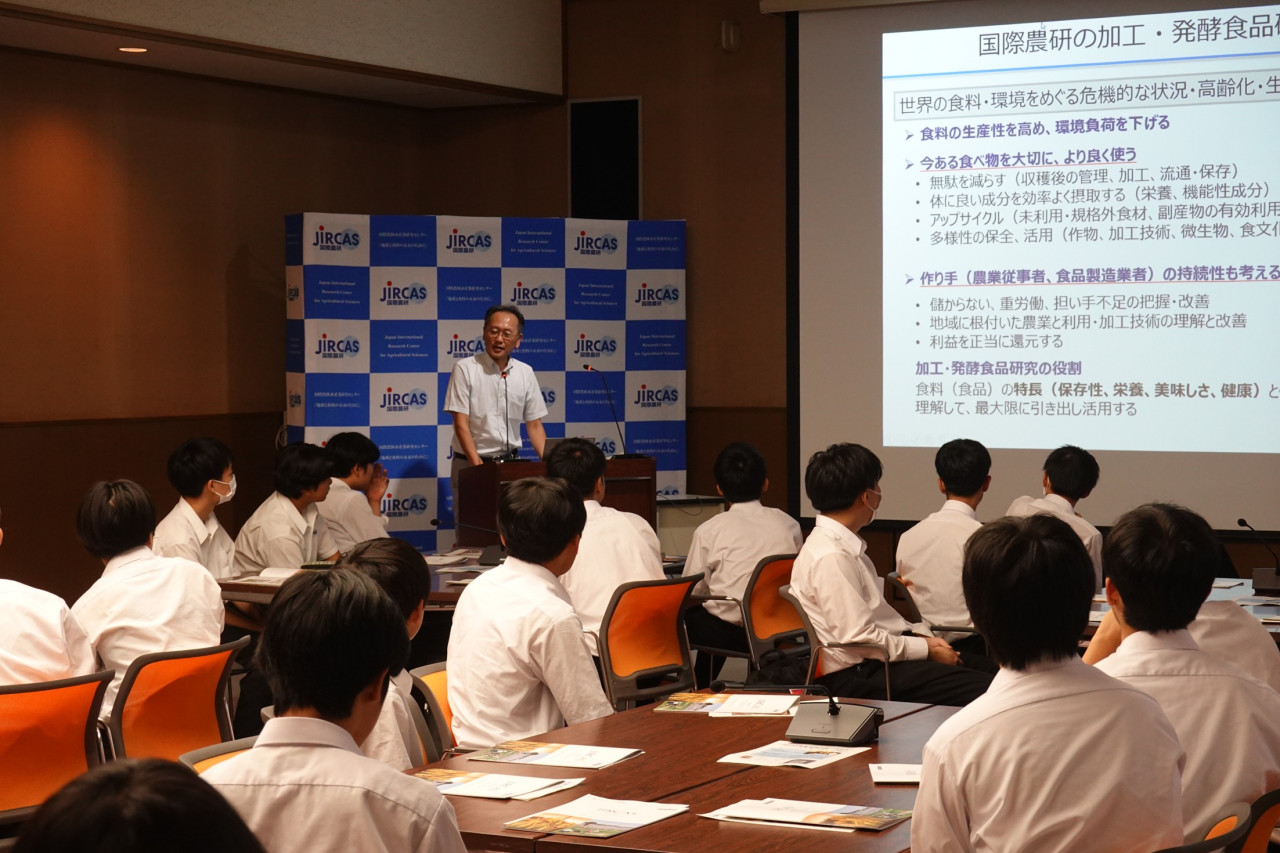



On Thursday, October 9, 2025, 40 first-year students from Tochigi Prefectural Moka High School visited the Japan International Research Center for Agricultural Sciences (JIRCAS) for the 12th session of the Future Science Talent Academy. At this school, annual training at research institutions in Tsukuba Science City is conducted to help students explore international projects and cutting-edge science and technology. This initiative aims to enhance students’ interest in science and technology, support their choices between arts and sciences, and improve awareness of future career paths.
The visit began with an introduction to JIRCAS’s research activities and international collaborative projects. The lecture explained how agricultural, forestry, and fisheries research conducted in partnership with countries around the world contributes to society. In particular, students were encouraged to consider how initiatives in developing countries relate to life in Japan. By sharing diverse perspectives, the visit provided an opportunity to deepen understanding of global issues.
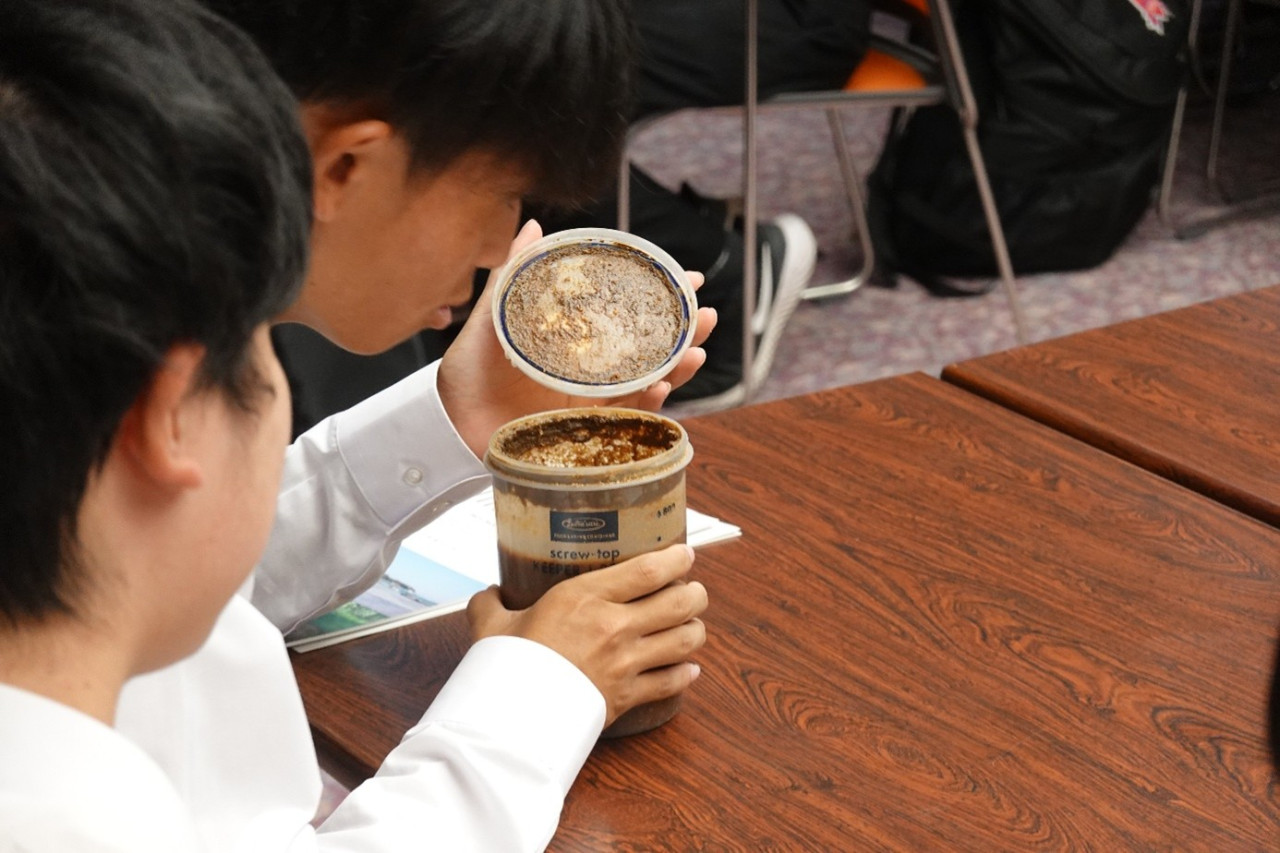
Next, Dr. MARUI Junichiro, Senior Researcher in the Biological Resources and Post-harvest Division, introduced research on establishing safe production methods for “padek,” a fermented fish seasoning being developed in Laos, as well as the development of high-value-added foods such as amazake (a sweet rice drink) using Japanese koji techniques in Laos and Thailand. The lecture used concrete examples, including samples of padek produced locally, to show how research progresses through continuous communication with local people and by receiving advice from them. This session highlighted the appeal of JIRCAS’s activities, which blend advanced scientific knowledge with local wisdom and practices.
Dr. Marui also emphasized the depth of understanding gained by visiting research sites firsthand and encouraged students to “take every opportunity to experience the world beyond Japan.” While language skills such as English are important for conducting international research, he shared practical advice based on rich international experience, noting that using basic local phrases like “hello,” “thank you,” and “delicious” can significantly strengthen relationships with local partners.
After the lecture, students asked many questions, demonstrating active engagement. Questions included: “You said a lot of salt is used to ensure the safety of padek—does this affect health?” “Is the use of koji molds unique to Japan?” “Have you ever faced danger while working abroad?” Dr. Marui answered each question carefully, leaving a strong impression of the students’ curiosity and their desire to broaden their international perspectives.
Through this visit, students had a valuable opportunity to reaffirm the societal significance of science and technology and the importance of international collaboration. It also encouraged them to reflect on their own future careers and goals. Going forward, the Academy plans to continue providing students with direct exposure to research environments to further stimulate interest and engagement in science and technology.