


On Monday and Tuesday, November 10–11, 2025, the Japan International Research Center for Agricultural Sciences (JIRCAS) welcomed 80 second-year students (two classes) from Okinawa Prefectural Kyuyo Senior High School for the 17th and 18th sessions of the “Future Science Talent Academy.” The activity is part of the school’s science and mathematics program, aiming to cultivate problem-solving skills and foster scientific and international perspectives through educational trips. Following last year, JIRCAS was selected as one of the visit destinations for this training program.
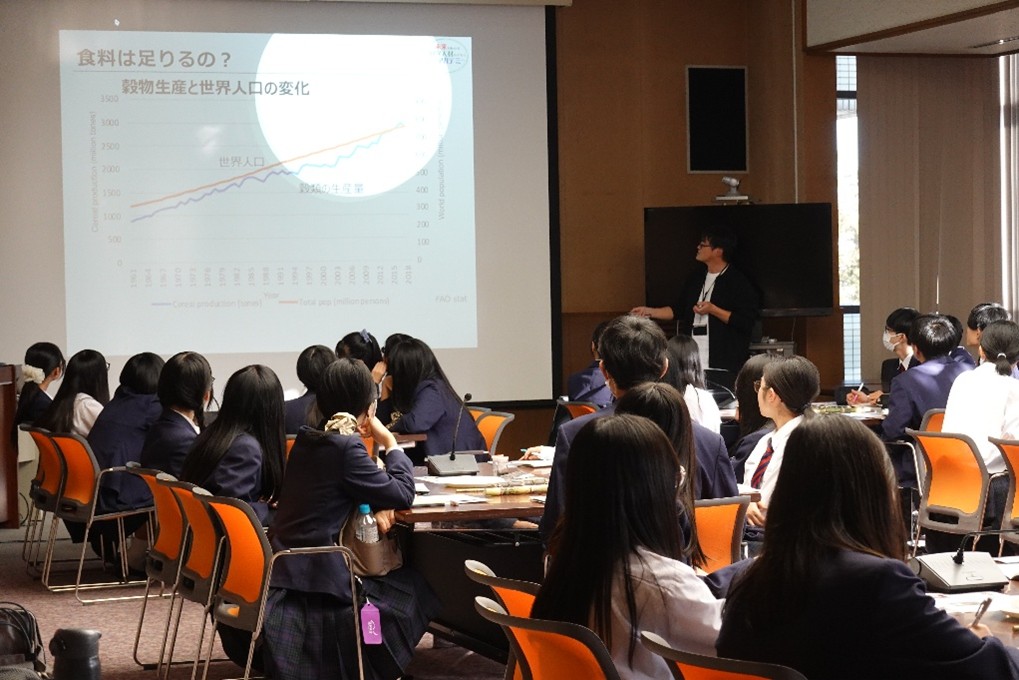
The sessions began with an introduction to JIRCAS’s research activities and international collaborations, explaining how research in agriculture, forestry, and fisheries conducted with global partners contributes to food systems and daily life in Japan. The presentation also focused on Japan’s food production and global food production and distribution, giving students an opportunity to reflect on the significance of Japan’s cooperation in research and technology development in developing countries. Additionally, the role of global human resources and science, technology, and innovation (STI) talent—highly sought after to address global challenges—was also discussed.
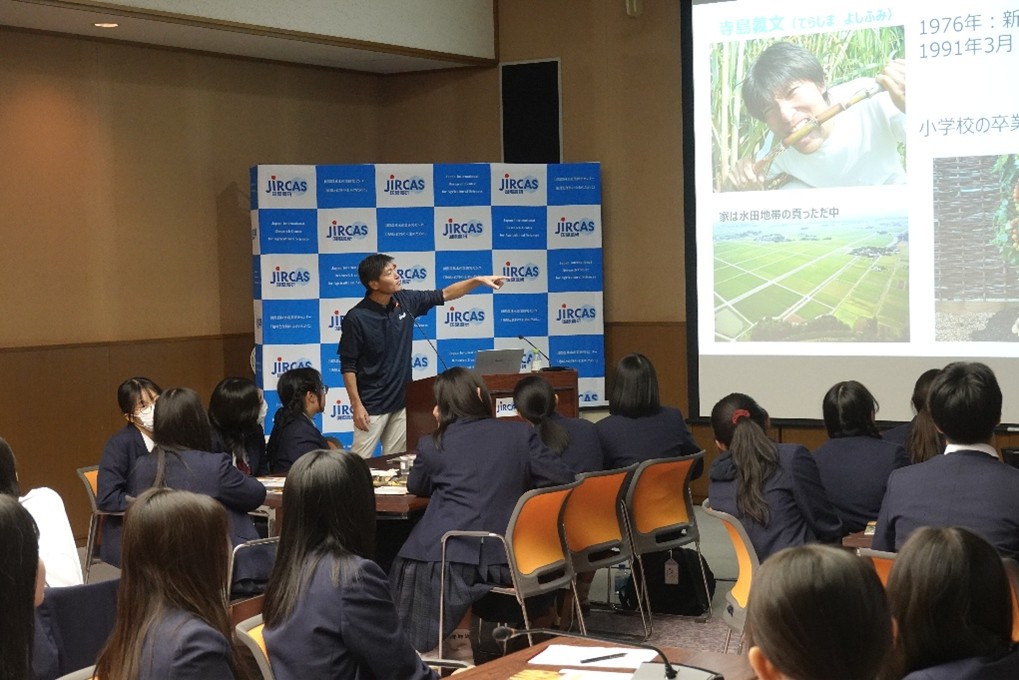
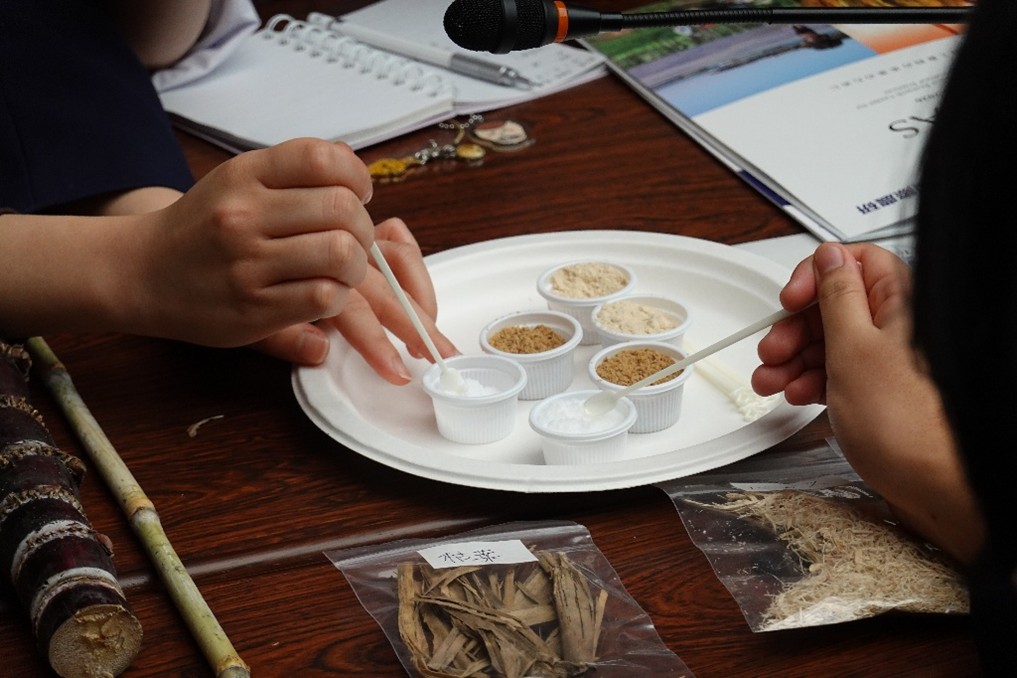
Next, Senior Researcher TERAJIMA Yoshifumi, based at JIRCAS’s Tropical Agriculture Research Front in Ishigaki City, gave a lecture on his ongoing research on sugarcane. He shared his motivation for becoming a researcher, why he began studying sugarcane, and his amazement upon encountering wild sugarcane overseas, bringing his experience to life with photos and personal anecdotes. Students also had the opportunity to taste white sugar, brown sugar, and wasanbon (a fine-grained Japanese sugar), deepening their understanding of sugar types, characteristics, and production processes.
The lecture touched on the negative history of sugarcane, including the slave trade and poll taxes, while highlighting sugarcane’s important role today. Dr. Terajima also discussed sugarcane’s potential contributions to global food and energy production, including its use as biofuel and plastic raw material. He explained his ongoing research on creating superior sugarcane varieties by crossbreeding wild species and related species to introduce new traits.
In particular, he explained that in sugarcane production, sucrose, produced by photosynthesis, is the main component taken off the island, while most of the fertilizer components, such as nitrogen and phosphorus, remain on the island as by-products. By making good use of this characteristic, he wants to create a system that makes sustainable sugarcane production possible by utilizing the limited resources on the island. The students were impressed by his passion for sugarcane research. The Q&A session was highly interactive, with students asking sharp questions that even surprised him.
Through this visit, students gained a deeper understanding of the potential of science, the social significance of research, and the importance of international collaboration. It was a valuable opportunity for them to reflect on their future careers and aspirations. JIRCAS will continue providing opportunities for young scientists to experience research firsthand and further cultivate interest and curiosity in science and technology.