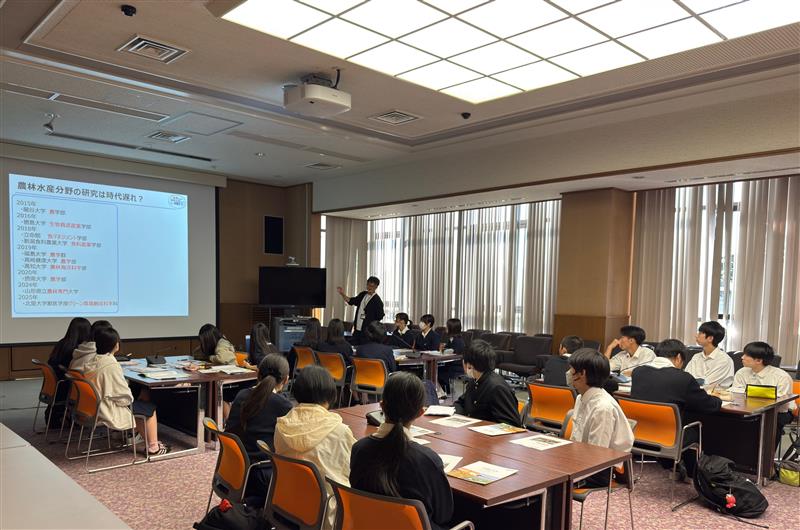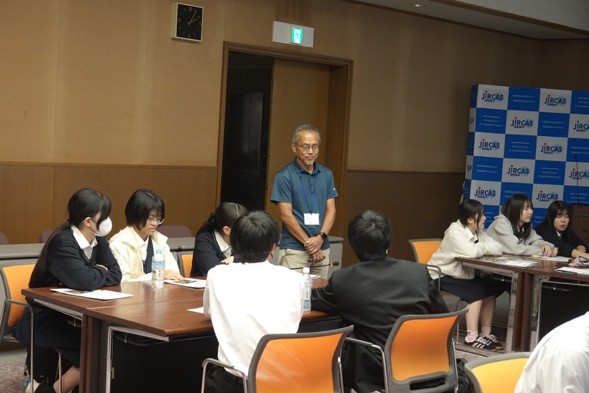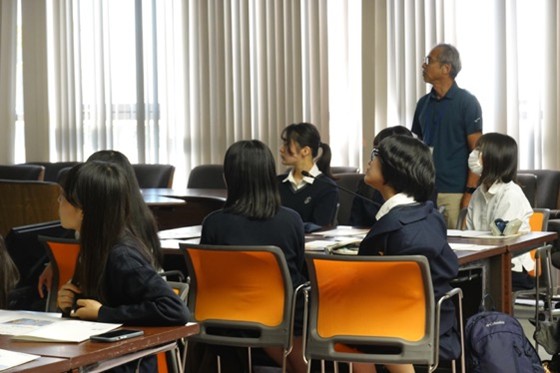
On Thursday, October 30, 2025, the Japan International Research Center for Agricultural Sciences (JIRCAS) welcomed 21 second-year students from the Natural Science Course of Kanazawa Nisui High School in Ishikawa Prefecture for the 16th session of the Future Science Talent Academy. The school conducts study trips for students to learn about cutting-edge science and technology, aiming to cultivate interest in science and awareness of career paths. This visit was part of that program.
The session began with an introduction to JIRCAS’s research activities and international collaborative projects. Students learned how agricultural, forestry, and fisheries research conducted in partnership with institutions around the world contributes to Japan’s food systems and daily life. The presentation emphasized the current state of Japanese food production and international food distribution challenges, as well as the significance of conducting research in collaboration with partners in developing countries.
Dr. TSUTSUI Isao, Senior Researcher in the Fisheries Division, delivered a lecture highlighting Japan’s shrimp consumption: 256,000 tons annually, equivalent to 253 shrimp per person, with 94% dependent on imports. He discussed JIRCAS’s efforts to develop new aquaculture technologies aimed at ensuring that “everyone can enjoy eating shrimp.”
Dr. Tsutsui introduced a practical research example in Thailand, where rising feed costs had posed challenges for shrimp farmers. By introducing new feeds derived from algae and other sources, the project improved profitability by 1.5 times, demonstrating the importance of on-site collaboration with local partners.
Dr. Tsutsui also shared his personal journey as a researcher, including university entrance failures, challenges in selecting a laboratory, experiences with the Japan Overseas Cooperation Volunteers, and subsequent struggles and lessons that shaped his current work. Using photos and anecdotes, the lecture encouraged interactive dialogue with students.
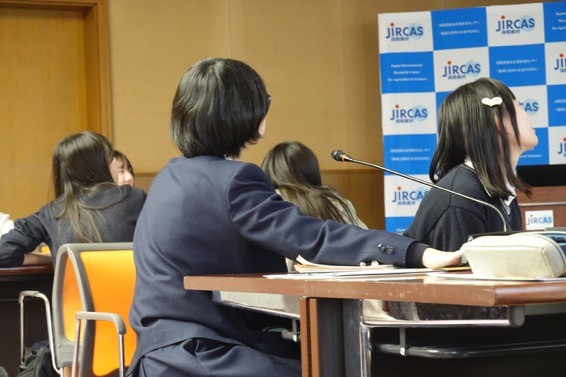
During the Q&A session, students asked many questions, among them the challenges of working abroad, life as a researcher, and communication strategies with local communities.
Dr. Tsutsui responded carefully to each question, providing practical insights and encouragement. When asked by a teacher, “What is the key to advancing research?”, he replied: "Sometimes not finding an answer is itself a result. By continuing your efforts, you will eventually reach the answers you seek."
The visit provided students with a valuable opportunity to understand the potential of science, the societal importance of research, and the role of international cooperation, while reflecting on their own career goals and future aspirations. JIRCAS plans to continue offering students direct experiences in research environments to further cultivate interest in science and technology.