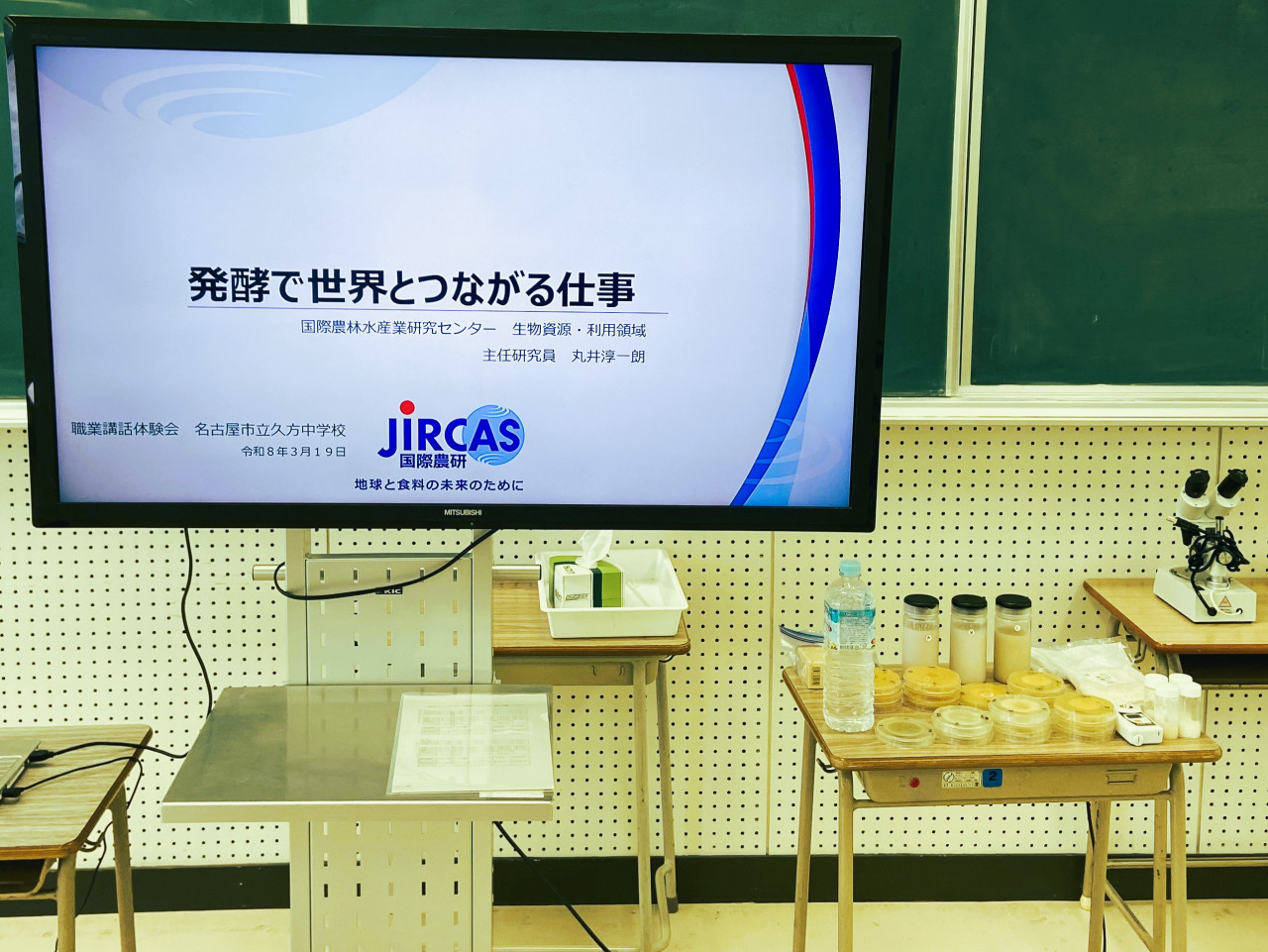
On Thursday, March 19, 2026, as part of the Future Science Talent Academy, JIRCAS held its 28th session as an outreach lecture at Nagoya Municipal Hisakata Junior High School. The school organizes career talk sessions aimed at helping students learn the value of work, understand how to engage with others, and consider their future career paths. This lecture was conducted as part of that program. Students selected sessions based on their interests from six fields—food research, medical technology, beauty technology, illustration, automobile dealerships, and professional sports—and a total of 109 first-year students participated.
The lecture in the field of food research was delivered by Dr. Junichiro Marui, Senior Researcher in the Biological Resources and Post-harvest Division, under the title “Connecting with the World through Fermentation.” He introduced JIRCAS’s efforts to address global food issues and explained research and development on fermented foods that contribute to the effective use of local agricultural products.
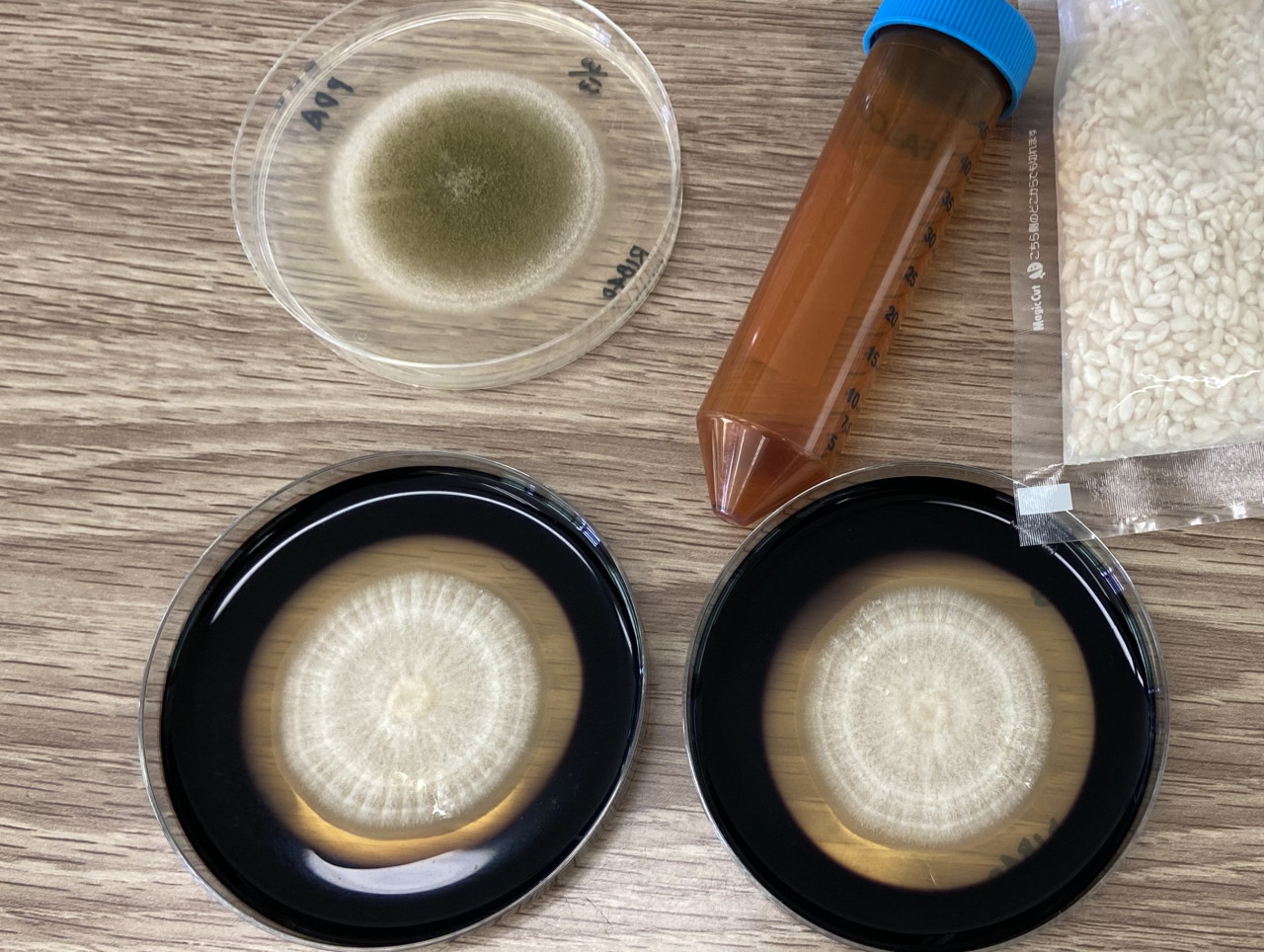
Dr. Marui also shared examples from his research conducted in Southeast Asia, including Thailand and Laos, using photographs and samples. Through these examples, students explored the power of microorganisms that support fermentation and considered the problem-solving skills required in the field of international collaboration. Hands-on activities were also conducted, including experiments to visualize the enzymatic functions of koji mold and a mock preference survey using commercially available amazake made with koji, allowing students to actively engage in the learning process.
Students asked many enthusiastic questions, leading to lively discussions on the diversity of fermented foods, the role of microorganisms, and comparisons between food cultures in Southeast Asia and Japan. There were also numerous questions about careers as researchers and international cooperation, such as the challenges faced in international collaboration and how they are overcome. The session provided a valuable opportunity for students to reflect on the social role of science and technology and their own future career paths.
Through this visit, the students gained a deeper appreciation for identifying problems with curiosity and thinking scientifically. JIRCAS will continue to provide learning opportunities for junior and senior high school students—who will be the future leaders of science and technology—to experience research firsthand and engage with cutting-edge research and scientific thinking, thereby fostering an interest in science and a global perspective.
JIRCAS provides opportunities for junior and senior high school students to engage with cutting-edge research and develop scientific thinking skills. For an overview of the “Future Science Talent Academy” and related inquiries, please refer to the introduction page of the Academy.