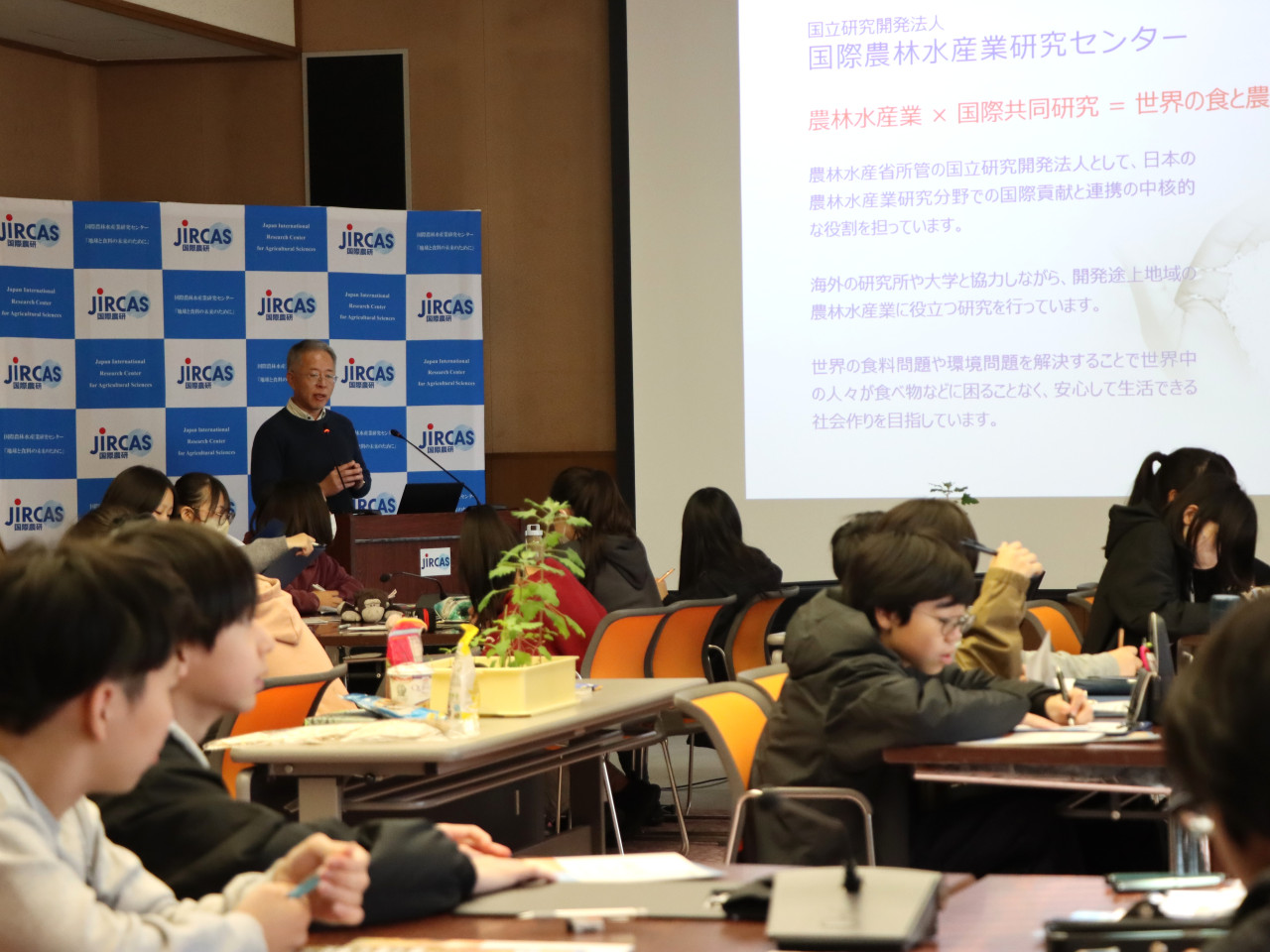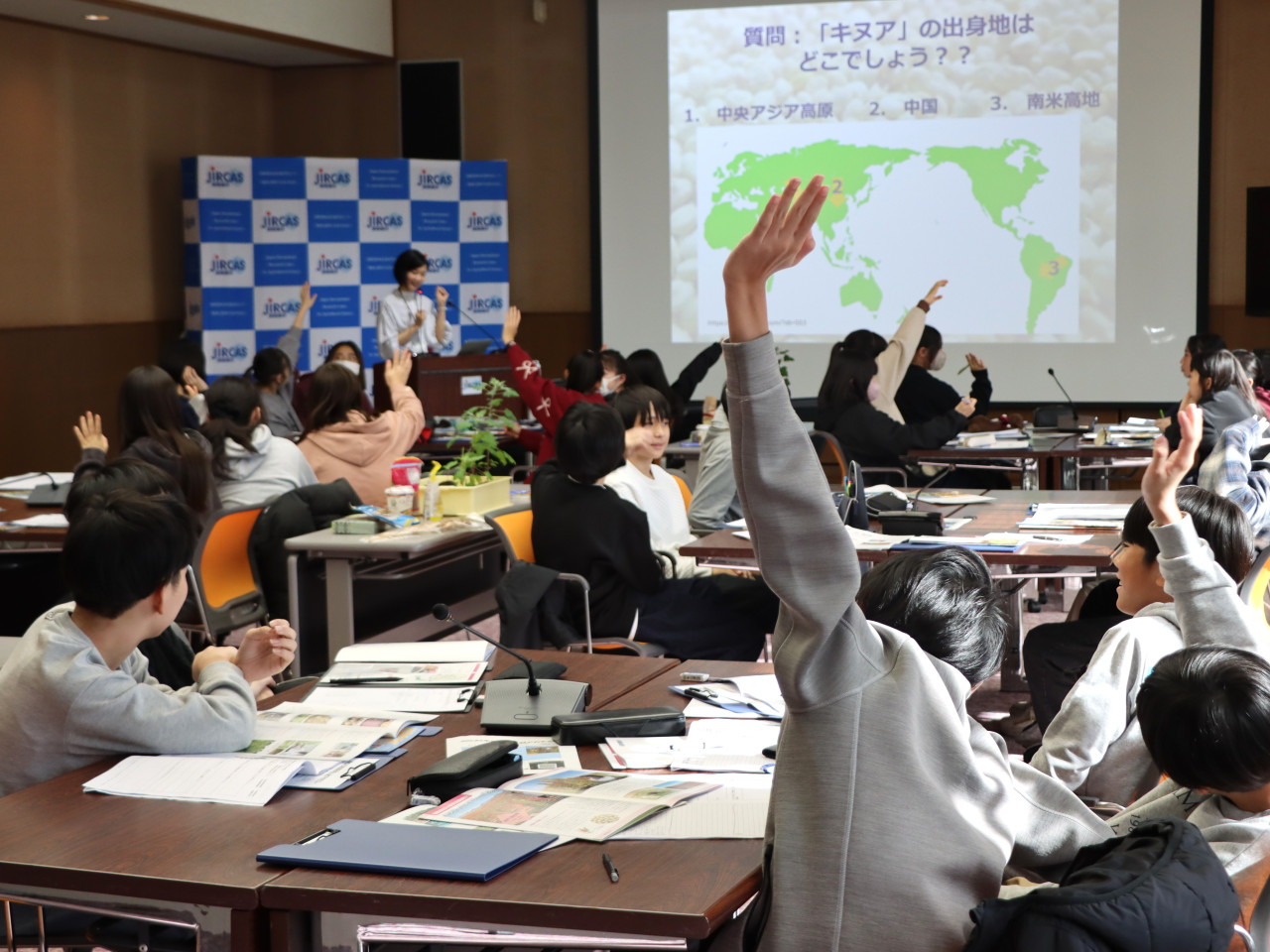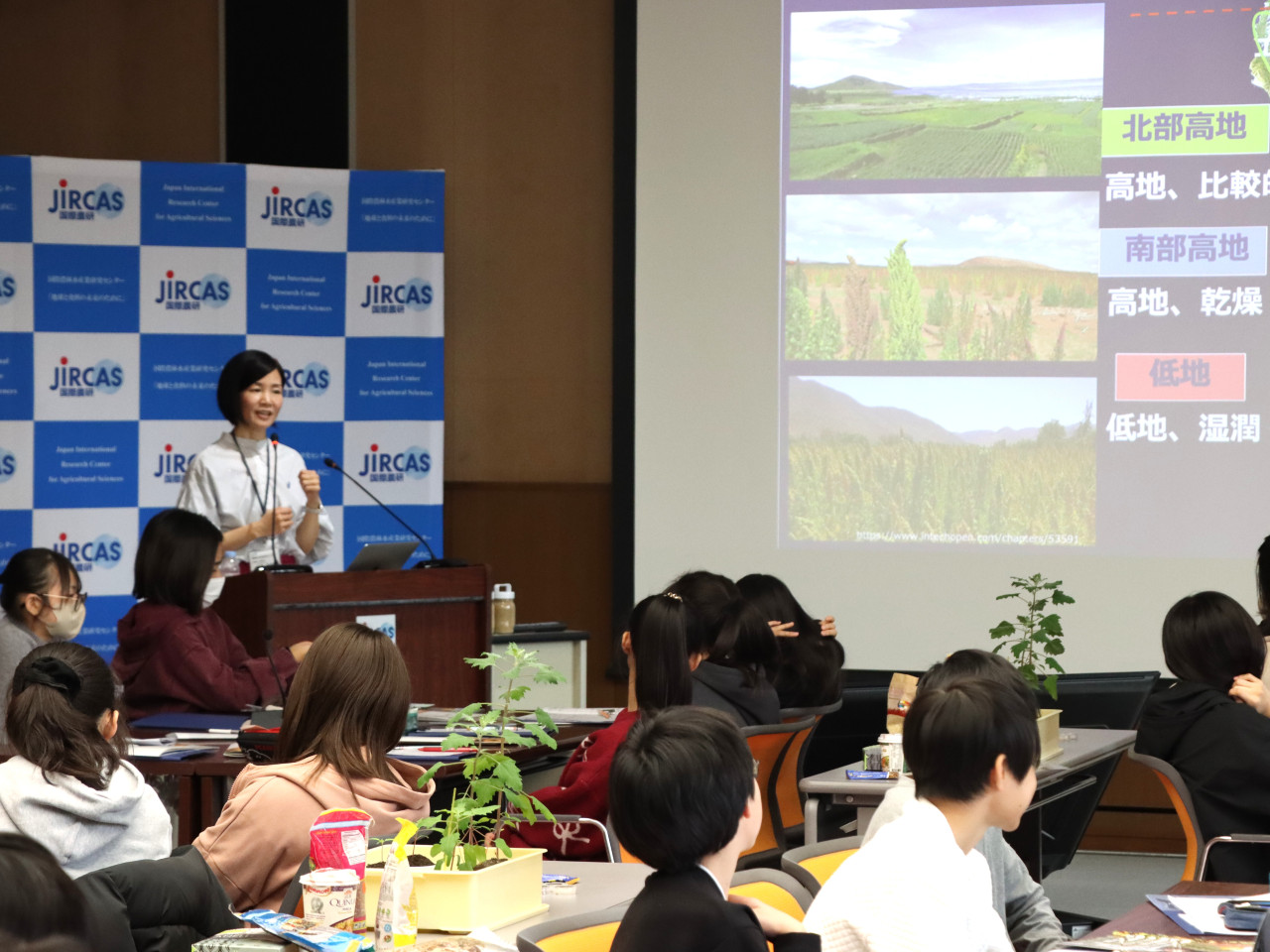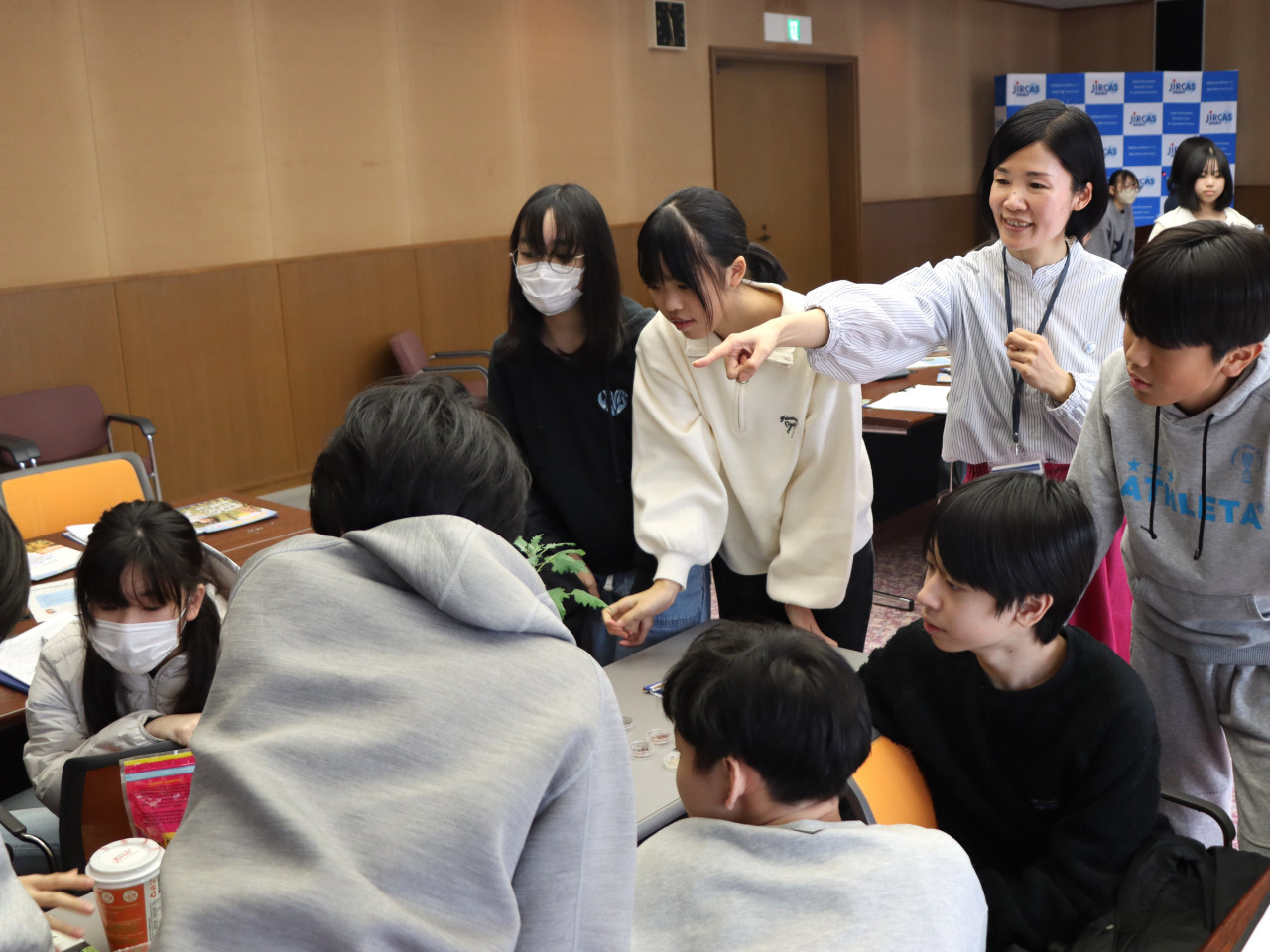
On Wednesday, November 19, 2025, the Japan International Research Center for Agricultural Sciences (JIRCAS) welcomed 68 first-year students from Salesian International School Setagaya for the 22nd (morning) and 23rd (afternoon) sessions of the “Future Science Talent Academy.”
At the school, a “Discovery Camp” is held for first-year middle school students in the general curriculum to cultivate scientific curiosity through off-campus learning. The program aims to give students firsthand experience with cutting-edge research and efforts toward building a sustainable society. The visit to JIRCAS was part of this initiative, offering students an opportunity to learn about the connection between science and society through exposure to international agricultural research.
The sessions began with an overview of JIRCAS’s research activities and international collaborations, giving students a chance to think about global food and environmental issues. Students then presented, in small groups, the SDG (Sustainable Development Goals) activities they practice at school or in their communities, sharing familiar initiatives such as supporting children’s cafeterias and collecting plastic bottle caps. These presentations helped students recognize that each individual can contribute to a sustainable society in various ways.
In the lecture portion, Project Leader NAGATOSHI Yukari from the Biological Resources and Post-harvest Division delivered a talk on quinoa, a crop gaining attention as a “superfood.” In her lecture titled, “Quinoa Research: Unlocking the Potential of a Food that Supports the Future,” she introduced the characteristics of quinoa and the latest research developments while showing actual plant specimens, seeds, and related products. Quinoa is also known for being selected by NASA as a candidate crop for space cultivation, and expectations continue to grow for its future applications. During the Q&A session, students asked numerous questions such as, “Where can you buy quinoa?”, “Why did quinoa research stagnate for so long?”, and “What motivates this research, and why is it important in developing countries?”, demonstrating their high level of interest.
Through this visit, the students had the opportunity to think about “food” and “science” from various perspectives. It was a meaningful experience that encouraged them to believe in their own potential, broaden their horizons with flexible thinking, and continue to learn by identifying challenges. It is hoped that the younger generation who will lead the future will cultivate the curiosity and global outlook needed to build a better world.