



On Thursday, October 9, 2025, 36 first-year students from the Top Advanced Course and Advanced Course Departments of Sakushin Gakuin High School visited the Japan International Research Center for Agricultural Sciences (JIRCAS) for the 13th session of the Future Science Talent Academy. At this school, the Super Science Academy (SSA) program is promoted with the goal of “fostering interest in science and technology, cultivating intellectual curiosity and investigative spirit toward nature, and developing logical thinking and creativity.” This visit was conducted as part of that initiative.
The session began with an introduction to JIRCAS’s research activities and international collaborative projects, explaining how agricultural, forestry, and fisheries research conducted in partnership with countries worldwide contributes to food and daily life in Japan. In particular, students were given the opportunity to consider the current state of Japan’s food production and international food production and distribution, as well as the significance of Japan’s cooperation in research and technology development in developing countries.
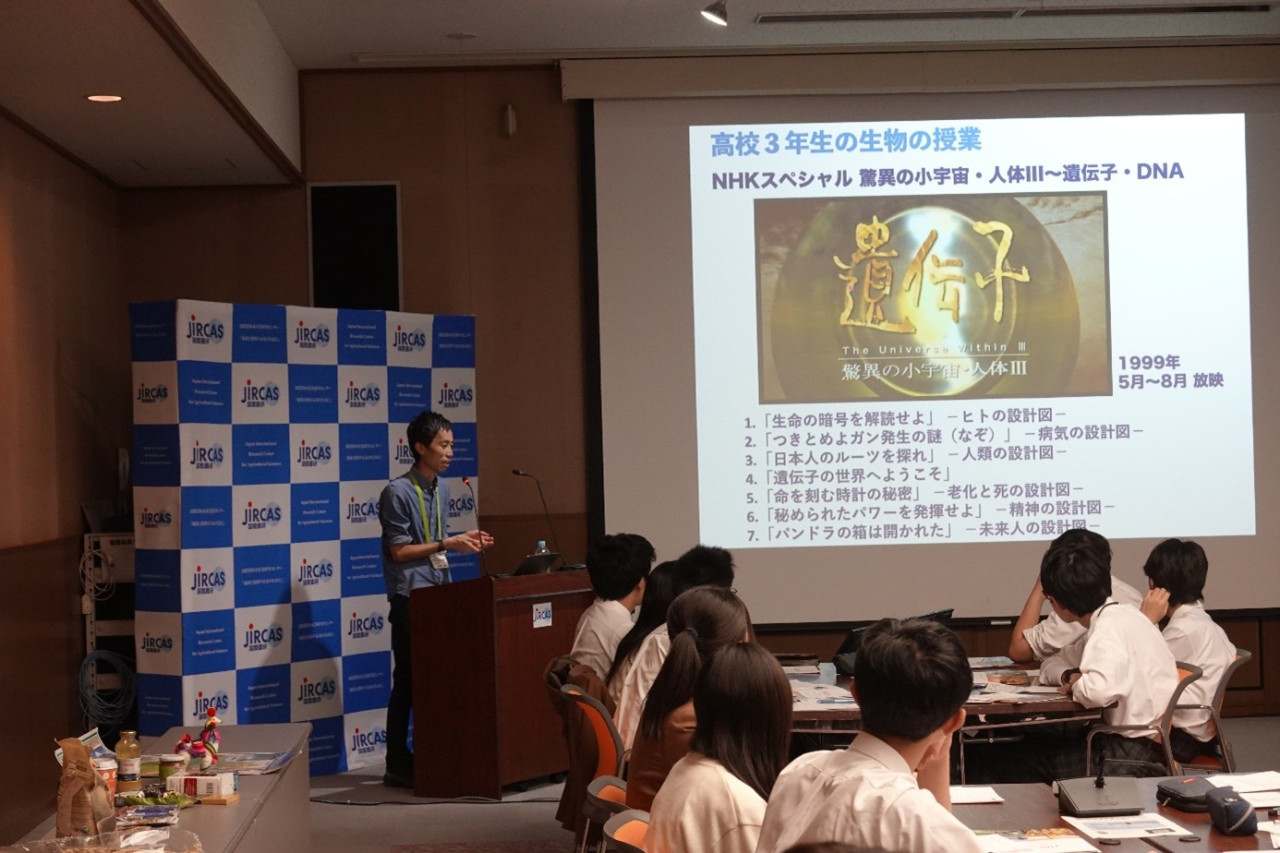
Next, Senior Researcher OGATA Takuya from the Biological Resources and Post-harvest Division gave a lecture titled “Food Production and Plant Science.” He first shared his own career path, explaining that a documentary about “genes” he saw in his third year of high school sparked his interest in biotechnology, leading him to pursue research through a doctoral program. He also shared his surprise at discovering that many JIRCAS researchers conduct work with a global perspective.
Dr. Ogata then introduced research activities his team is conducting primarily in South America, particularly Bolivia. South America is the origin of key crops such as potatoes and tomatoes, and JIRCAS is also conducting research on quinoa, which originates from the region.
Quinoa, known as a superfood for its high protein and vitamin content, can thrive even under the harsh conditions of high-altitude, dry regions in Bolivia. Ogata explained that their research focuses on analyzing quinoa’s responses to environmental stress, using genome editing to develop resilient crops and exploring underutilized crops that perform well under challenging conditions. Examples included the use of betacyanin pigment synthesis genes and “Green Revolution” dwarfing genes. He also spoke passionately about ongoing efforts to understand genes related to early flowering and apply that knowledge to plant breeding.
Through this visit, students gained a deeper understanding of the potential of science, the societal significance of research, and the importance of international collaboration. It also provided a valuable opportunity to reflect on their own career paths and future goals. Moving forward, the Academy aims to continue offering opportunities for students to experience research firsthand, further stimulating their interest and engagement in science and technology.