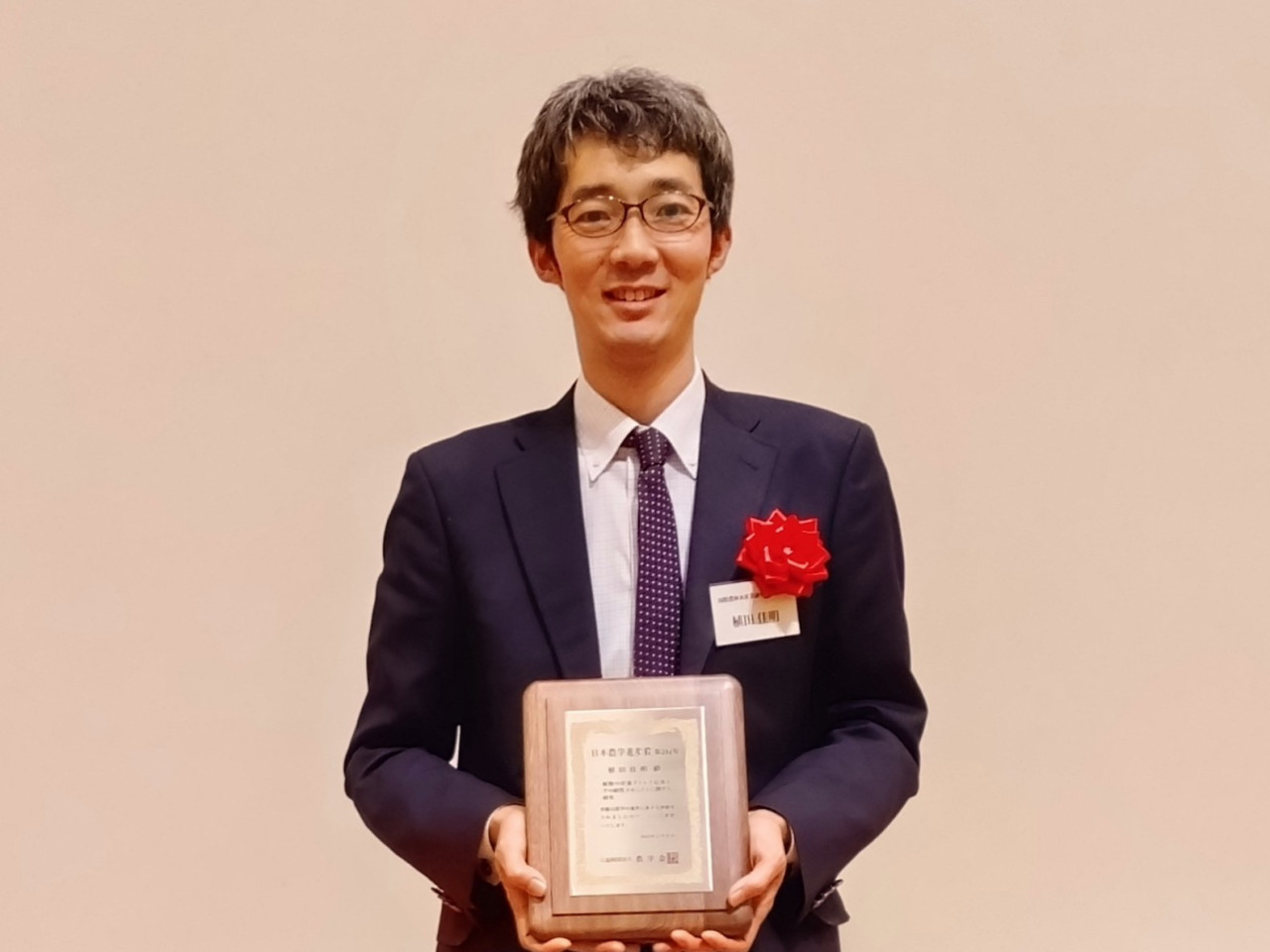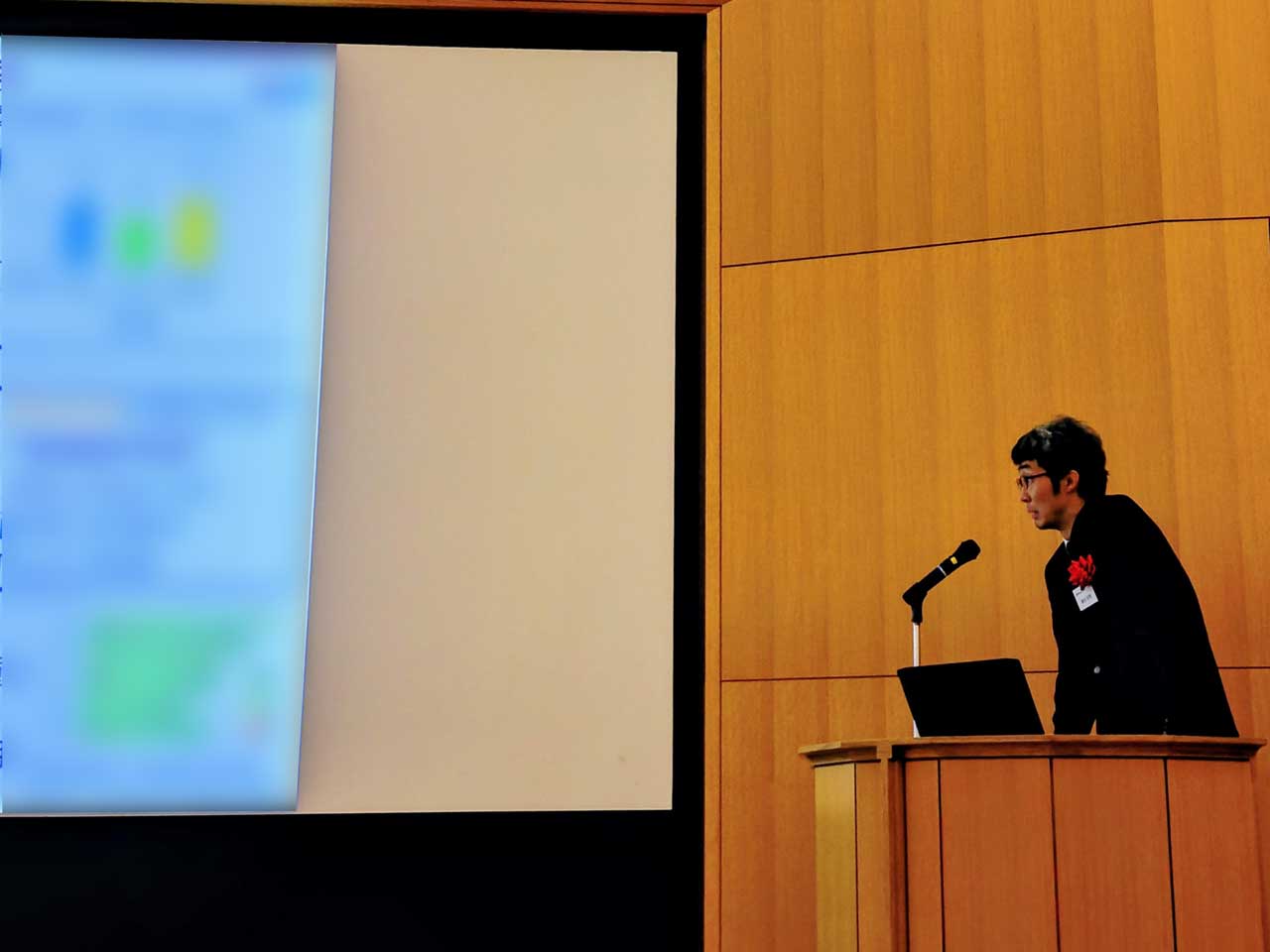



On Friday, November 28, 2025, the 2025 (24th) Japan Prize in Agricultural Sciences, Achievement Award for Young Scientists ceremony and recipient lecture were held at Yayoi Auditorium, Faculty of Agriculture, University of Tokyo. The award is administered by The Foundation of Agricultural Sciences of Japan (FASJ).
Dr. UEDA Yoshiaki, Senior Researcher in the Crop, Livestock and Environment Division of the Japan International Research Center for Agricultural Sciences (JIRCAS), received the award for his research on plant nutrient stress responses and resistance mechanisms. The award certificate and commemorative gift were presented by FASJ President TANGE Takeshi.
https://www.nougaku.jp/award/award1.2025.html
This award is presented annually by FASJ to outstanding young and mid-career researchers under 40 who have made remarkable contributions to the advancement of agricultural science in support of the sustainable development of agriculture, forestry, fisheries, and related industries.
Dr. Ueda’s research elucidates the molecular-level responses and tolerance mechanisms of plants under nutrient deficiencies, such as nitrogen and phosphorus. His work is highly praised for its potential to support the development of crops resilient to environmental changes.
Many researchers from JIRCAS have received this award in the past, demonstrating the active role of young researchers in the international agricultural and forestry research community.
Previous JIRCAS Awardees:
- 2021 (20th Award): TSUJIMOTO Yasuhiro – Development and dissemination of effective rice fertilization techniques suitable for cultivation environments in Africa
- 2017 (16th Award): MAENO Kotaro – Physiological and ecological studies of the desert locust outbreaks in Africa
- 2014 (13th Award): IKAZAKI Kenta – Elucidation of desertification mechanisms in the Sahel region of West Africa and development & dissemination of labor-saving desertification countermeasures
- 2005 (4th Award): Marcy Nicole Wilder – Development of shrimp seed production and aquaculture technologies based on physiological and biochemical research