



Pick Up
1493. International Day of Plant Health
Related Research Program
Information
1493. International Day of Plant Health
May 12 is recognized by the United Nations as the International Day of Plant Health. This international observance aims to raise global awareness that protecting plant health is essential for ending hunger, reducing poverty, preserving biodiversity and the environment, and promoting sustainable economic development.
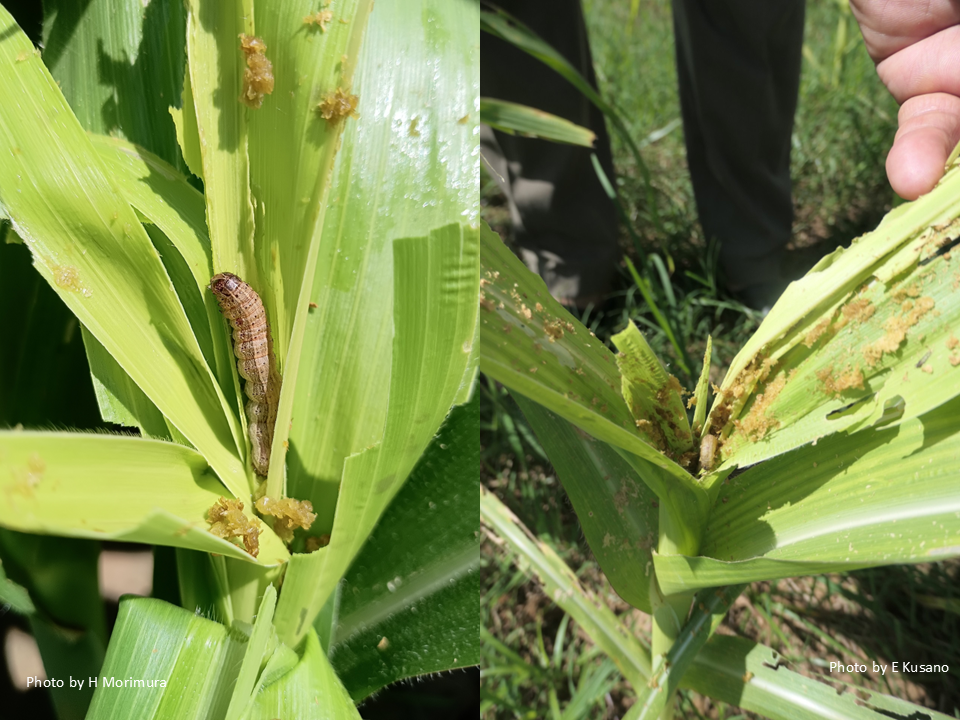
Plants are fundamental to our daily lives. They produce approximately 98 percent of the oxygen we breathe and provide around 80 percent of the food we consume. However, plant pests and diseases are responsible for the loss of up to 40 percent of global crop production each year. This represents a major barrier to ensuring adequate food and nutrition worldwide.
Plant protection, often referred to as plant biosecurity, plays a role similar to border control and hygiene for plant systems. It aims to prevent the introduction and spread of pests and diseases across borders and ensure rapid response when outbreaks occur. These efforts help safeguard our food supply, protect farmers’ livelihoods, facilitate international trade, and conserve ecosystems and biodiversity.
There are also actions that individuals can take. Avoiding the introduction of plants, fruits, vegetables, seeds, or soil when returning from overseas is critical to preventing the spread of harmful pests and diseases. When purchasing plants or plant products online, it is important to verify that they come from reliable sources and comply with necessary phytosanitary regulations. Additionally, if unusual symptoms are observed in nearby plants, promptly reporting them to relevant authorities is essential.
Plant pests and diseases have significant impacts on global food security and economies. They cause substantial losses in agricultural production and trade. Moreover, climate change is increasing both the frequency and geographic spread of pests and diseases, with outbreaks occurring earlier or appearing in regions where they were not previously observed. Protecting plant health will therefore become increasingly important in ensuring stable food systems in the future.
Protecting plant health ultimately means protecting our lives and our future.
In addition to daily plant protection measures, research into sustainable pest management is becoming increasingly important. These efforts include the use of natural enemy insects to control pest populations and monitoring approaches to maintain the effectiveness of pesticides.
At JIRCAS, research is being conducted to develop sustainable pest control strategies that reduce dependence on chemical pesticides. This includes monitoring pest outbreaks and evaluating the costs associated with using natural enemies. For example, in Thailand, a cost estimation model for rearing natural enemy insects has shown that, depending on the method used, production costs can be reduced to a certain extent. These findings suggest that biological control using natural enemies can serve as a viable alternative within integrated pest management systems. Such research expands the possibilities for protecting plant health in a sustainable manner.
Reference
Kusano, E., Malee, S., Sirimachan, N., Pinsri, N., Sappanukroh, P., Nitjarunkul, A., Jamrutsri, P., & Kobori, Y. (2026).
Cost estimation model for small-scale rearing systems of natural enemy insects: Propagation for controlling Spodoptera frugiperda (Lepidoptera: Noctuidae) in Thailand. CABI Agriculture and Bioscience, 7, 6.https://doi.org/10.1079/ab.2026.00
(Authors: IIYAMA Miyuki, Strategic Coordination Office; KUSANO Eiichi, Social Sciences Division; KOBORI Yoichi, Crop, Livestock and Environment Division)