



Pick Up
1414. Small-scale Logging in Moist Forests Causes Biomass Loss in Tropical Forests
Related Research Program
Information


1414. Small-scale Logging in Moist Forests Causes Biomass Loss in Tropical Forests
Tropical forests are essential to the global carbon (C) cycle, storing approximately half of the world's aboveground carbon (AGC). Landsat observations show that over the past 30 years, 46% of tropical moist and dry forests have experienced at least one disturbance, such as deforestation due to land expansion or degradation due to fire, resulting in a decline in biomass and biodiversity and a decline in ecosystem function. Over time, these disturbed forests gradually recover their carbon stocks and ecological functions, but the recovery process is still poorly understood.
A paper published in Nature quantified the dynamics of AGC in disturbed tropical forests by integrating hectare-scale Earth observation data and spatially explicit biomass recovery curves to estimate forest carbon loss and gain in disturbed tropical forests from 1990 to 2020.
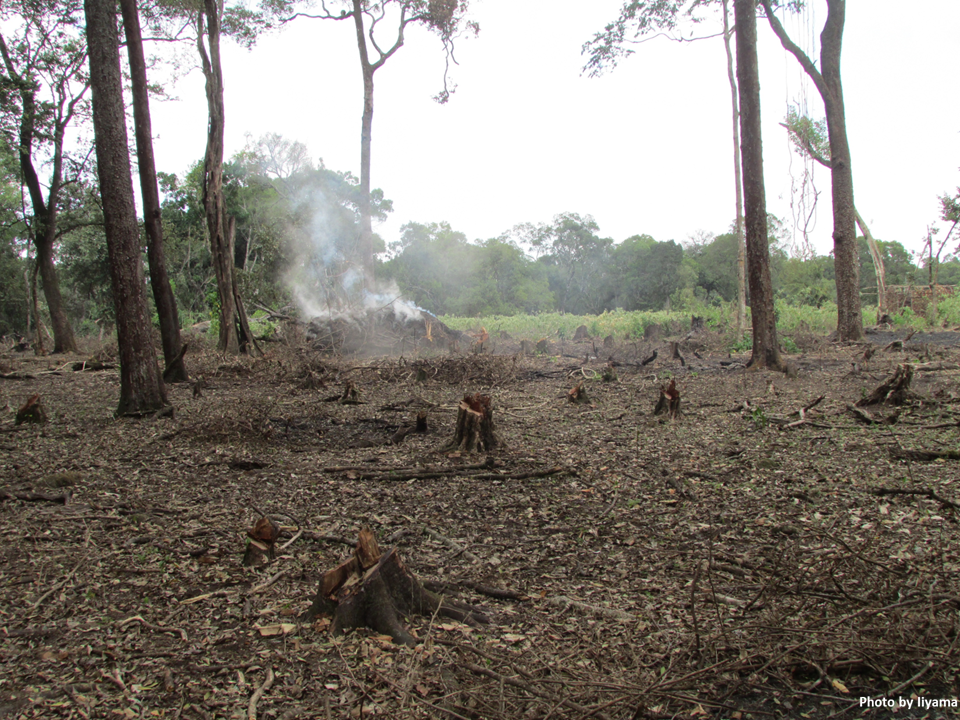
The analysis showed that while disturbed tropical dry forests remained carbon neutral, disturbed tropical moist forests experienced a net AGC loss, primarily due to small-scale but sustained deforestation. Although small-scale deforestation (less than 2 hectares) affected only 5% of the disturbed area, it accounted for approximately 56% of carbon loss due to continuous land-use conversion without forest regeneration. In contrast, carbon loss due to large-scale fires was offset by long-term post-fire recovery. These findings highlight the disproportionate impact of small-scale logging on carbon loss in the tropics, highlighting that total carbon losses from fire and non-fire forest degradation (-17.8 PgC) are even greater than those from deforestation (-14.9 PgC).
The paper also found that while both large-scale commodity production and small-scale agriculture were estimated to have caused carbon losses in South America, 97% of net carbon loss in Africa from 1990 to 2020 was attributable to small-scale agriculture (disturbances of less than 2 hectares). Additional pressures from village development and road construction further exacerbated losses in Africa.
The analysis suggests that in addition to limiting land-use change and avoiding anthropogenic disturbance to tropical forests, which are carbon hotspots, young and recovering forests must be protected. Supporting sustainable agricultural practices, stable land tenure, and agroforestry is essential to increase the productivity of existing agricultural land, reduce pressure on forest land, and avoid further carbon loss.
(Reference)
Xu, Y., Ciais, P., Santoro, M. et al. Small persistent humid forest clearings drive tropical forest biomass losses. Nature 649, 375–380 (2026). https://doi.org/10.1038/s41586-025-09870-7
Contributor: IIYAMA Miyuki, Information Program