



Pick Up
1412. Sub-Saharan Africa May Have Lost Approximately One-Fourth of Its Pre-Industrial Revolution Biodiversity
Related Research Program
Information
1412. Sub-Saharan Africa May Have Lost Approximately One-Fourth of Its Pre-Industrial Revolution Biodiversity
Biodiversity supports important aspects of human health, culture, values, and the economy. However, biodiversity is rapidly being lost due to human activities such as agricultural expansion, urbanization, and resource extraction, threatening the well-being of current and future generations. A major obstacle to curbing biodiversity loss is the lack of reliable biodiversity information essential for policy and planning. This problem is particularly acute in Sub-Saharan Africa, which faces pressing socioeconomic challenges and is losing its rich biodiversity—a key asset for building a just and sustainable future—at an alarming rate.
Top-down approaches to biodiversity estimation in Sub-Saharan Africa have been criticized for not reflecting local realities. While policy-relevant biodiversity data are lacking in Sub-Saharan Africa, researchers, field rangers, tour guides, museum curators, and others have knowledge of the region's biodiversity and its transformation. The research underlying this paper engaged approximately 200 of these experts in the information-gathering process. The resulting dataset contains estimates of how the populations of diverse plant and animal species have been affected by human activities. The paper created a map of biodiversity change using an index that represents the abundance of each species in ecosystems across Sub-Saharan Africa as a percentage of their pre-industrial abundance (before approximately 1700).
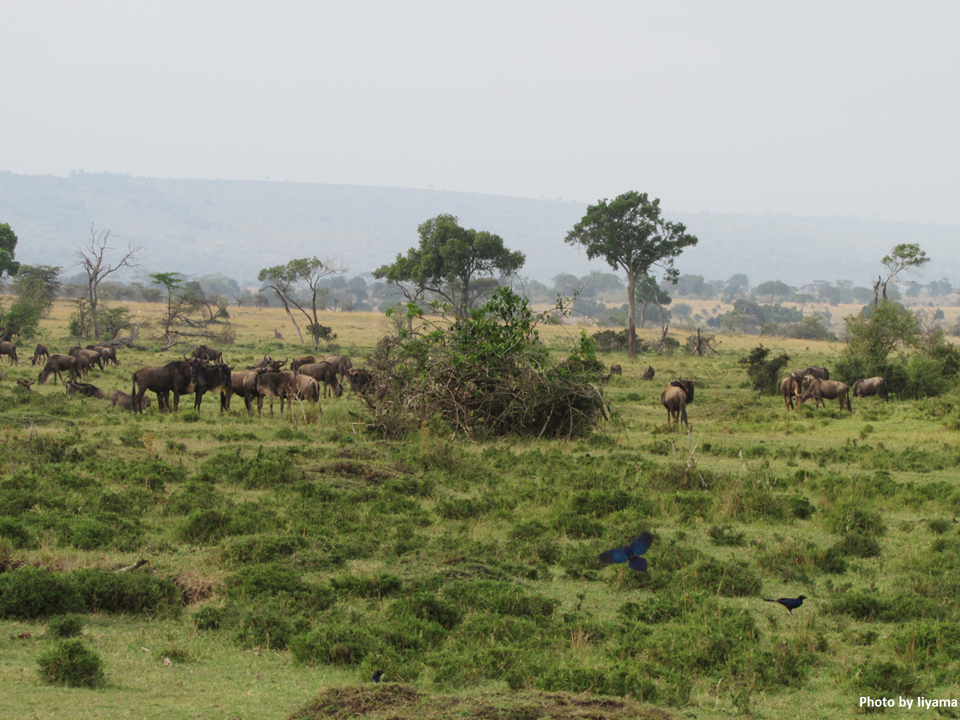
The analysis found that plant and animal biodiversity in Sub-Saharan Africa has declined by 24% compared to pre-industrial populations. While the loss of biodiversity represents only 10% of the populations of some disturbance-adapted grass and wildflower species, it has declined by more than 75% for large mammals, such as elephants, lions, and some antelopes. Rwanda and Nigeria experienced the greatest declines, while the least affected populations were observed in Namibia and Botswana.
The main drivers of biodiversity loss in Sub-Saharan Africa are excessive resource exploitation, overgrazing, and agricultural activities. A striking finding is that 84% of the region's remaining wild populations reside outside protected areas—in natural forest and grassland ecosystems (known as rangelands) where wild or domesticated herbivores graze. In these areas, people coexist with and depend on biodiversity. A priority for biodiversity conservation and restoration is the sustainable management of these "farms," which support Sub-Saharan Africa's more than 500 million people.
This century, Sub-Saharan Africa is expected to experience greater demographic and environmental change than any other region in the world. By 2050, cultivated land area is projected to double and grain demand to triple. The region's natural forests and extensive rangelands should be at the heart of future biodiversity conservation and restoration strategies. For these strategies to be ecologically effective and socially just, it is essential to understand and support the governance structures, value systems, and land-use practices that support biodiversity and people.
The paper acknowledged that the approach taken had limitations and could not eliminate all potential biases and errors, but expressed hope that bottom-up expert knowledge could be used to evaluate the outcomes of alternative development scenarios and strategies to mitigate biodiversity loss.
(Reference)
Clements, H.S., Biggs, R., De Vos, A. et al. A place-based assessment of biodiversity intactness in sub-Saharan Africa. Nature 649, 113–121 (2026). https://doi.org/10.1038/s41586-025-09781-7
Contributor: IIYAMA Miyuki, Information Program